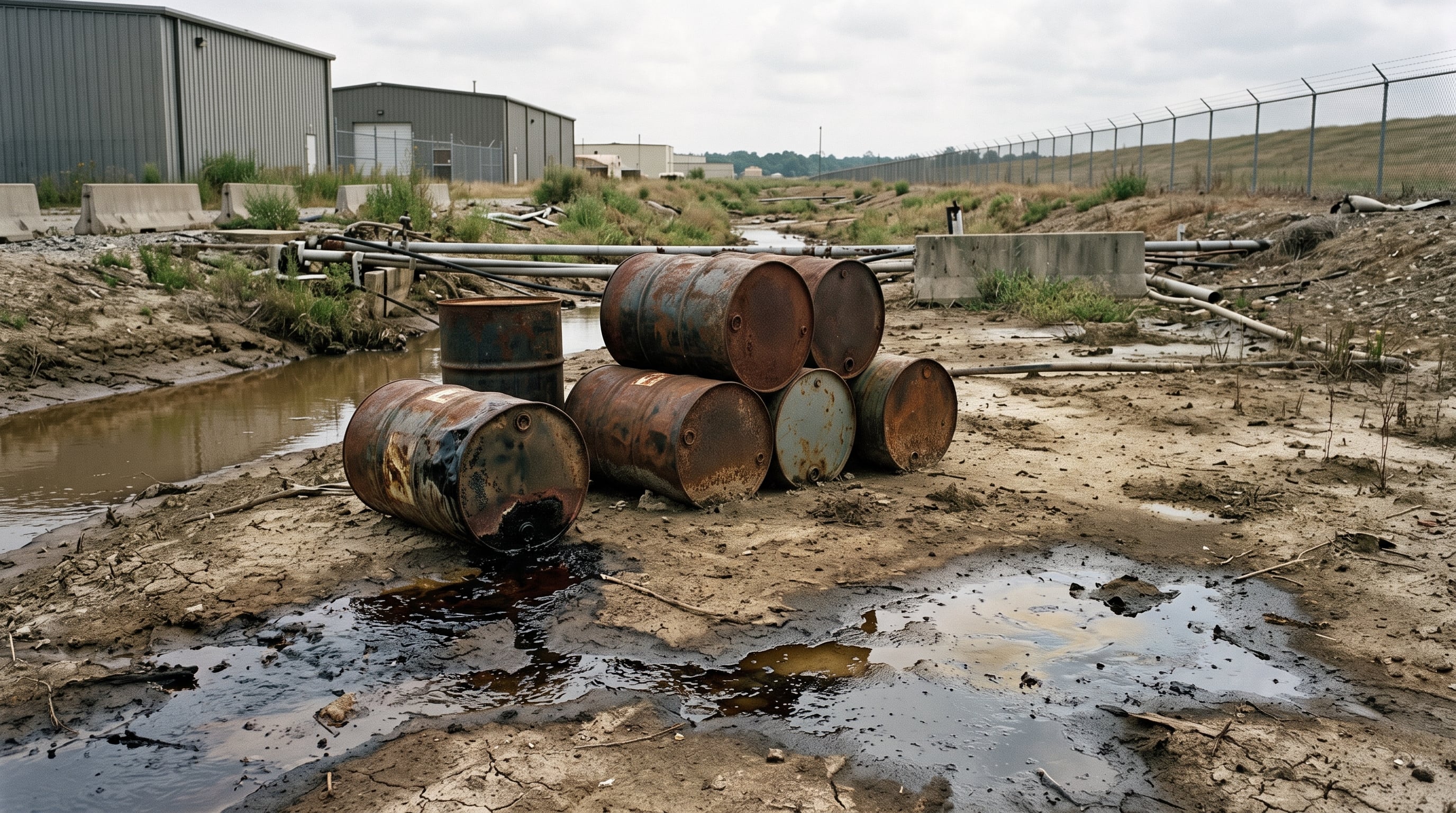
Camp Lejeune is the installation everybody knows. It is not the only one. More than 700 current and former military sites sit on the EPA National Priorities List or carry an active Installation Restoration Program, and a large share of those cleanups exist because industrial solvents, fuel, or metals reached the groundwater that fed the base water system. Motor pools degreased with trichloroethylene and poured it on the ground. Fuel farms leaked for decades before anyone monitored a tank. Fire training pits burned fuel into unlined soil. The water came out of the tap looking exactly like water.
There is no presumption for any of this outside Camp Lejeune, and that fact is used to shut veterans down early. It should not. A facts-found claim built on the government’s own environmental record is a real claim, and the record is unusually good: EPA Superfund site files, Army and Air Force Installation Restoration Program reports, and state environmental agency findings all name the contaminant, the concentration, the year, and often the specific well. Very few exposure cases come with documentation of that quality already sitting in the public record.
What you were actually breathing, drinking, or touching
No presumption exists outside Camp Lejeune. These claims are filed facts found — and the environmental record makes the exposure element unusually well documented.
Where it was, when it was, and who was standing there
The exposure, in specifics
A claim is decided on specifics. Location, date range, and duty — in that combination — are what turn an assertion of exposure into a documented one.
What creates the contamination
Four sources account for most of it: industrial degreasing at motor pools and maintenance shops, leaking underground fuel storage tanks, unlined fire training pits, and munitions or rocket-propellant residue producing perchlorate in the groundwater. All four were routine practice for decades and none was regulated at the time.
Which installations
Any installation with an EPA Superfund listing or an active Installation Restoration Program is a candidate — that includes many long-closed bases. The relevant question is not whether the base is famous. It is whether the contaminant plume and the base water supply overlapped during your assignment dates.
Who was drinking it
Everyone assigned there, plus dependents in base housing and civilian employees. Unlike an occupational exposure, water contamination does not care what your job was. Barracks residents, family housing residents, and anyone eating in a base dining facility were consuming it daily.
Where the proof lives
EPA Superfund site documents are public and searchable by installation. Service Installation Restoration Program records, Records of Decision, and Remedial Investigation reports state the contaminant and concentration by year. State environmental agencies often hold the earliest sampling data.
How you qualify
The routes available on this exposure
Work out which route your case is on before you gather a single document. Preparing the wrong evidence is the most common reason a truthful claim comes back denied.
Facts-found route
The direct service-connection route
Three elements. An in-service exposure event, proven with the environmental record and your assignment dates. A current diagnosis. And a medical nexus connecting the two. The exposure element is the one most veterans assume is impossible and it is usually the easiest, because a Record of Decision naming trichloroethylene in the base supply during the years you lived there is documentary proof produced by the government itself.
Match your assignment dates against the sampling dates in the environmental file.
Identify the specific contaminant and concentration, not just “bad water.”
Get a nexus opinion that ties that specific solvent to your specific diagnosis.
Buddy statements from others assigned there strengthen residence and duration.
Secondary route
What follows a granted condition
Solvent-related kidney and liver disease drive secondaries quickly — hypertension from renal impairment, anemia from chronic kidney disease, and the fatigue and cognitive complaints that come with hepatic dysfunction. Each is separately claimable once the primary is service-connected, and each is routinely missed.
Chronic kidney disease to hypertension and anemia.
Liver disease to fatigue, cognitive change, and functional loss supporting unemployability.
Any granted condition to the mental health treatment it necessitates.
Two different things — never combine them
A presumption and a TERA determination are not the same thing
These two get mixed together constantly — by veterans, by service officers, and sometimes in the decision letter itself. They are separate mechanisms that answer separate questions. One asks where and when you served. The other asks what you did while you were there. Treating either one as a substitute for the other is how a winnable claim gets prepared the wrong way and comes back denied.
Here is the fastest way to tell which lane you are standing in. A presumption almost always comes out of a deployment or an assignment to a place that has already been named — Vietnam, the Gulf, the Korean DMZ, the burn-pit countries, Camp Lejeune. Congress or VA drew a box around a region and a set of dates, and if your service falls inside that box and your diagnosis is on the list attached to it, you are in the presumptive lane and the law does the connecting for you. TERA is for everything else. If your exposure did not come from being sent to one of those named locations — if it came from the aircraft you turned wrenches on, the fuel you pumped, the foam you sprayed, the paint and solvent you stripped with, the engine room you stood watch in, the stateside installation where the work itself was the hazard — then no list is ever going to carry your claim. That is a TERA case, and it is proved with your duties.
Read both columns before you decide what to gather. If you are in the presumptive lane, the work is proving your service facts — orders, dates, locations. If you are in the TERA lane, the work is documenting what you actually did and then getting a medical opinion that ties it to the diagnosis. Those are two entirely different piles of paper, and preparing the wrong one costs months. And plenty of veterans are standing in both lanes at the same time — one condition that qualifies off a deployment, another that only ever gets connected through the work.
Set by law — where and when you served
A presumption
A presumption is written into statute and regulation. It has three moving parts and all three have to line up: a specific place, a specific date range, and a diagnosis that appears on the list attached to that place. When they do, VA presumes the exposure and presumes the connection — you never have to produce a medical opinion tying the disease to the service.
It is decided on service records, not on medical evidence.
Miss the location or the date window by anything at all and the presumption simply does not apply.
The condition list is closed — a diagnosis that is not on it is not presumptive, however strong the science behind it.
If you do qualify, it is the fastest route to a decision that exists.
Based on what you actually did
A TERA determination
TERA stands for Toxic Exposure Risk Activity. It is VA’s finding that your service involved an activity that put you at risk of a hazard, and it comes out of your duties, your assignments, and the work you actually performed — not out of a list of places and dates. It is not a presumption, and on its own it does not grant service connection.
What it does: it puts the exposure into the record, and under 38 U.S.C. § 1168 it generally obligates VA to obtain an exam and a medical opinion when there is a current disability and the file is otherwise short of proof.
What it does not do: it does not concede the medical link. VA can find TERA and still deny the claim for “no nexus.”
It is also used on the health care side, to establish eligibility to enroll and to get the toxic exposure screening.
It is frequently missing from the file, or built off your primary job code alone — which misses the duties that actually exposed you.
Keep them apart — four rules that decide claims
No presumption does not mean no claim. It means your claim is facts-found, and the link gets built with evidence instead of handed to you by regulation.
A TERA finding is not a presumption. It never removes the need for a nexus opinion — it is what forces VA to go get one.
You can be in both lanes at once. Presumptive on one condition and facts-found on another, inside the same application.
Serving somewhere with a documented hazard is not the same as qualifying for a presumption. The presumption needs the exact place, the exact dates, and a listed condition — all three.
How to apply
The filing order, with the actual forms
Order matters. Filing in the wrong sequence is how veterans lose months of back pay on a claim that was always going to be granted.
1
VA Form 21-0966
File an Intent to File first
Environmental record gathering takes months. This form holds the effective date for one year while you do it.
2
Pull the environmental record for your installation
Search the EPA Superfund site file and the service Installation Restoration Program record for your base. You want the contaminant name, the concentration, the affected wells, and the years — then match them to your assignment dates.
3
VA Form 21-526EZ
File the claim naming the contaminant
Do not write “bad water.” Write the installation, the years you were assigned, the contaminant named in the environmental record, and the condition you are claiming.
4
VA Form 21-4138
Add your statement and your buddy statements
Describe where you lived, how long, and what you drank. Get statements from others assigned to the same barracks or housing area.
5
VA Form 21-22a
Appoint an accredited agent
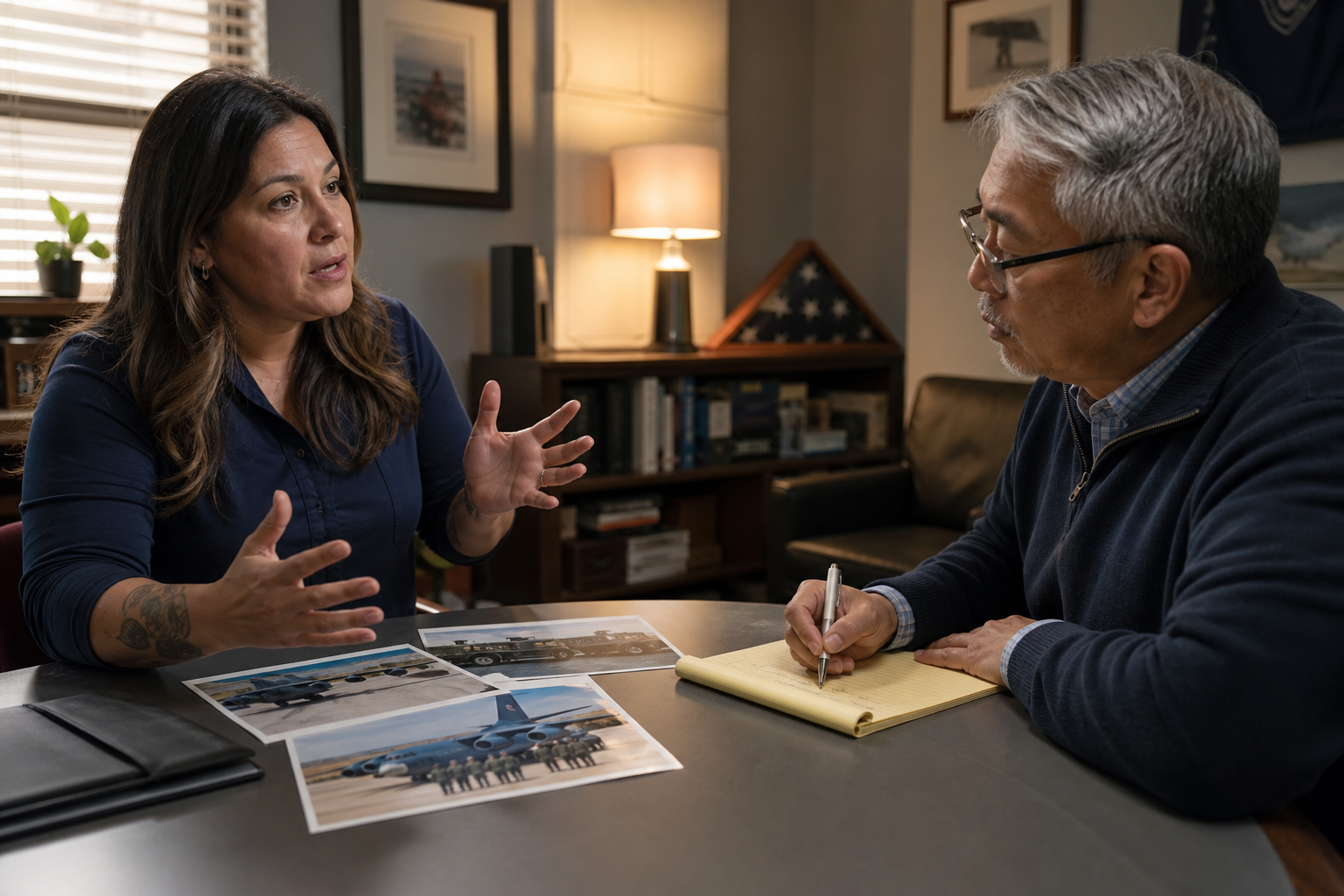
Facts-found claims are won on evidence development. Talk to us before filing so the record is assembled in the right order.
Evidence to gather
What belongs in the file before you file
Assignment orders and personnel records establishing your dates at the installation.
Base housing records if you or your family lived on the installation.
EPA Superfund site documents for the installation, including the Remedial Investigation and the Record of Decision.
Service Installation Restoration Program reports naming the contaminant and the affected wells.
State environmental agency sampling results, which often predate the federal record.
A nexus opinion written around the specific contaminant and your specific diagnosis.
Buddy statements from others assigned to the same housing area in the same years.
What you will be told, and the answer
The shortcuts to expect
““There is no presumption for that base.””
Correct, and irrelevant. A presumption is a shortcut, not a requirement. Direct service connection has always been available and it is decided on evidence. The absence of a presumption is not a legal bar and should never be reported to you as one.
““We have no record of contaminated water there.””
VA does not maintain environmental records — EPA and the service branches do. The duty to assist obliges VA to help develop the record, and a public Superfund file naming the contaminant is evidence that must be considered once it is in your claim.
““We cannot say how much you were exposed to.””
Dose reconstruction is not the legal standard for direct service connection. The standard is whether it is at least as likely as not that service caused the condition. Equal evidence goes to the veteran under the benefit of the doubt rule.
Why representation changes the odds
Register with us on your contaminated base water — beyond lejeune claim
Tell an accredited agent what happened and we will review your situation first, then tell you honestly whether we can help. One form, one click, and a real person reads it.
Knowing which environmental record to request, and how to read a Record of Decision, converts an “unprovable” exposure into documented fact.
The nexus opinion has to name the contaminant and the mechanism. A generic letter gets a generic denial.
These claims are frequently denied at the first decision and won on appeal. Building for the appeal from day one saves years.
We match assignment dates against sampling dates — the overlap is the entire case and it is rarely obvious from the paperwork.
VA-Accredited Claims Agent #45147
Albert Thombs
An accredited agent personally reviews every request — we’ll reach out within 48 hours.
Registering opens the secure sign-up form of the advocate who is next to take a new file, in a new tab. If you would rather have someone look at your situation before you decide anything, ask for the free case review instead.
Office hours: Mon–Fri, 11am–6pm Pacific
Keep building the case
The era, the job, and the medical evidence that go with this exposure
Direct service connection: 38 CFR 3.303. Benefit of the doubt: 38 CFR 3.102. Environmental documentation: EPA Superfund site files and Department of Defense Installation Restoration Program records. General information for education, not legal or medical advice.
Both options are free · No obligation
Two ways to work with us — both free
Talking to a VA-accredited claims agent costs nothing either way. Pick the one that fits: get answers to your questions, or register to hire us to take on your claim.
Free information — just ask
You can ask Albert, our AI claims assistant, anything about exposure, evidence, or the claims process — he answers instantly. If you would rather have a direct, personal answer, send your question below and an accredited agent will come back to you. No cost, no obligation.
Or send your question
Ready to hire us? Register with us
For veterans who have decided they want us on their claim. Registering is free too, and it takes the registration form plus a signed VA Form 21-22a.
Until VA Form 21-22a is signed we cannot accept your claim, access your VA file, or do any work on your behalf. That is federal law, not firm policy.
What happens after you register
You register. This simply starts the conversation — you are not our client yet, and you owe us nothing.
You sign and return VA Form 21-22a. It appoints us as your accredited representative and gives us access to your VA file.
Once we have your signed 21-22a and access to your case, we verify everything is in order.
We review your case in full and conduct your interview with an accredited agent.
Only then do YOU decide whether to move forward with us. If you choose not to, we will not proceed on your behalf — no pressure, no obligation.