

Toxic ExposureEvidence Center
Authoritative source directory

Know what each source proves—and what it does not.

Use the strongest source for the question: peer-reviewed medicine for associations, toxicology for route and dose, environmental records for site pathways, and 38 C.F.R. Part 3 for entitlement rules.

Authoritative source directory of medical, scientific, and regulatory research
Researcher searching a peer-reviewed medical literature database on a monitor

Medical research

PubMed / National Library of Medicine

Find peer-reviewed systematic reviews, cohorts, case-control studies, and clinical research.

What it can establish for your claim

Use it to pull the specific study — cohort, case-control, or systematic review — showing your exposure is biologically capable of causing your diagnosis, then hand that citation to a clinician for the nexus opinion.

Use carefully: PubMed indexing does not make every study equally strong. Evaluate design, population, exposure measure, and applicability.

Expert consensus committee reviewing veteran health evidence around a conference table

Consensus evidence

National Academies Veterans Health

Independent consensus reviews on Agent Orange, Gulf War health, airborne hazards, PFAS, and other veteran issues.

What it can establish for your claim

Establishes the strength-of-evidence category (sufficient, limited/suggestive, inadequate) that VA and the courts already treat as authoritative — powerful for rebutting a flat “there is no evidence” statement.

Use carefully: Population evidence and policy review do not decide an individual claim.
Toxicologist working with substance samples and reference profiles in a laboratory

Toxicology

ATSDR Toxicological Profiles

Substance-specific effects by route and duration, dose-response evidence, and site public-health assessments.

What it can establish for your claim

Documents, substance by substance, which health effects a chemical is known to cause and by which route (inhalation, skin, ingestion) — the factual backbone for a route-specific exposure argument.

Use carefully: A site assessment may find contamination without a completed personal exposure pathway.
Oncologist reviewing a pathology report and imaging with a veteran patient

Cancer evidence

IARC Monographs

Determine whether an agent or exposure circumstance is carcinogenic or potentially carcinogenic.

What it can establish for your claim

Establishes whether an agent is a known, probable, or possible human carcinogen — enough to defeat a categorical “this chemical does not cause cancer” statement.

Use carefully: Hazard classification does not establish a veteran’s dose or individual nexus.
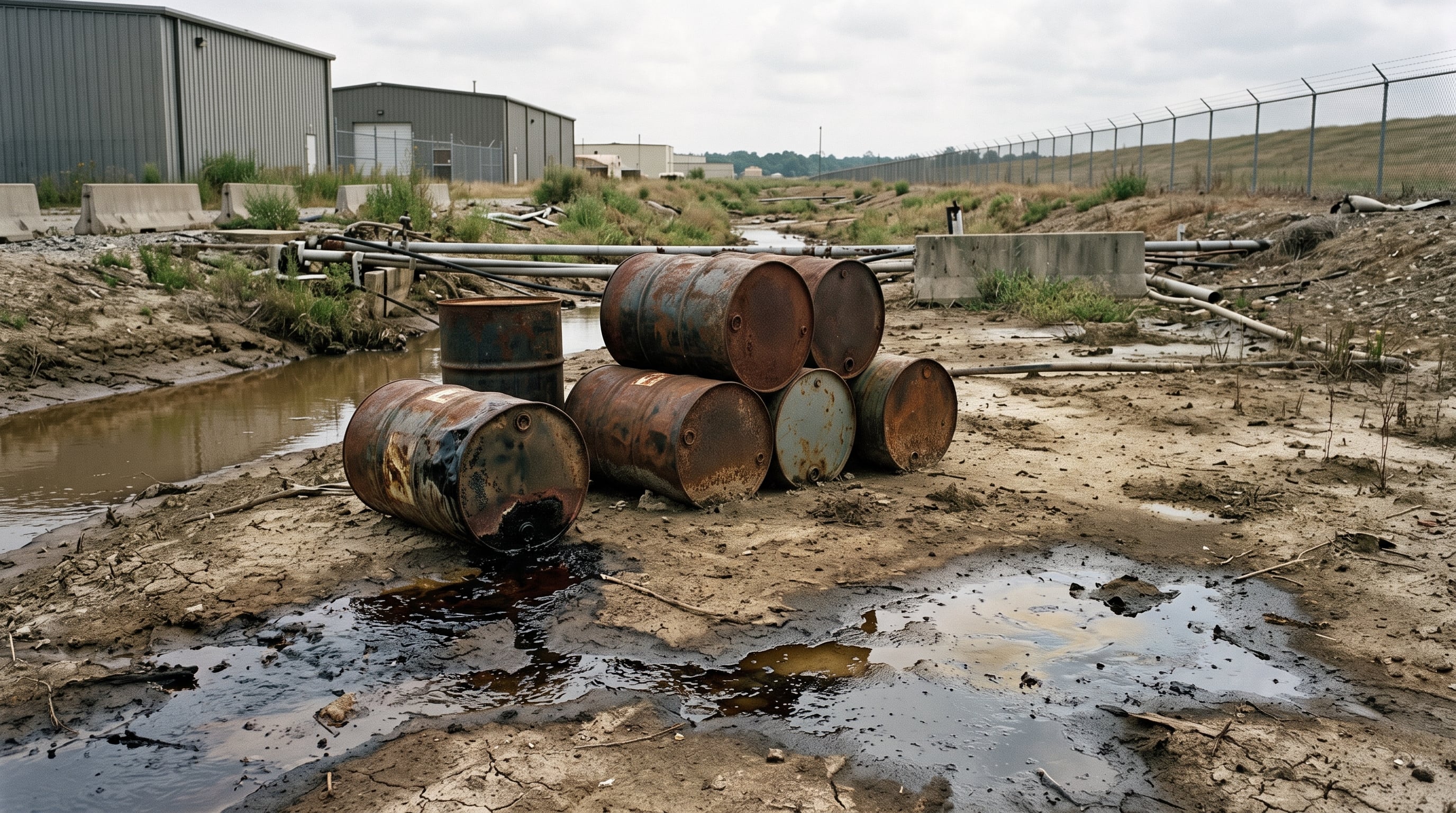
Groundwater monitoring well and cleanup signage at a contaminated federal facility

Installation records

EPA Federal Facility Superfund

Find cleanup status, Records of Decision, groundwater restrictions, and federal-facility documents.

What it can establish for your claim

Confirms documented contamination, cleanup orders, and use restrictions at a named federal facility — objective proof the hazard existed where you served.

Use carefully: Cleanup status proves environmental concern, not personal exposure.
Veteran in a telehealth appointment with a VA environmental health clinician

Clinical evaluation

VET-HOME

Telehealth military environmental exposure evaluation for enrolled veterans.

What it can establish for your claim

Puts a VA clinical environmental-exposure evaluation into your medical record — contemporaneous evidence a later examiner has to weigh.

Use carefully: Clinical evaluation does not automatically establish compensation exposure or nexus.
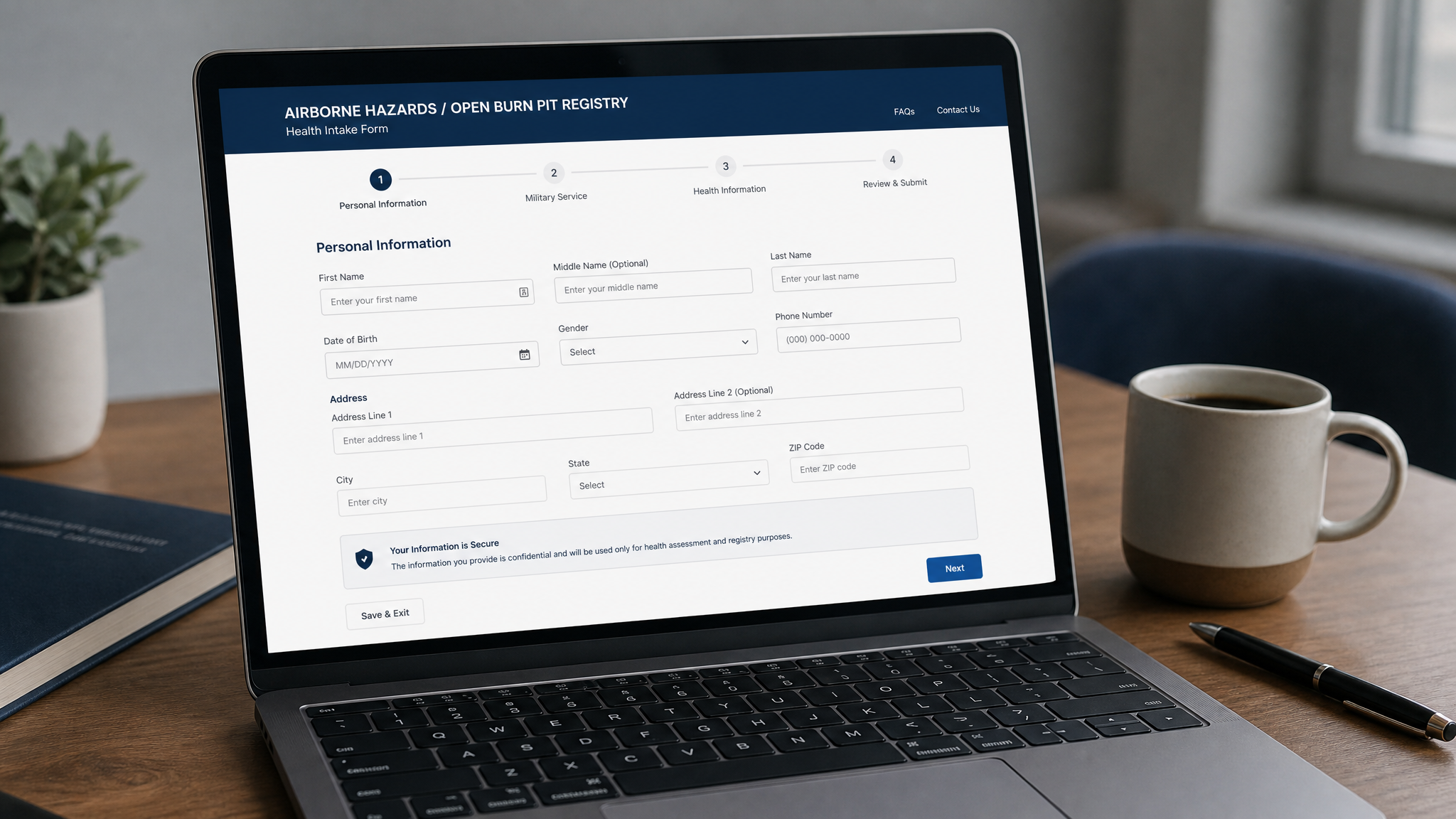
Veteran completing a VA environmental exposure registry questionnaire

Registries

VA Environmental Health Registries

Surveillance, outreach, health evaluation, and research programs for defined exposures.

What it can establish for your claim

Creates a dated, VA-held record that you reported a specific exposure and related symptoms — useful corroboration of onset and consistency.

Use carefully: Registry participation does not confirm exposure or grant compensation.
Exposure record database screen showing service dates and duty locations

Exposure records

ILER Official FAQ

Official purpose, access, source-data, and limitations of the Individual Longitudinal Exposure Record.

What it can establish for your claim

Explains, in plain agency language, what the ILER is, which data feeds it, and where it has documented gaps — so a "the ILER is negative" denial can be met with the known limitations of the record itself.

Use carefully: Actual ILER access is restricted to authorized channels; public screeners are not ILER.
Environmental restoration work underway on a military installation

Installation records

Defense Environmental Restoration Program

Installation restoration, munitions response, BRAC, and cleanup program information.

What it can establish for your claim

Shows a specific installation was in the environmental-restoration or munitions-response program — corroboration that a recognized hazard was present on that base.

Use carefully: Program inclusion does not prove personal contact.
Bound volumes of federal regulations open to the service connection rules

Law and regulation

38 C.F.R. Part 3

The governing entitlement rules for direct, presumptive, secondary, and aggravation theories.

What it can establish for your claim

The exact regulatory text for direct, presumptive, secondary, and aggravation service connection — quote it directly to hold an adjudicator to the correct legal standard.

Use carefully: Part 3 addresses service connection; rating questions generally arise after entitlement.

Not sure which source proves your claim?

You do not have to build the evidence file alone. Tell an accredited agent what you are trying to prove and they will point to the right records — or handle it for you.

An accredited agent personally reviews every request — we’ll reach out within 48 hours.

VA-Accredited Claims Agent #45147

Think a denial or low rating was wrong?

Tell an accredited agent what happened. We review your situation first and tell you honestly whether we can help — before anyone signs anything.

An accredited agent personally reviews every request — we’ll reach out within 48 hours.

Call 702-992-4883