
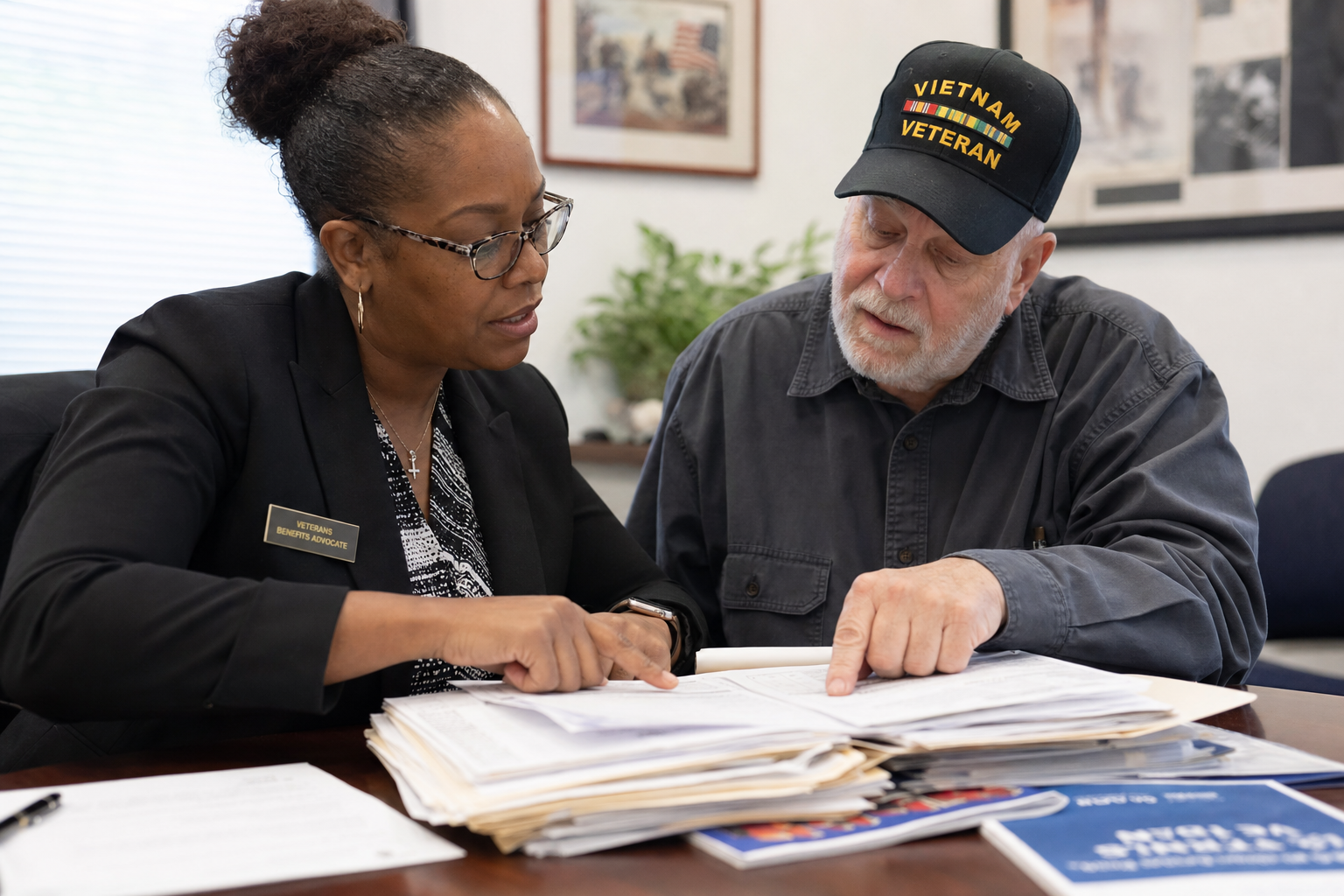
Evidence-first strategy
Every claim is built on a documented paper trail — service records, nexus letters, and buddy statements — before a single form is filed.

VA-Accredited Claims Agent
Accredited VA claims agent — helping veterans navigate toxic exposure claims with evidence-first strategy and regulatory precision.
VA OGC accredited
Zero upfront cost
PACT Act specialist
38 CFR regulatory focus
No 21-22a = no advice
Why families trust this help
There is a lot of noise out there – unaccredited "consultants" who charge illegal fees and disappear. Here is the difference, in facts you can verify yourself.

Albert L. Thombs Jr.
VA Accredited Claims Agent #45147
U.S. Army veteran, 100% service-connected disabled, and founder of The VA Disability Advocate, LLC. He spent a decade fighting the VA for his own benefits – now he and a team of 10 advocates do it for veterans and families nationwide.
20+ years helping veterans
Albert L. Thombs Jr. is a VA Accredited Claims Agent, accreditation #45147 – a number you can look up yourself in the VA Office of General Counsel database. Accreditation is not a marketing badge; it is federal authorization to represent veterans.
Accredited agents answer to the VA General Counsel and are bound by 38 CFR standards of conduct. That is a level of oversight the "claim sharks" who cold-call veterans simply do not have.
By law, no one may charge you to file an initial claim, and we never do. Registering costs nothing. Fees are recovery only: 20% of past-due benefits, never hourly, nothing on a first-time claim, under 38 C.F.R. § 14.636. Every fee is disclosed in writing first.
Every calculator, worksheet, and benefit guide on this site is free and open – no account, no email harvesting, no paywall. The information belongs to you because you earned it.
Or call the office directly: 702-992-4883
Every claim is built on a documented paper trail — service records, nexus letters, and buddy statements — before a single form is filed.
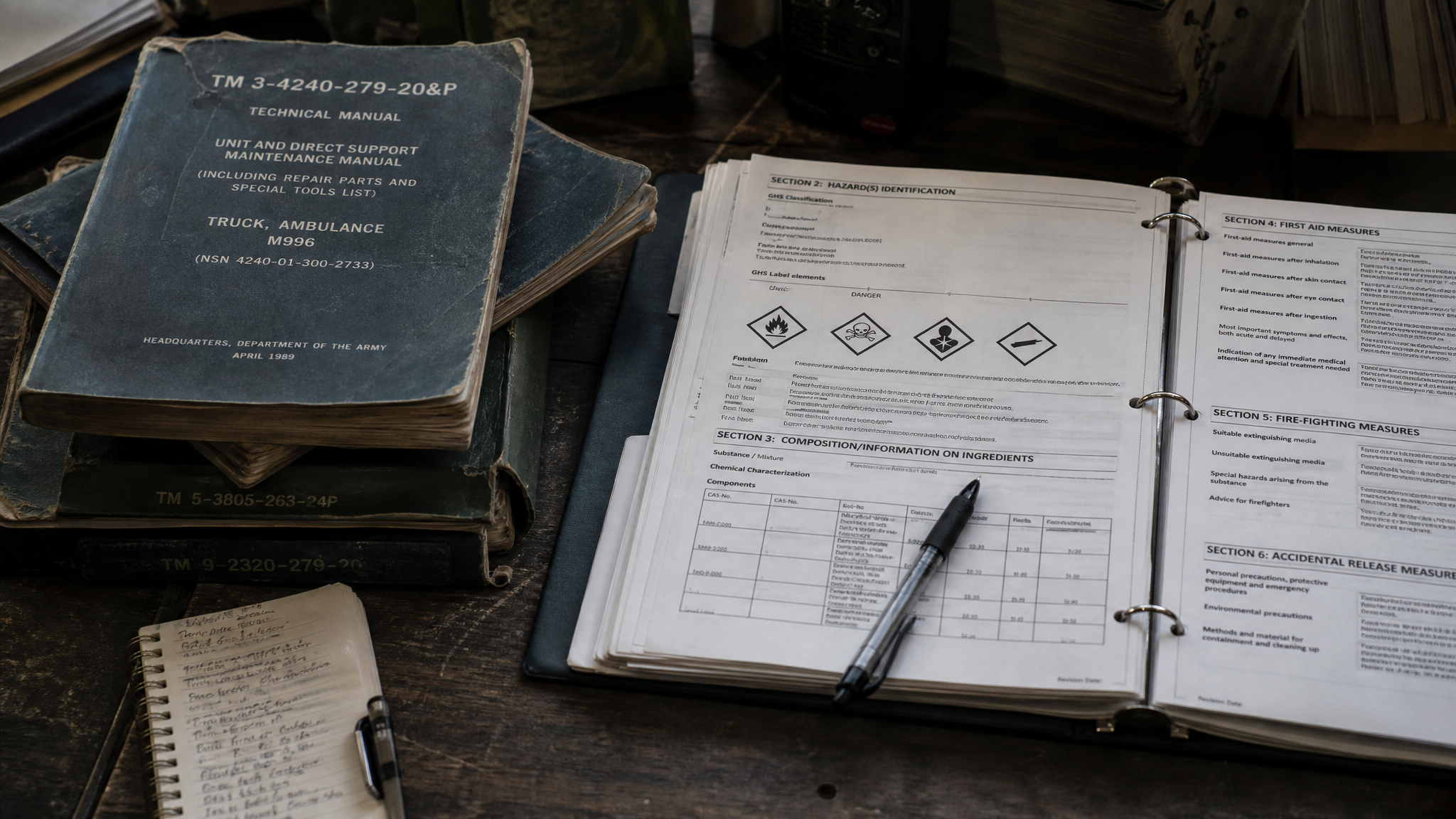
Every decision references 38 CFR directly — no guesswork, no assumptions. If the regulation says it, we cite it.

PACT Act, burn pits, AFFF/PFAS, Agent Orange, radiation — I specialize in the cases most agents won’t touch.
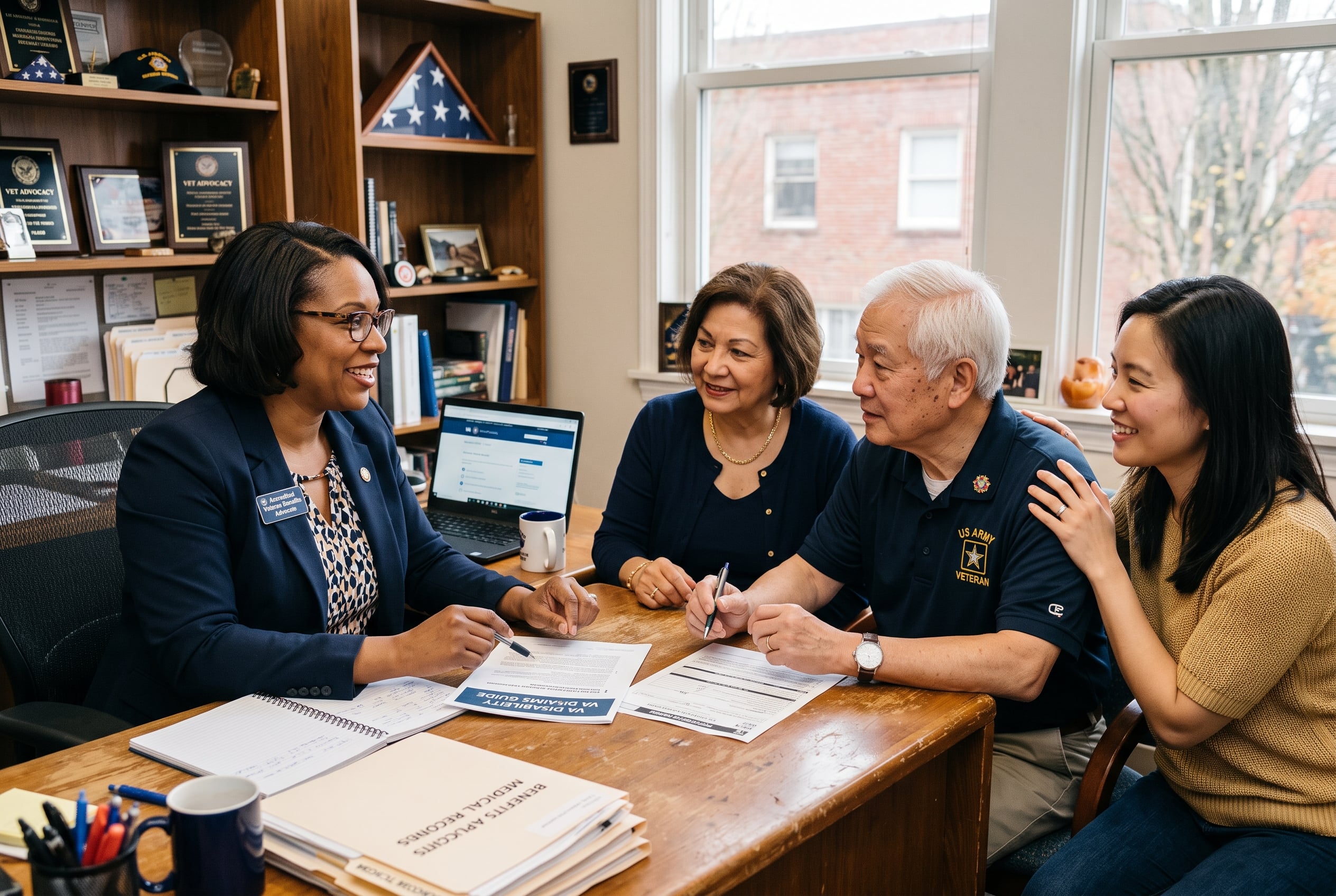
You’ll understand every step. I translate VA bureaucracy into plain language because an informed veteran is a more powerful claimant.
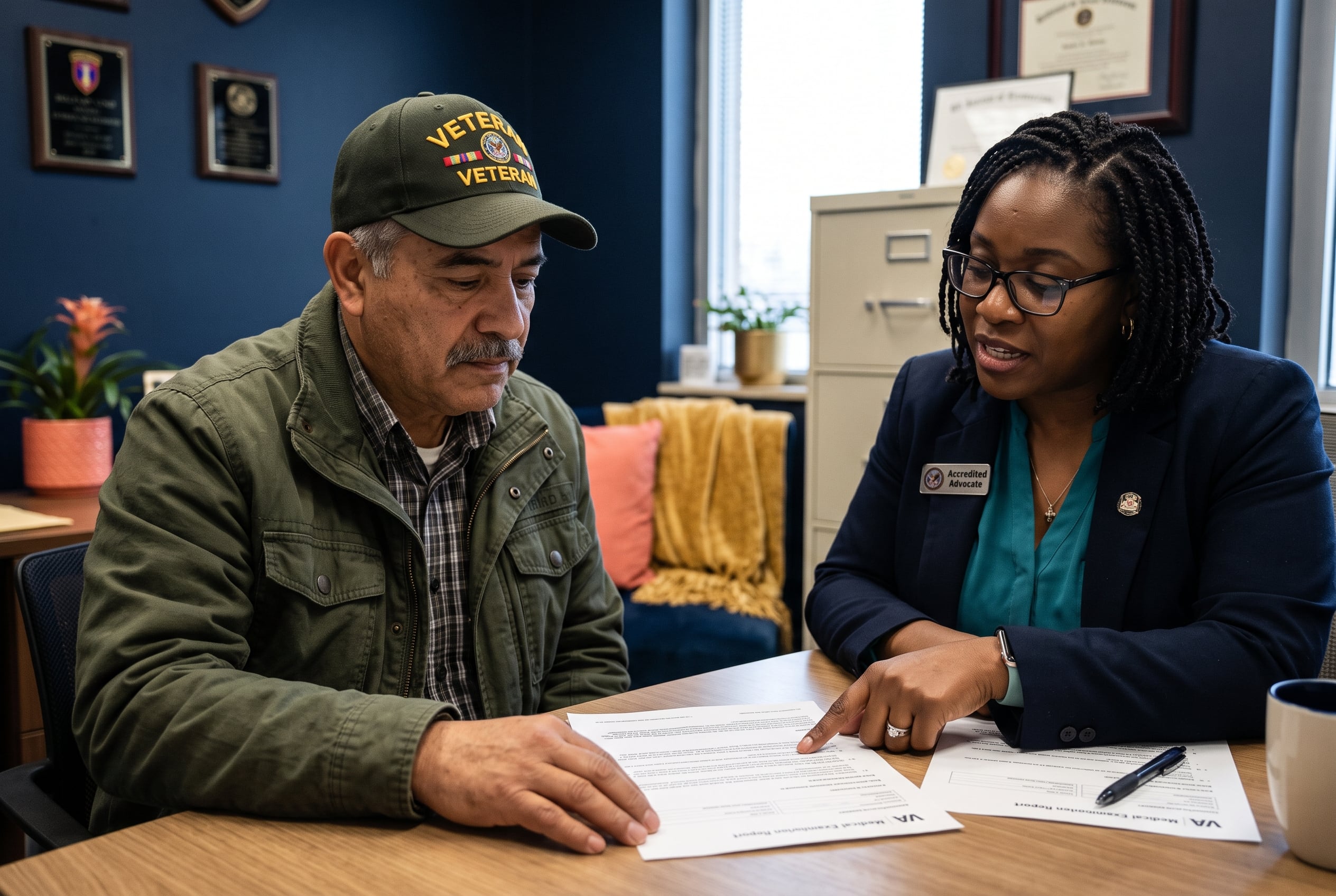
A C&P exam that states a conclusion without the data behind it is not evidence VA can safely lean on. When a report skips the reasoning, I say so in writing and cite the case law that requires better.

I became a VA-accredited claims agent because I watched too many veterans — people who gave years of their lives to this country — get denied not because their claims were invalid, but because nobody walked them through the evidence requirements. The VA system is not designed to be user-friendly. Regulations, nexus requirements, presumptive conditions, rating hierarchies — it takes time to learn and even more time to apply correctly.
My practice focuses exclusively on toxic exposure claims: burn pit presumptives under the PACT Act, Agent Orange and herbicide-linked conditions, AFFF/PFAS exposures at military installations, radiation-related diseases, and occupational chemical exposures. These are the most documentation-intensive claims in the VA system — and the ones where having an accredited agent in your corner makes the biggest measurable difference.
I work the regulatory framework directly. Every case I build traces back to statute and regulation:
My goal on every case is simple: give you the most accurate picture of where you stand, what evidence you need, and what realistic outcomes look like — no false promises, no upselling, no guesswork.
30-minute call to review your DD-214, service history, current ratings, and exposure timeline — no commitment required.
Once you sign the POA, we’re official. I can access your VA file, communicate with the VA on your behalf, and build your case.
Service records, medical records, buddy statements, nexus letters, and exposure documentation — we build the full paper trail.
Every condition mapped to the correct 38 CFR pathway — presumptive, direct service connection, or secondary connection.
Forms prepared, submitted, and tracked. I follow the claim from filing through decision and review the rating for accuracy.
If the rating is wrong or incomplete, we file a Supplemental Claim or Higher-Level Review with the supporting evidence to correct it.
The left column is what my accreditation authorizes me to do for a veteran. The right column is what can only begin once a signed VA Form 21-22a is on file with the VA.
Represent you before the VA at all levels
Review and analyze your C-file and rating decisions
Prepare and file VA claims and appeals
Advise on regulatory pathways and presumptives
Coordinate nexus and medical opinions
File Supplemental Claims and Higher-Level Reviews
Provide educational guidance on the VA system
Specific claims advice for your case
Formal representation before the VA
Access to your VA file or eFolder
Communicating with the VA on your behalf
Preparing and submitting forms under your name
Reviewing confidential VA records
Providing formal written case analysis
Important — the 21-22a boundary
VA regulations under 38 CFR §§ 14.629 and 14.631 define the boundaries of accredited agent representation. Until a signed VA Form 21-22a is on file with the VA, I cannot provide case-specific advice, access your VA records, or represent you in any formal capacity. This isn’t a preference — it’s a federal regulatory requirement that protects both of us.
General education about your situation — no advice, no representation.
VA Form 21-22a filed digitally — takes minutes, activates full representation.
The VA records the appointment in your file. Processing time varies — the representation starts once it is on file.
I access your file, review your history, and build the claim strategy.
Frequently asked questions
A VA-accredited claims agent (like myself) is federally accredited under 38 CFR § 14.629 to represent veterans before the VA for a fee. VSOs (Veterans Service Organizations like DAV or VFW) are free but often have high caseloads and limited bandwidth. The key difference: a claims agent dedicates exclusive, personal attention to your case and is federally accountable for the representation they provide.
Registering costs nothing. Under federal law (38 C.F.R. § 14.636), an accredited agent may charge a fee only after a favorable decision is issued, and only on the past-due benefits that result from it. Fees are recovery only: 20% of past-due benefits, never hourly, nothing on a first-time claim.
Not usually. Most denials come down to an evidence gap — missing nexus documentation, incomplete service records, or an improperly rated condition. A denial starts the clock on appeal options: Supplemental Claim (new and relevant evidence), Higher-Level Review (legal or factual error), or the Board of Veterans’ Appeals. A case review will tell us exactly what went wrong and what the realistic path forward looks like.
Yes — this is one of my primary focus areas. The PACT Act (Public Law 117-168) created presumptive service connection for 23 burn pit-related conditions. Covered service is on or after August 2, 1990 in Bahrain, Iraq, Kuwait, Oman, Qatar, Saudi Arabia, Somalia, or the United Arab Emirates; or on or after September 11, 2001 in Afghanistan, Djibouti, Egypt, Jordan, Lebanon, Syria, Uzbekistan, or Yemen — including the airspace above those locations. If you served in a covered location during the covered period, you may qualify without proving a direct nexus — we just need the qualifying service period and a confirmed diagnosis.
A nexus letter is a medical opinion written by a qualified physician that connects your current diagnosis to your military service. For non-presumptive conditions — meaning conditions the VA doesn’t automatically accept as service-connected — a strong nexus letter is often the single most important piece of evidence in your claim. I work with medical professionals to develop these when needed.
VA processing times vary. Initial claims typically take 3–6 months. Appeals can take longer depending on the lane chosen (a Supplemental Claim is fastest; the Board is slowest). I set realistic expectations on every case — no false timelines, no promises I can’t keep. My job is to build the strongest possible claim, not to rush a weak one.
Absolutely. Secondary service connection under 38 CFR § 3.310 allows you to claim a new condition that is caused or aggravated by an already service-connected disability. For example, a service-connected knee condition that caused a gait change that then caused a hip condition — the hip can be claimed as secondary. Many veterans are missing substantial rating points from unclaimed secondary conditions.
No cost. No commitment. Just an honest review of where you stand.
Free review request
We focus on veterans the VA has already denied or under-rated. We do not take brand-new (initial) claims, and we do not take every case.
We review your situation first, then tell you honestly whether we can help before anyone signs anything.
Unit + every location
Every job actually performed
Hazards, routes, frequency, and protection
Current diagnosis and examiner language
Presumptive, direct, secondary, or aggravation theory
Agent #45147 — accreditation is the anti-scam signal.
20+ years of experience
Complex exposure records need disciplined fact development, theory selection, and medical-opinion review.
A team of accredited advocates
Support for evidence organization, authorized record review, TERA development, and claim strategy.
Both options are free · No obligation
Talking to a VA-accredited claims agent costs nothing either way. Pick the one that fits: get answers to your questions, or register to hire us to take on your claim.

Free information — just ask
You can ask Albert, our AI claims assistant, anything about exposure, evidence, or the claims process — he answers instantly. If you would rather have a direct, personal answer, send your question below and an accredited agent will come back to you. No cost, no obligation.

Ready to hire us? Register with us
For veterans who have decided they want us on their claim. Registering is free too, and it takes the registration form plus a signed VA Form 21-22a.
Until VA Form 21-22a is signed we cannot accept your claim, access your VA file, or do any work on your behalf. That is federal law, not firm policy.
What happens after you register
An accredited agent personally reviews every request — we’ll reach out within 48 hours.