
Wartime Era
Five generations, five different chemistry sets, and one shared layer of law that most veterans are never told about. Start with the theater, then build the personal pathway: unit, every location, actual duties, and combined exposures.
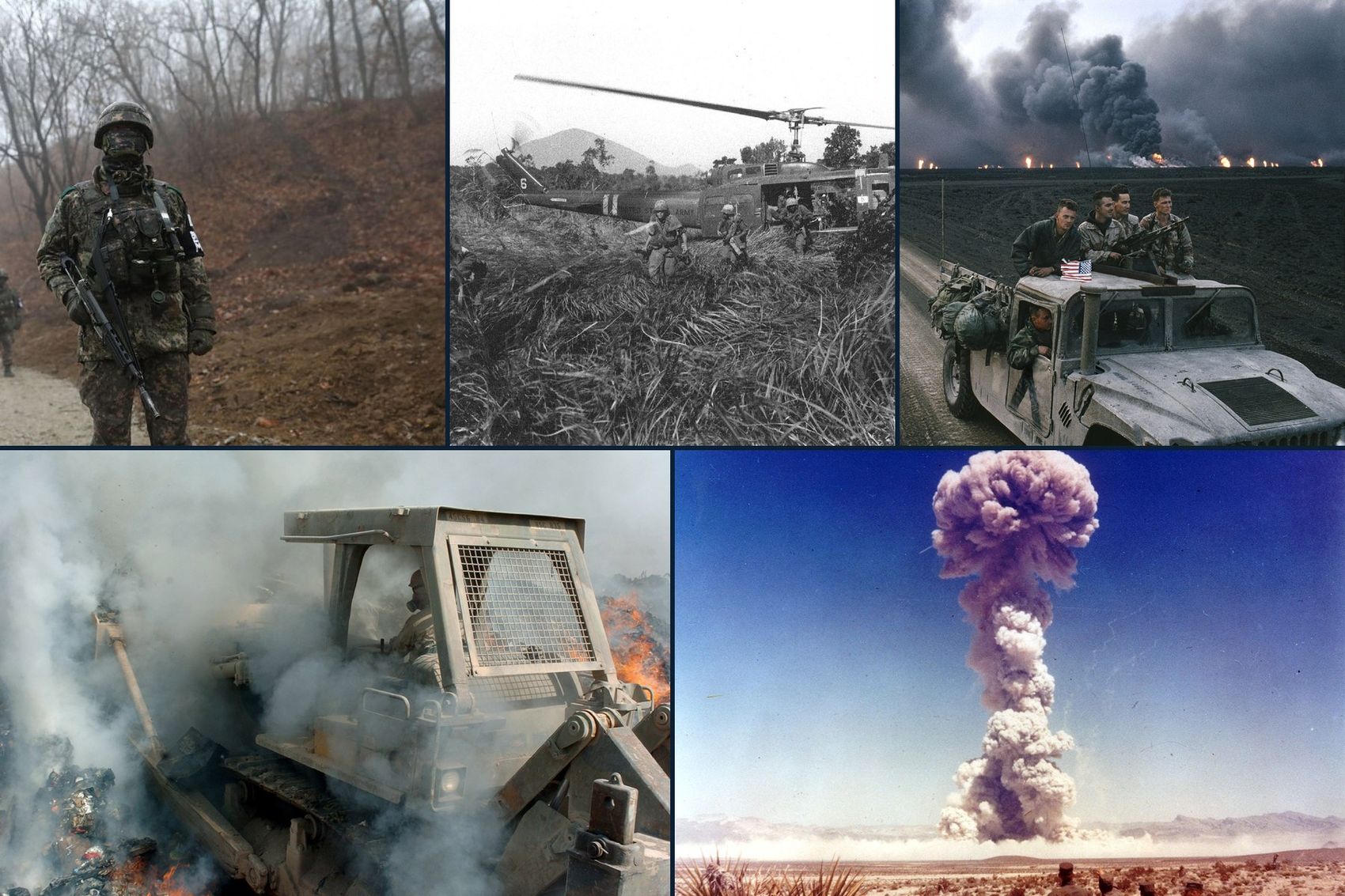
Every wartime era handed its veterans a different chemistry set. Korea handed men tactical herbicides along a fence line and unvented kerosene heaters inside frozen huts. Vietnam handed them dioxin, shipboard asbestos, and aviation fuel. The 1991 Gulf War handed them more than 600 burning oil wells, unrecorded pesticide application, and nerve-agent pretreatment tablets. Post-9/11 deployments handed them ten-acre burn pits, hexavalent chromium, and fine desert particulate. The Cold War handed them nuclear test participation, chemical-agent volunteer programs, and contaminated installations inside the United States. Those are not interchangeable claims, and VA does not decide them under the same regulations.
But the eras share far more than most veterans are told. The PACT Act presumptions are the clearest shared layer: the same 23 burn-pit conditions cover a Desert Storm veteran and an Afghanistan veteran, and the same herbicide list covers a Vietnam veteran and a Korean DMZ veteran inside his window. Asbestos, industrial solvents, leaded fuel, PFAS firefighting foam, and contaminated base water ran through all five eras. So the working method is identical everywhere: find the presumption your service actually fits, and if there is not one, build the exposure on the facts — unit, every location, and every duty you actually performed. Each file below spells out what is unique to that generation, what it shares with the others, what those exposures can cause, what the rating criteria actually say, who qualifies, and which VA registry exam applies.
The five eras side by side
Before you open a file, find your row. The left column is the generation and the trap that comes with it. The middle column is what that generation actually breathed. The right two columns are the part nobody explains: which presumptive door the law opens for you, and what the route looks like when that door is closed. A closed door is not a lost claim — it is a different kind of work.
| Era, years, and the trap | What that generation breathed | The presumptive door | If that door is closed |
|---|---|---|---|
| Korean War & DMZ Exposures1950s–1970sTrap · A Korea-era designation alone does not prove herbicide exposure. Dates, unit, worksite, and actual duties still matter. |
| Korean DMZ herbicide presumption under 38 CFR 3.307 and 3.309, for qualifying service in or near the DMZ from September 1, 1967 through August 31, 1971. | Build direct exposure on the facts: unit histories, travel orders, maps, performance evaluations, and witness statements. |
| Vietnam War Exposures1962–1975 and expanded locationsTrap · “Vietnam-era veteran” is not itself proof of herbicide exposure. Each presumption has specific service facts. |
| Herbicide presumption once the qualifying location, the date, and a listed diagnosis are all confirmed. | Conditions that are not on the list, and occupational hazards such as shipboard asbestos, develop as direct service connection under 38 CFR 3.303. |
| Gulf War Exposures1990–1991 and Southwest Asia serviceTrap · Reported estimates place Gulf War illness at about 25%–30% of 1990–1991 Gulf War veterans, but definitions and study methods vary. |
| Gulf War presumptive pathways under 38 CFR 3.317 — chronic fatigue syndrome, fibromyalgia, functional gastrointestinal disorders, and qualifying undiagnosed illness. | Diagnosed diseases are analyzed separately, and each direct exposure needs its own nexus. |
| GWOT / Post-9/11 Exposures2001–present qualifying serviceTrap · A presumptive exposure does not make every diagnosis presumptive. Match the exact disease to the current list. |
| PACT Act presumption once a listed diagnosis and a qualifying location are confirmed. | Non-presumptive conditions still need a direct or other Part 3 theory, and may trigger a 38 USC 1168 TERA opinion. |
| Cold War Exposures1945–1991Trap · “Radiation” is not one undifferentiated exposure. Identify the source, activity, dose evidence, disease, and latency. |
| Radiation pathways tested in order: 38 CFR 3.309(d), then 3.311, then direct service connection. | Project 112 / SHAD carries no general disease presumption and is evaluated case by case. |
The eras share more than the table can show. The same PACT Act burn-pit list reaches a Desert Storm veteran and an Afghanistan veteran. The same herbicide list reaches a Vietnam veteran and a Korean DMZ veteran inside his window. Asbestos, solvents, leaded fuel, firefighting foam, and contaminated base water ran through all five. Read every row that touches your service, not only the one with your war on it.
The five era files
Start with the theater, then build the personal pathway
Each file below is a full evidence read on one generation: what that era was uniquely exposed to, what it shares with the other four, what those exposures can cause, what the rating criteria actually say, who qualifies, and which VA registry exam applies. The tag lanes on each row tell you at a glance whether your exposure has its own presumptive pathway or whether it has to be built on the facts of your service.
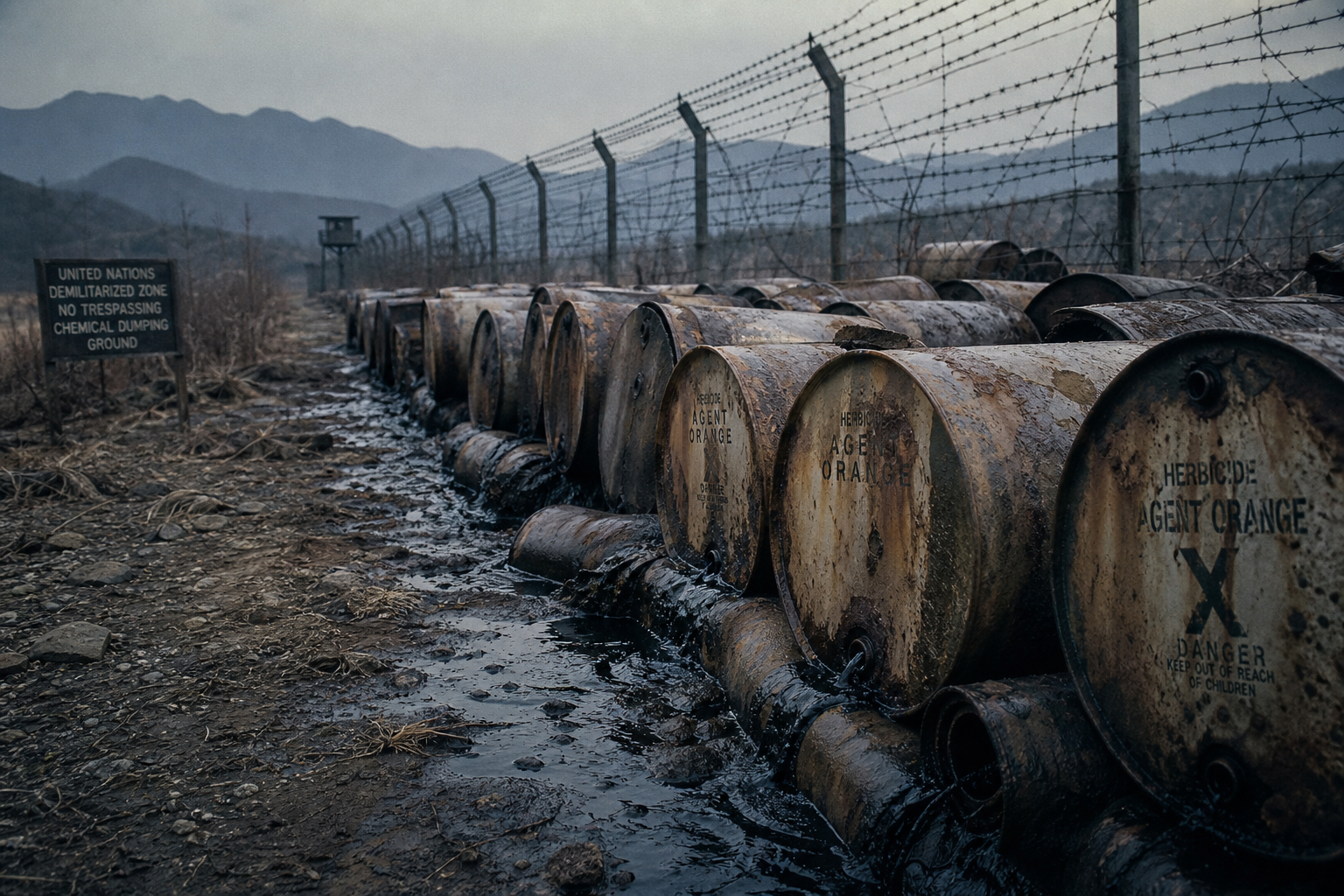
Korean War & DMZ Exposures
Korea claims can involve tactical herbicides near the DMZ, radiation, fuels, pesticides, asbestos, and industrial chemicals. Qualifying DMZ service has a defined presumptive window; service outside it may still support direct, facts-found exposure.
Korea’s veterans are fighting a records problem first and a medical argument second. Most Army personnel files from this period burned in the 1973 St. Louis fire, and the herbicide presumption VA offers here is the narrowest in the law — one fence line and a four-year window. Everything outside that window has to be proven from unit histories, duty descriptions, and a clinician willing to put the exposure in writing.
Unique to this era
Shared with other eras

Vietnam War Exposures
Vietnam-era analysis includes Agent Orange and other tactical herbicides, the TCDD dioxin contaminant, shipboard asbestos, fuels, solvents, lead, coatings, and combustion products.
Vietnam veterans have the widest presumption in the law and still get denied — usually over where the ship anchored, which base in Thailand, or a diagnosis that is one word away from the list. The other half of this era is under-rating: prostate cancer paid at 100 percent, reduced six months after treatment, then rated near zero on residuals no examiner ever measured.
Unique to this era
Shared with other eras
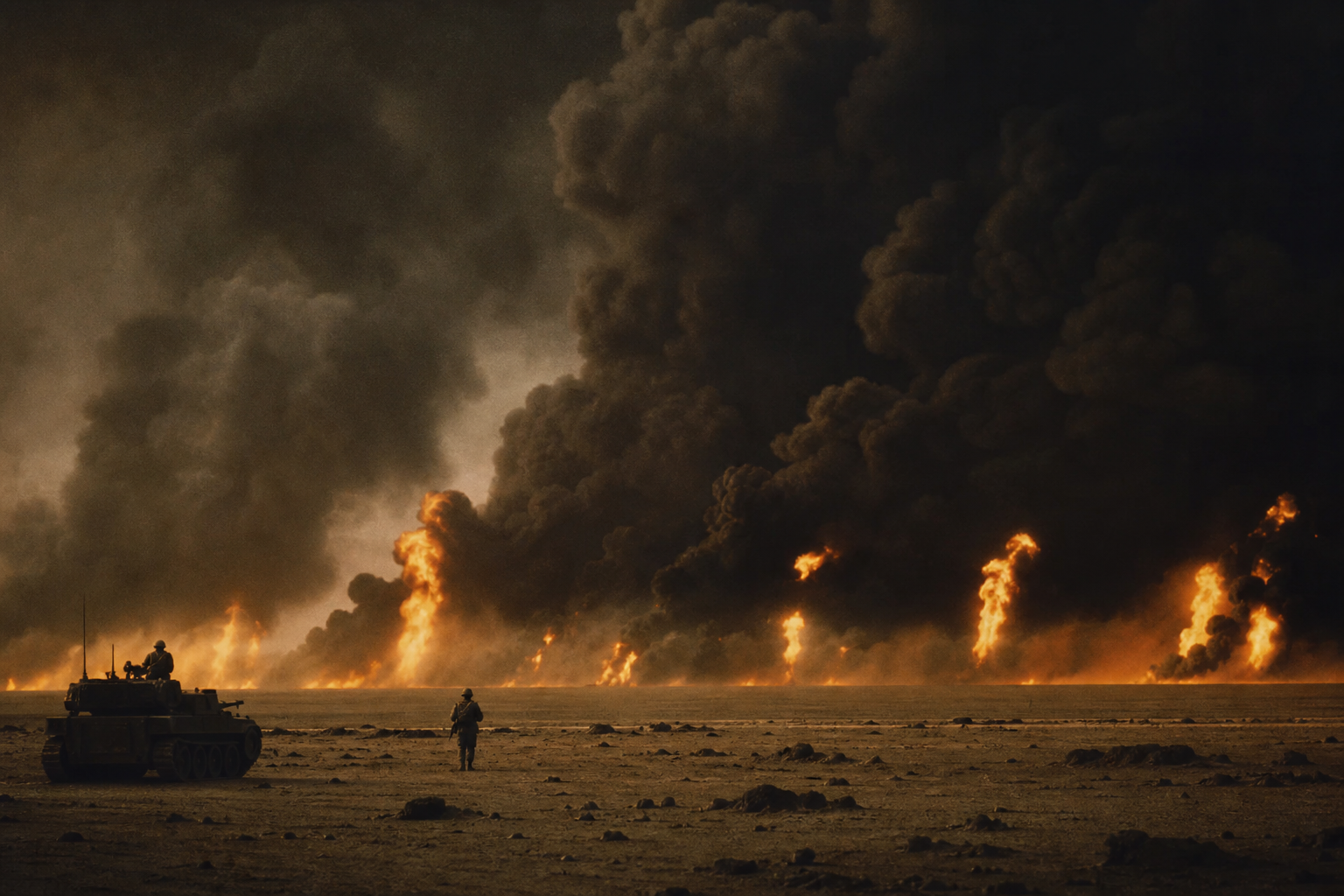
Gulf War Exposures
The Gulf War was a multi-exposure environment: more than 600 burning oil wells, pesticides, pyridostigmine bromide pills, Khamisiyah nerve-agent concerns, depleted uranium, sand, fuels, exhaust, vaccines, and environmental stressors.
Desert Storm veterans spent a decade being told nothing had happened to them. The undiagnosed-illness regulation written for this generation, 38 CFR § 3.317, is still one of the most powerful and least used tools in the law — and the PACT Act quietly added these veterans to the burn-pit presumptions most people associate only with Iraq and Afghanistan.
Unique to this era
Shared with other eras
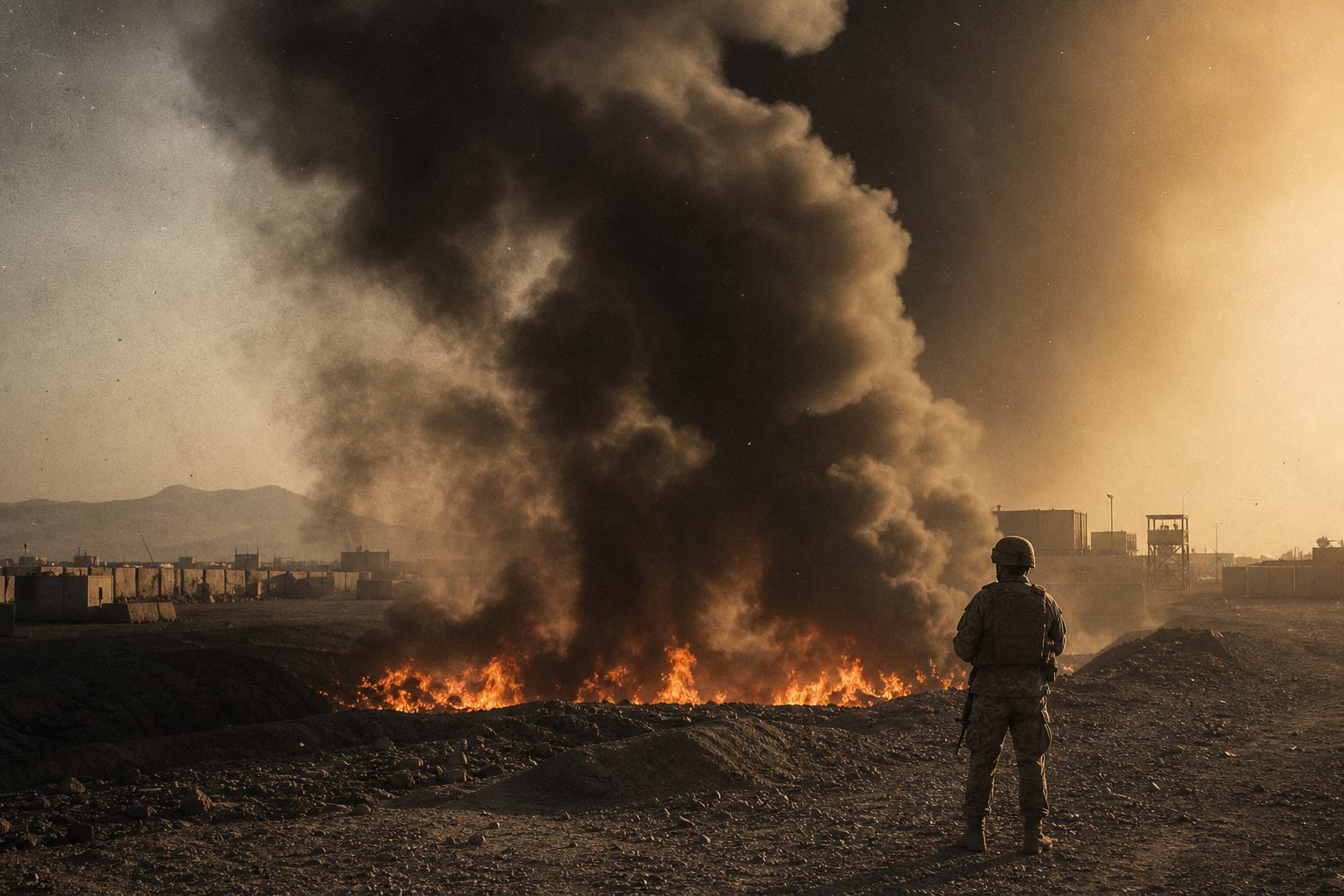
GWOT / Post-9/11 Exposures
Burn pits disposed of plastics, chemicals, paint, medical and human waste, and petroleum products—sometimes using JP-8. Veterans also encountered sand, dust, diesel exhaust, industrial pollution, sulfur-fire smoke, and task-specific hazards.
This is the generation the PACT Act was written for, and it is still the generation whose breathing claims get denied because the pulmonary function test was taken on a good day. The schedule says a daily inhaler alone meets the 30 percent criterion, and a verified history of attacks carries an asthma claim when the examination is quiet. Almost no one is told either sentence.
Unique to this era
Shared with other eras
Cold War Exposures
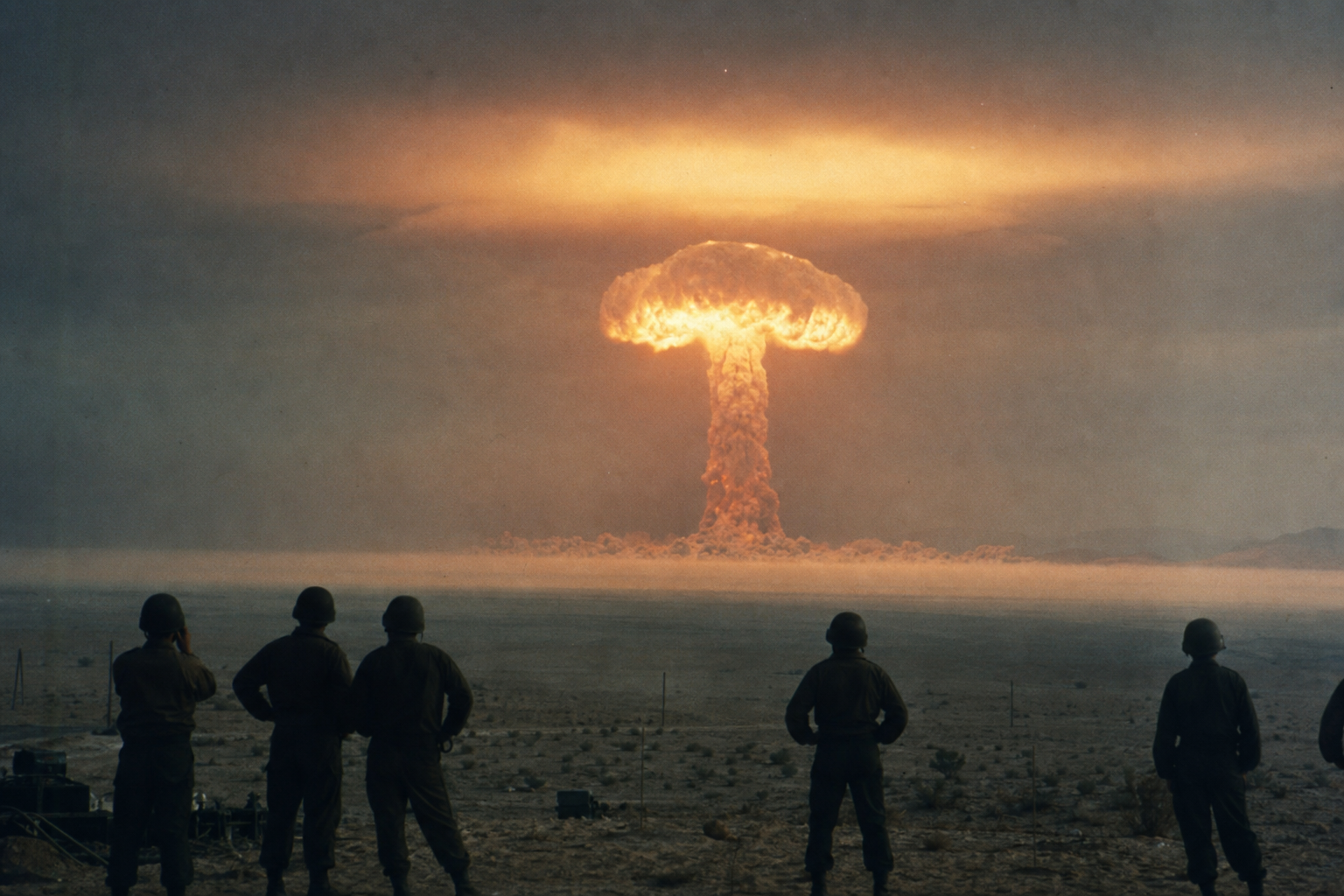
Cold War claims can involve atmospheric nuclear testing, Enewetak cleanup, Palomares or Thule response, Project 112/SHAD, chemical-agent training, calibration sources, fuels, solvents, and contaminated installations.
Cold War service produced very few combat records and an enormous amount of exposure. Nuclear test participation, chemical-agent volunteer programs, contaminated installations inside the United States, radar and fuel work — all of it sits under regulations that demand a dose estimate or a documented fact pattern instead of a list. These claims are won on paper, not on the diagnosis.
Unique to this era
Shared with other eras
Reserve and Guard service counts when the law says it counts. Exposure can occur during active duty, active duty for training, or inactive duty training; compensation still depends on the governing service and service-connection requirements.
Straight from the VA
The VA, era by era
The agency’s own breakdown of what the PACT Act changed for Vietnam, Gulf War and post-9/11 service, plus its explanation of Gulf War Illness.
How PACT Act affects Vietnam Veterans | Agent Orange, Radiation Exposure & New Locations | theSITREP
The Vietnam-era piece: Agent Orange, radiation, and the locations the law added.
Source: U.S. Department of Veterans Affairs
How PACT Act affects Gulf War & Iraq Veterans | Kuwait, Saudi Arabia, Somalia & More | theSITREP
Gulf War and Iraq service: the countries and dates the VA now recognizes.
Source: U.S. Department of Veterans Affairs
How PACT Act affects Post 9/11 Veterans | Afghanistan, Lebanon, Syria, Uzbekistan & More | theSITREP
Post-9/11 deployments and the burn-pit presumptions attached to them.
Source: U.S. Department of Veterans Affairs
What is Gulf War Illness | Symptoms of Gulf War Illness | Gulf War Syndrome & Disability | theSITREP
The VA on Gulf War Illness — the symptom pattern and how it is treated as a claim.
Source: U.S. Department of Veterans Affairs
These videos are published by the U.S. Department of Veterans Affairs and are embedded here unedited. They are the agency’s own explanation of its rules, not ours, and they are not legal or medical advice. If what the VA said on camera does not match what your decision letter says, that gap is worth a conversation.

Both options are free · No obligation
Not sure where you stand? Let us look at it.
Tell us what happened and what the VA said. An accredited agent reads it and tells you honestly what he sees — no cost, no obligation. When you are ready to have us fight it, register and we start.
An accredited agent personally reviews every request — we’ll reach out within 48 hours. Or call 702-992-4883.