
Medical evidence, taught the way a claim actually needs it.
A study does not win a claim by itself. Learn how each exposure reaches the body, how strong the evidence really is, and the exact question a qualified clinician should answer for your diagnosis.

Association, plausibility, and the strength-of-evidence scale
Start with the strongest sources — National Academies consensus assessments, ATSDR profiles, IARC or EPA determinations — then systematic reviews, cohorts, mechanistic studies, and case reports. For every source, record the population, route, outcome, magnitude, confounders, limitations, and whether it applies to you.
Sufficient. Strong, consistent evidence of an association.
Limited or suggestive. Evidence points to an association but is not conclusive.
Inadequate or insufficient. Not enough evidence — which also means it cannot be ruled out.

Choose your condition to start learning
Each file walks you through the exposure-to-diagnosis pathway, the strength of the evidence, the signs to document, and the peer-reviewed sources — plus the categorical statement examiners use that it is built to rebut.

Migraines & Chronic Headache
When an examiner writes that “medical science has not connected toxic exposure to migraine,” that is not a medical finding — it is a shortcut. Migraine is a neurological disorder, and several exposures common in service act directly on the nervous system: carbon monoxide is a recognized cause of headache, organophosphate pesticides repeatedly produce neurologic symptoms including headache, blast and TBI are a leading cause of post-traumatic migraine, and headache is one of the core Gulf War illness symptoms the VA already recognizes. Nobody claims science knows the single cause of all migraine — that is not the question. The question is whether a qualified clinician connected your specific exposure history to your specific headache pattern. A flat denial that skips that analysis has not done the job.
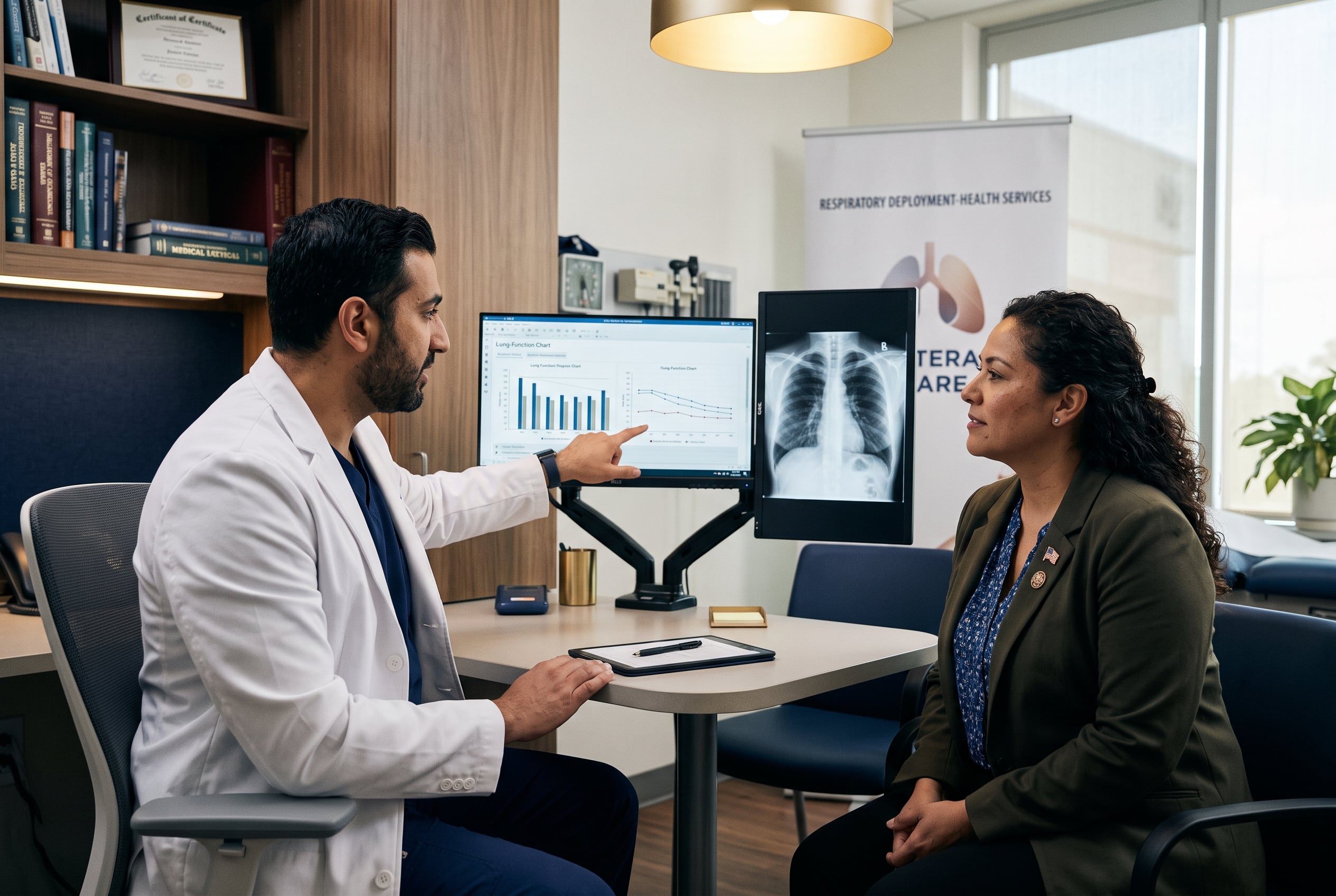
Respiratory & Small-Airway Disease
A “normal chest X-ray and breathing test” does not automatically rule out deployment lung disease. Some soldiers with biopsy-proven small-airway disease had relatively unremarkable routine testing — so a negative screen is not the end of the analysis.

Cancers
Two opposite shortcuts both fail: “the chemical is carcinogenic, so it caused this cancer” and “it is not presumptive, so exposure does not matter.” The honest path names the exact cancer and primary site, then weighs agent, route, dose, latency, and competing risks — unless a legal presumption already applies.

Neurological Conditions
Research links pesticides and solvents to Parkinson’s disease and other neurologic conditions through several biological pathways. But “solvents” and “pesticides” are too generic to evaluate until the specific substance and your actual task are named.

Cardiovascular Conditions
Cardiovascular disease is not one diagnosis. Hypertension and ischemic heart disease are recognized herbicide-associated conditions, and PFAS is linked to dyslipidemia — so each endpoint has to be analyzed on its own rather than lumped together.

Immune & Autoimmune Conditions
PFAS and related exposures affect the immune system, but the evidence differs by disease and by compound. A sound claim names the exact autoimmune diagnosis and the specific chemical rather than arguing “autoimmune disease” in the abstract.
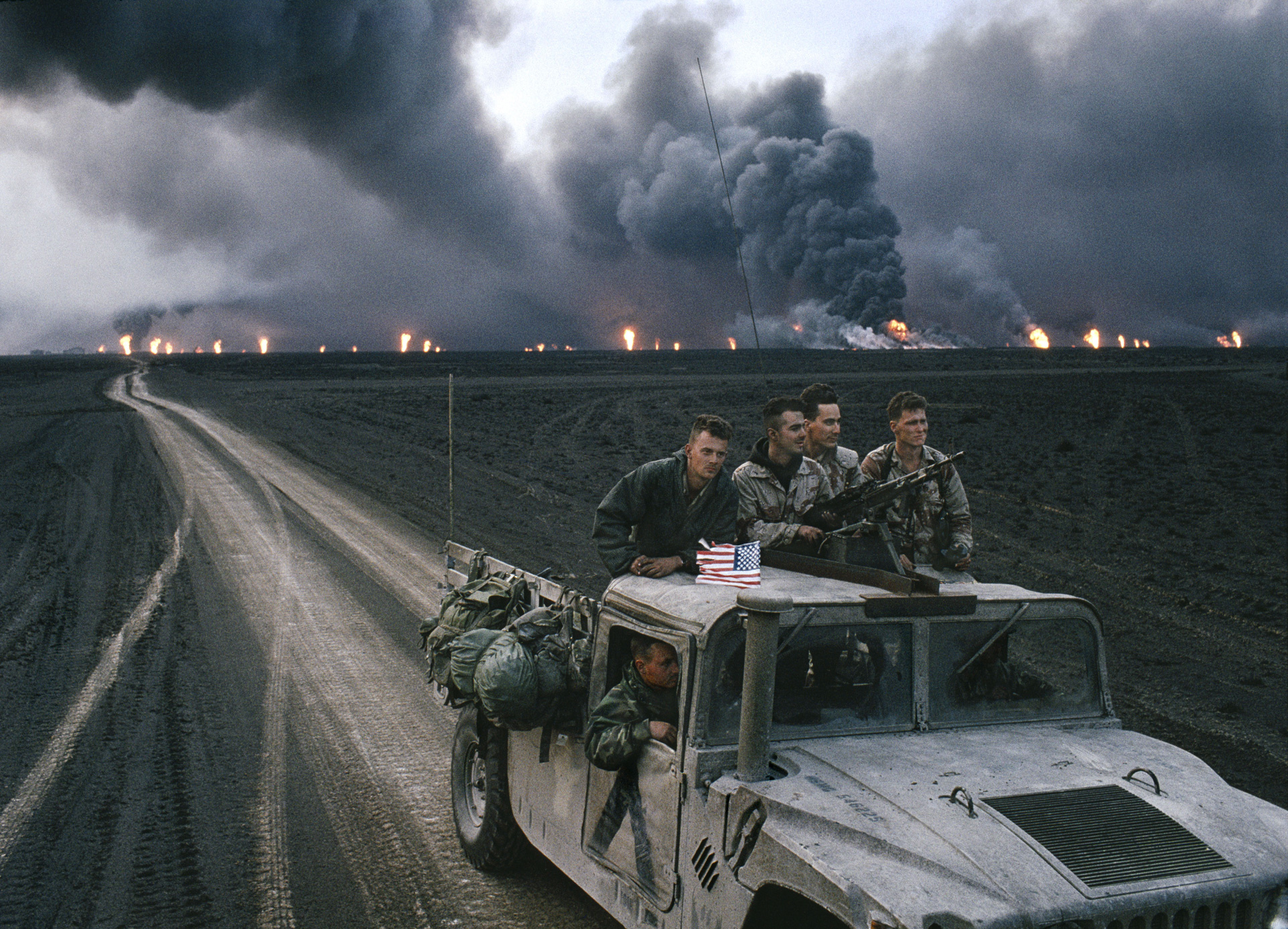
Gulf War Illness / Chronic Multisymptom Illness
Gulf War exposures can produce a chronic, multisystem illness that does not fit one tidy diagnosis. The record should sort your symptoms into diagnosed disease, undiagnosed illness, or medically unexplained chronic multisymptom illness — each has its own presumptive pathway.

Reproductive, Developmental & Endocrine
A PFAS blood level is not proof of where or when you were exposed. NASEM found sufficient evidence linking PFAS to decreased fetal and infant growth and suggestive evidence for other endpoints — but timing and a military source still have to be established.
A study is evidence, not a verdict
Use these files to test categorical statements, establish biological plausibility, and help a qualified clinician explain why the evidence does — or does not — apply to an individual veteran. Association is not automatic causation, but uncertainty is not proof against you either.
Association is not automatic causation — but uncertainty is not proof against the veteran. The correct question is whether a reasoned opinion applies the best available evidence to accurate service and medical facts under the governing standard. General information, not legal or medical advice.

Both options are free · No obligation
Not sure where you stand? Let us look at it.
Tell us what happened and what the VA said. An accredited agent reads it and tells you honestly what he sees — no cost, no obligation. When you are ready to have us fight it, register and we start.
An accredited agent personally reviews every request — we’ll reach out within 48 hours. Or call 702-992-4883.