





Toxic ExposureEvidence Center
A veteran and their child seen from behind, looking out over a hazy, contaminated horizon
Family & survivor benefits

It didn’t stop with you.
It reached them too.

Toxic exposure never stopped at the veteran. It can reach children, spouses, and survivors—and those benefits have their own laws, their own eligibility, and their own forms. Most families are never told they exist.

Why this page exists

Exposure is inherited, and so is the paperwork gap

A veteran can spend years fighting for a rating and still never learn that the same service exposure opened doors for a child born with spina bifida, for a family that drank contaminated water at Camp Lejeune, or for a surviving spouse after a service-connected death. These are separate programs. Some do not even require the veteran's own claim to be granted first.

Below is the plain-English map of the family and survivor benefits tied to toxic exposure—who qualifies, what each provides, the exact legal authority, and the catch you need to watch for. Dollar figures change; always confirm the current amount on VA.gov before you rely on it.

A child of a veteran wearing leg braces sitting with a parent while a nurse kneels to talk with them

For children

Spina bifida and covered birth-defect allowances, health care, and vocational training.

A veteran family standing together outside their home

For families

Camp Lejeune reimbursement for 15 covered conditions—and CHAMPVA health coverage.

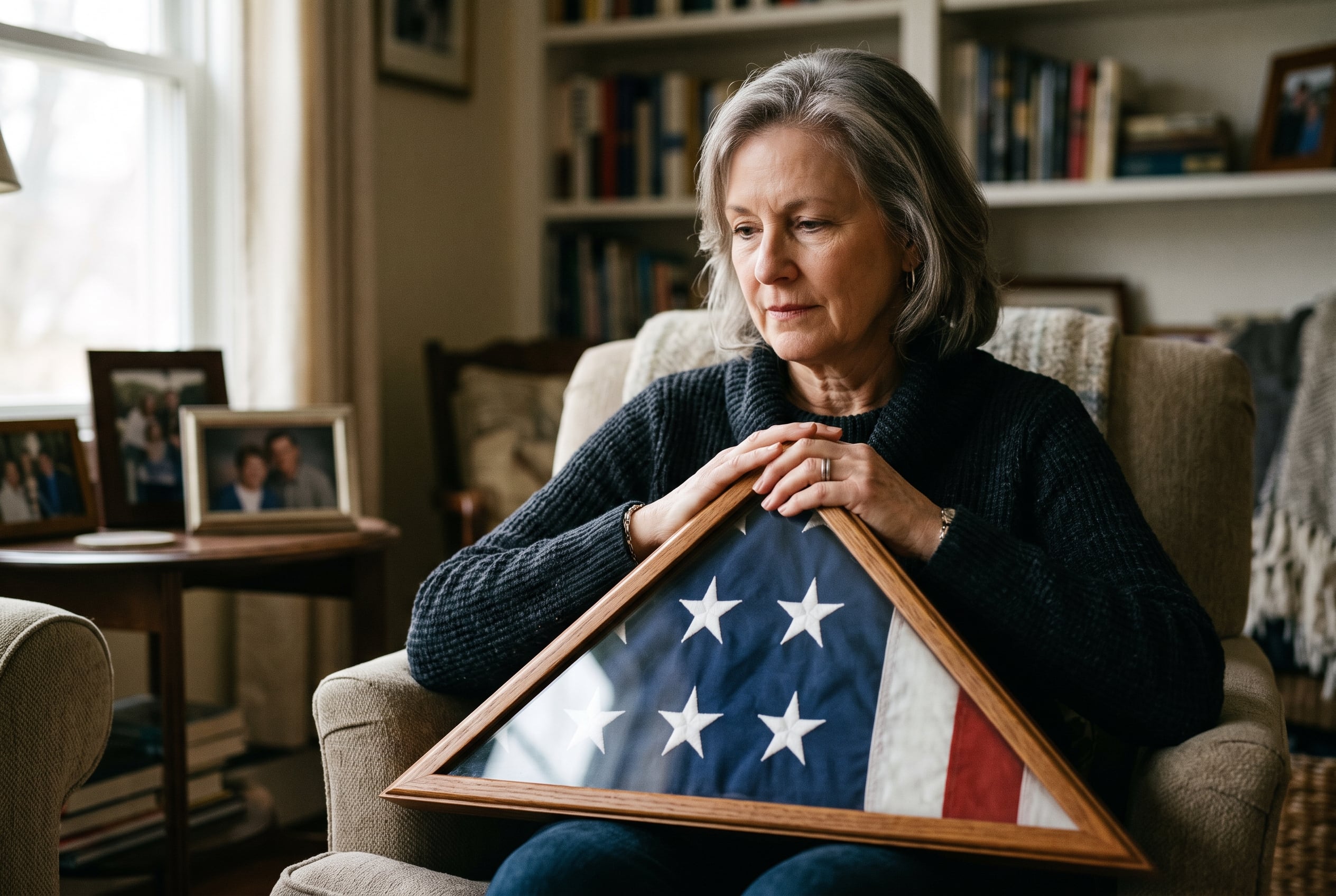
A surviving spouse seated at a table with a cased burial flag and VA paperwork while an advocate takes notes

For survivors

DIC, Survivors Pension, and Chapter 35 education after a service-connected death.

Most families are never told this

You can file—or appeal—a toxic-exposure claim for your veteran

Whether your veteran is living or has passed away, you may have the right to help them file, sign when they cannot, continue a pending claim, or appeal a denial. Our full guide walks through how these claims are requested, what evidence to gather, how to get a DD-214, and every form—explained in plain English.

Read the filing & appeal guide
Spina Bifida Monthly Allowance
Children of herbicide-exposed veterans

Spina Bifida Monthly Allowance

Who qualifies

Biological children of Vietnam veterans — and of veterans who served in or near the Korean DMZ between September 1, 1967 and August 31, 1971 — who have spina bifida in any form except spina bifida occulta. The child must have been conceived after the veteran’s qualifying service began.

What it provides

A tax-free monthly monetary allowance paid at one of three levels based on the child’s degree of disability, plus VA health care and vocational training and rehabilitation. The benefit belongs to the child and is paid directly for the child.

Legal authority

38 U.S.C. Chapter 18; 38 C.F.R. § 3.814.

Watch for: This is the one herbicide birth-defect benefit that reaches beyond Vietnam to qualifying Korea-DMZ service. Eligibility turns on the veteran’s qualifying service and the child’s diagnosis — not on whether the veteran’s own disability claim was granted. Confirm the current three-level payment amounts on VA.gov.

Covered Birth Defects — Children of Women Veterans
Children of women Vietnam veterans

Covered Birth Defects — Children of Women Veterans

Who qualifies

Biological children of women who served in the Republic of Vietnam during the recognized period, where the child has one or more covered birth defects that resulted in permanent physical or mental disability.

What it provides

A tax-free monthly monetary allowance based on the level of disability, plus VA health care and vocational training. Spina bifida is handled under its own program; other covered defects fall here.

Legal authority

38 U.S.C. § 1815; 38 C.F.R. § 3.815.

Watch for: This program is specific to the children of women Vietnam veterans and is separate from the spina bifida allowance. Certain conditions are excluded (for example, defects that are familial, or that result from a birth injury rather than the veteran’s service). Verify the covered-condition list and current amounts on VA.gov.
Camp Lejeune Family Member Care
Families who lived at Camp Lejeune

Camp Lejeune Family Member Care

Who qualifies

Family members who lived at Marine Corps Base Camp Lejeune or MCAS New River for at least 30 days (consecutive or nonconsecutive) between August 1, 1953 and December 31, 1987 — including those exposed in utero.

What it provides

Reimbursement of out-of-pocket health-care costs for 15 covered conditions, including bladder, breast, esophageal, kidney and lung cancer, leukemia, multiple myeloma, myelodysplastic syndromes, non-Hodgkin’s lymphoma, Parkinson’s disease, scleroderma, female infertility, miscarriage, hepatic steatosis, and renal toxicity.

Legal authority

38 U.S.C. § 1787. Apply with VA Form 10-10068.

Watch for: VA is the payer of last resort — it reimburses costs your other health insurance does not cover for the 15 listed conditions. This family program is distinct from the veteran’s own presumptive disability claim for Camp Lejeune water exposure. Confirm the current covered-condition list on VA.gov.
Dependency & Indemnity Compensation (DIC)
Surviving spouses, children, and parents

Dependency & Indemnity Compensation (DIC)

Who qualifies

Surviving spouses, dependent children, and in some cases dependent parents of a service member who died in service or a veteran who died of a service-connected condition — or who was rated totally disabled for a set period before death.

What it provides

A tax-free monthly payment. The base surviving-spouse rate is $1,699.36 per month effective December 1, 2025. Add-ons can apply: an 8-year provision (+$360.85), Aid and Attendance (+$421.00), Housebound (+$197.22), each child under 18 (+$421.00), and a 2-year transitional benefit (+$359.00). The SBP–DIC offset was fully eliminated as of January 1, 2023.

Legal authority

38 C.F.R. §§ 3.5, 3.22.

Watch for: DIC is one of the most under-claimed survivor benefits. A toxic-exposure death can support DIC even years later if the underlying condition is tied to service — the death certificate wording and a well-built nexus matter enormously. Confirm current rates on VA.gov.
Survivors Pension
Low-income survivors of wartime veterans

Survivors Pension

Who qualifies

Needs-based benefit for eligible low-income surviving spouses and unmarried dependent children of deceased wartime veterans who meet service and income/net-worth limits.

What it provides

A monthly payment that brings countable income up to a set limit, with higher maximums available for survivors who are housebound or who need aid and attendance.

Legal authority

38 U.S.C. Chapter 15; 38 C.F.R. §§ 3.3, 3.23.

Watch for: Survivors Pension is income- and net-worth-tested and is different from DIC, which does not depend on income. A survivor may be eligible for one and not the other — the paths should be checked separately. Confirm current income limits and rates on VA.gov.
CHAMPVA Health Coverage
Spouses and children

CHAMPVA Health Coverage

Who qualifies

The spouse and eligible children of a veteran who is rated permanently and totally disabled from a service-connected condition, or who died from a service-connected condition (and who are not eligible for TRICARE).

What it provides

A comprehensive health-coverage program that shares the cost of covered services and supplies, including doctor visits, hospital care, and prescriptions.

Legal authority

38 U.S.C. § 1781.

Watch for: CHAMPVA eligibility hinges on the veteran’s permanent-and-total rating or a service-connected death — which is exactly why building the veteran’s toxic-exposure claim correctly protects the whole family. Verify current eligibility rules and enrollment steps on VA.gov.
Chapter 35 Education (DEA)
Spouses and children

Chapter 35 Education (DEA)

Who qualifies

Spouses and children of a veteran who is permanently and totally disabled from a service-connected condition, or who died in service or from a service-connected condition.

What it provides

Survivors’ and Dependents’ Educational Assistance pays a monthly benefit for college, career-training, apprenticeship, and other approved programs. Full-time rate is $1,574.00 per month for the October 1, 2025–September 30, 2026 period (three-quarter time $1,244; half time $912), paid directly to the student.

Legal authority

38 U.S.C. Chapter 35.

Watch for: A dependent may be able to use Chapter 35 or the transferred Post-9/11 GI Bill — but usually not both at once, so compare before electing. Confirm the current rates and eligibility period on VA.gov.
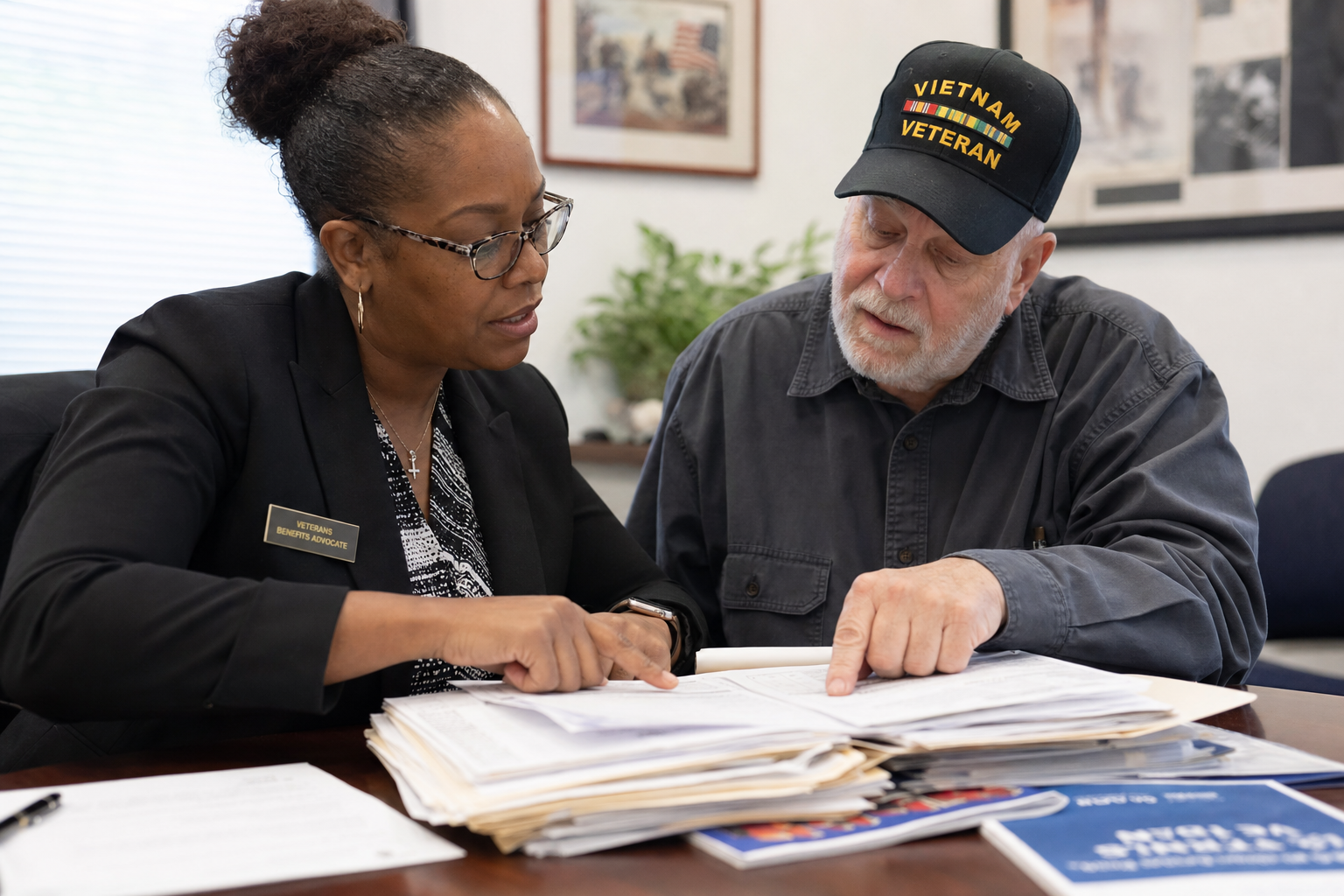
A veteran and an advocate comparing two separate claim folders at a table

Two different questions

Some family benefits ride on the veteran's own rating (CHAMPVA, Chapter 35, DIC). Others—spina bifida, covered birth defects, and Camp Lejeune family care—stand on their own facts. Never assume one answers the other.

A regulation book open beside a service record, showing a presumptive exposure list

Presumptive vs. facts-found still matters

A presumptive death or condition makes the survivor path far cleaner. When there is no presumption, the family path depends on the same exposure chain and nexus you build for the veteran—unit, location, actual duties, and the medical link.

Hands checking a thick VA claim file page by page against a checklist

Build the veteran's claim right

A permanent-and-total rating and a well-documented service-connected condition are what unlock health care, education, and survivor benefits for the whole household. Getting the veteran's claim correct is family protection.

VA-accredited agent #45147

Not sure which family benefit fits your service?

Albert Thombs and a team of 10 accredited advocates can look at the exposure chain and map every benefit your family may qualify for—before, during, and after a claim. No fee unless you win.

702-992-4883

VA-Accredited Claims Agent #45147

Think a denial or low rating was wrong?

Tell an accredited agent what happened. We review your situation first and tell you honestly whether we can help — before anyone signs anything.

An accredited agent personally reviews every request — we’ll reach out within 48 hours.

Call 702-992-4883