


Veterans Crisis LineDial 988 then Press 1 — or text 838255· Free & confidential, 24/7
Toxic Exposure Evidence Center shieldToxic ExposureEvidence Center
Condition evidence file

Cancers

Both shortcuts are wrong. IARC hazard classification shows an agent can cause cancer under some circumstances; individual analysis still requires pathology, primary site, route, intensity, latency, and competing risks unless a legal presumption applies.

Cancers clinical evidence
All condition files
An oncologist reviewing a CT scan with an older veteran patient
Medical education

What this means for your claim

Two opposite shortcuts both fail: “the chemical is carcinogenic, so it caused this cancer” and “it is not presumptive, so exposure does not matter.” The honest path names the exact cancer and primary site, then weighs agent, route, dose, latency, and competing risks — unless a legal presumption already applies.

Exposure routes

InhalationIngestion (contaminated water)Dermal contactRoute, dose and latency depend on the specific agent

Interactive pathway

How exposure becomes Cancers

Step 1 of 4Carcinogenic agents

Tactical herbicides / TCDD, particulate matter, diesel exhaust, hexavalent chromium, PFAS, solvents, asbestos, and ionizing radiation.

Where this exposure comes from in service

Tactical herbicides / TCDDOutdoor particulate matterDiesel exhaustHexavalent chromiumPFASSolventsAsbestosIonizing radiation

Strength of the evidence

Each row shows how strong the cited evidence is for that specific statement, using the National Academies scale.

Hazard — the agent can cause cancer under some circumstances (IARC)

Sufficient

IARC Group 1 means sufficient evidence of carcinogenicity in humans for that agent or circumstance.

Individual causation without pathology, site, dose and latency analysis

Inadequate or insufficient

Hazard classification is not an individual dose or nexus determination; the opinion must connect agent to this cancer.

Inadequate or insufficientLimited or suggestiveSufficient

Categories follow the National Academies framework and reflect the general evidence for each statement — not a determination about any individual veteran’s claim.

The examiner shortcut this rebuts

“The chemical is carcinogenic, so it caused this cancer”—or the opposite: “The cancer is not presumptive, so exposure is irrelevant.”

Know the signs

Tap the signs that sound like you. This is a private learning tool — nothing is saved or sent. Bring what you mark to a clinician and to a free review.

Nothing marked yet.

General education about Cancers — not a diagnosis or medical advice.

Where claims get lost

The questions that quietly sink headache claims

A cancer claim is usually decided by two things the examiner writes down: the primary site, and whether anything other than your service could explain it. These are the questions that settle both.

"What kind of cancer is it, exactly?"

Why it hurts you: Veterans answer with where the cancer spread instead of where it started. Both the rating criteria and every presumptive list key off the primary site — the organ the cancer began in. Name the wrong one and the examiner applies the wrong criteria, or checks a presumptive list against a cancer you do not actually have.

How to answer it

Read it off the pathology report and say it the way the pathologist wrote it, then describe where it spread as a separate fact. If you do not have the pathology report, request it — it is the single most important document in a cancer claim.

"Do you smoke? Any cancer in your family?"

Why it hurts you: This is the competing-risk question. An honest yes gets converted into the entire explanation, and your exposure quietly drops out of the opinion. Nothing in the law says a veteran with other risk factors cannot have a service-connected cancer.

How to answer it

Answer honestly, then say out loud that you want the exposure weighed alongside it. The question is not whether service was the only cause — it is whether service exposure at least as likely as not contributed.

"When were you first diagnosed?"

Why it hurts you: The gap between service and diagnosis gets used both ways. A long gap becomes “too remote to relate” and a short one becomes “not enough time to develop.” Neither is answered unless someone puts the expected latency for that cancer and that agent in the record.

How to answer it

Give the date, then make sure the opinion addresses latency directly. Many exposure-related cancers surface decades after the exposure — that delay is expected biology, not a reason for denial.

"Were you exposed to anything specific?"

Why it hurts you: “Burn pits” or “chemicals” cannot be evaluated, so the examiner writes that no specific exposure was identified. Generic exposure is the same as no exposure once it reaches the rater.

How to answer it

Name the agent, the job, the installation and the years. And if your cancer and your service already fall on a presumptive list, say so plainly — a presumption means the medical link does not have to be proven, and an examiner who opens a causation debate is answering a question that is no longer on the table.

Studies and authoritative evidence

Each source is paired with an honest limitation. A study establishes biological plausibility; a qualified clinician still has to apply it to your specific service and medical facts.

International Agency for Research on Cancer

IARC Monographs classifications

What it supports: Classifies agents and exposure circumstances by strength of carcinogenic-hazard evidence.

Limit / honest caveat: Hazard classification is not an individual dose or nexus determination.

Verify at International Agency for Research on Cancer
Go deeper

VA Benefits: Toxic Exposure & the PACT Act

A plain-English overview from the U.S. Department of Veterans Affairs on toxic-exposure benefits and how the PACT Act expanded them — useful background before you take an examiner’s opinion apart.

What a sound opinion should do

  • Name exact pathology and primary site
  • Test presumptive eligibility first
  • Match agent to cancer site and route
  • Address latency and known risk factors
  • Explain why population evidence applies to this veteran

Have this condition and a denial or low rating?

Send the examiner’s exact wording. An accredited claims agent will tell you honestly whether the opinion answered the real question — and what evidence rebuts it. General information, not legal or medical advice.

Registries and screening

The registries and the screening that put this in VA's own records

VA's registries are keyed to where and when you served, not to your diagnosis. There is no registry for cancers — there is a registry for the exposure that may have caused it. Which one fits you depends on the theater, the base and the years on your discharge papers, so the six programs below are organized by exposure rather than by illness. For most veterans on this page, at least one of them covers their service.

None of these is a claim, and none of them is required in order to file one. If anyone tells you your claim depends on being in a registry, they are wrong. What a registry evaluation actually does is put a dated exposure history and a clinician's findings into VA's own record, in VA's own words — and years later, that entry is what shows your concern predated the diagnosis. That is far harder for an examiner to wave away than a memory.

Start here · five to ten minutes

Ask for your toxic exposure screening

The PACT Act requires VA to offer this to every veteran enrolled in VA health care. It takes about five to ten minutes, and it is the cheapest way to get your exposure history into VA's own record in VA's own words.

What it is

A short set of questions asking whether you believe you were exposed to open burn pits and other airborne hazards, Agent Orange, radiation, Gulf War-related hazards, or contaminated water at Camp Lejeune.

Who can get it

Every veteran enrolled in VA health care. If you are not enrolled yet, enrollment comes first — call 877-222-8387.

How often

An initial screening, then at least once every five years. If you answer that you do not know whether you were exposed, VA schedules you again a year later.

How to get one

It is often done during a primary care or specialty visit — but you can ask for it sooner. Ask your primary care team directly, or ask your facility for its Toxic Exposure Screening Navigator by name.

What it is not

It is not an exam for any specific illness, and it is not part of the disability claims process. It is optional, and declining it does not affect your health care or your benefits.

Why bother

It creates a dated VA record that you raised military exposure. Years later, that entry is evidence that the concern predated the diagnosis.

A civilian or community provider cannot perform this screening — it lives inside VA's own health record. If you only see a private doctor, that is a reason to enroll in VA health care as well.

The six VA exposure programs, and who each one covers

Read the eligibility line first. If it describes your service, the program is open to you whether or not you have ever filed a claim, and whether or not anyone has connected your illness to the exposure yet.

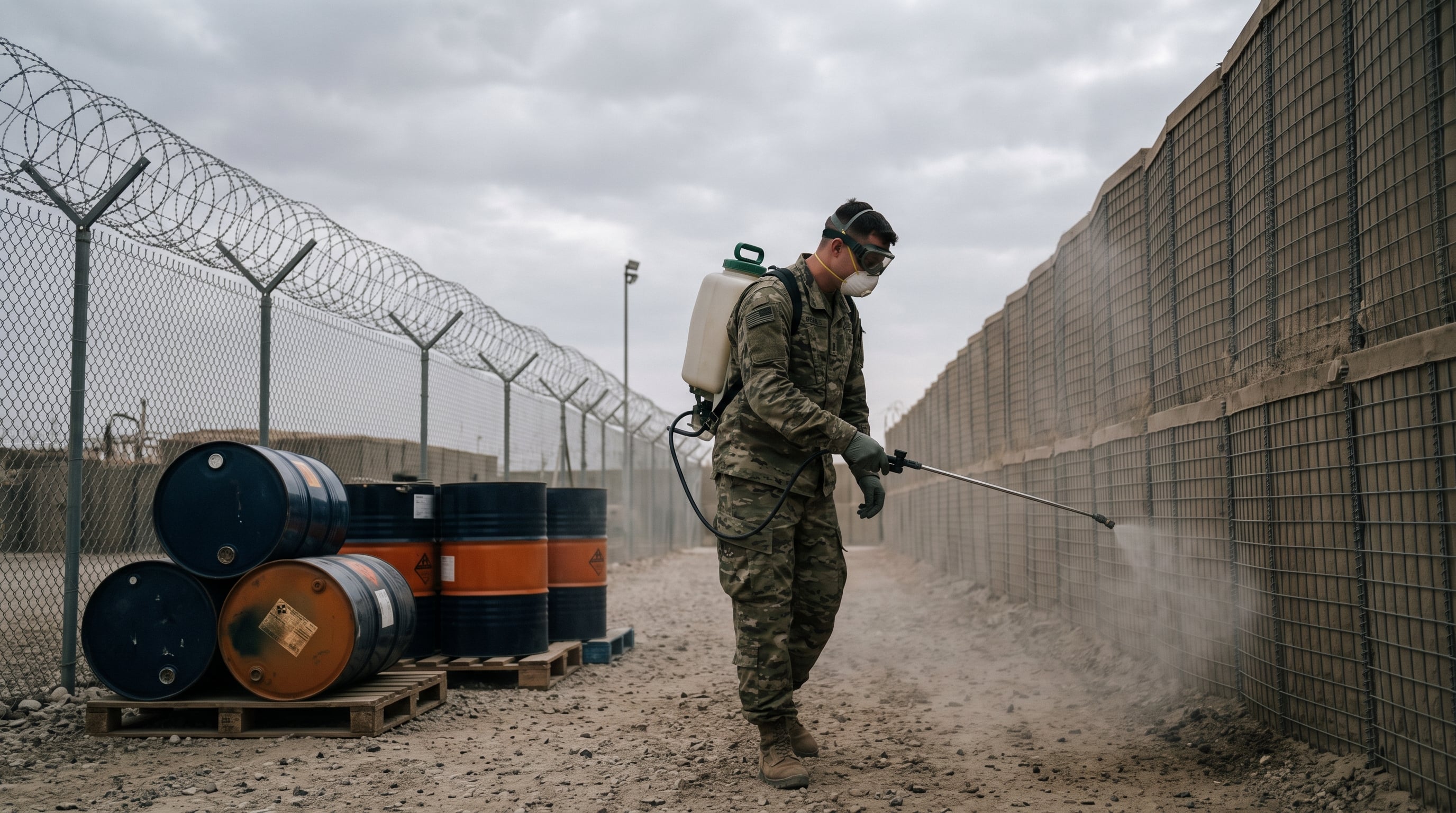
Herbicide drums and spray equipment representing Agent Orange exposure

Agent Orange Registry

Who it covers

Veterans who may have been exposed to herbicides, including Agent Orange, during service.

What happens

A free, exposure-focused health examination by a VA clinician, with your exposure history documented and a written summary of the findings.

It is not a disability exam, it is not a claim, and taking part does not commit you to filing anything.

Agent Orange Registry on VA Public Health
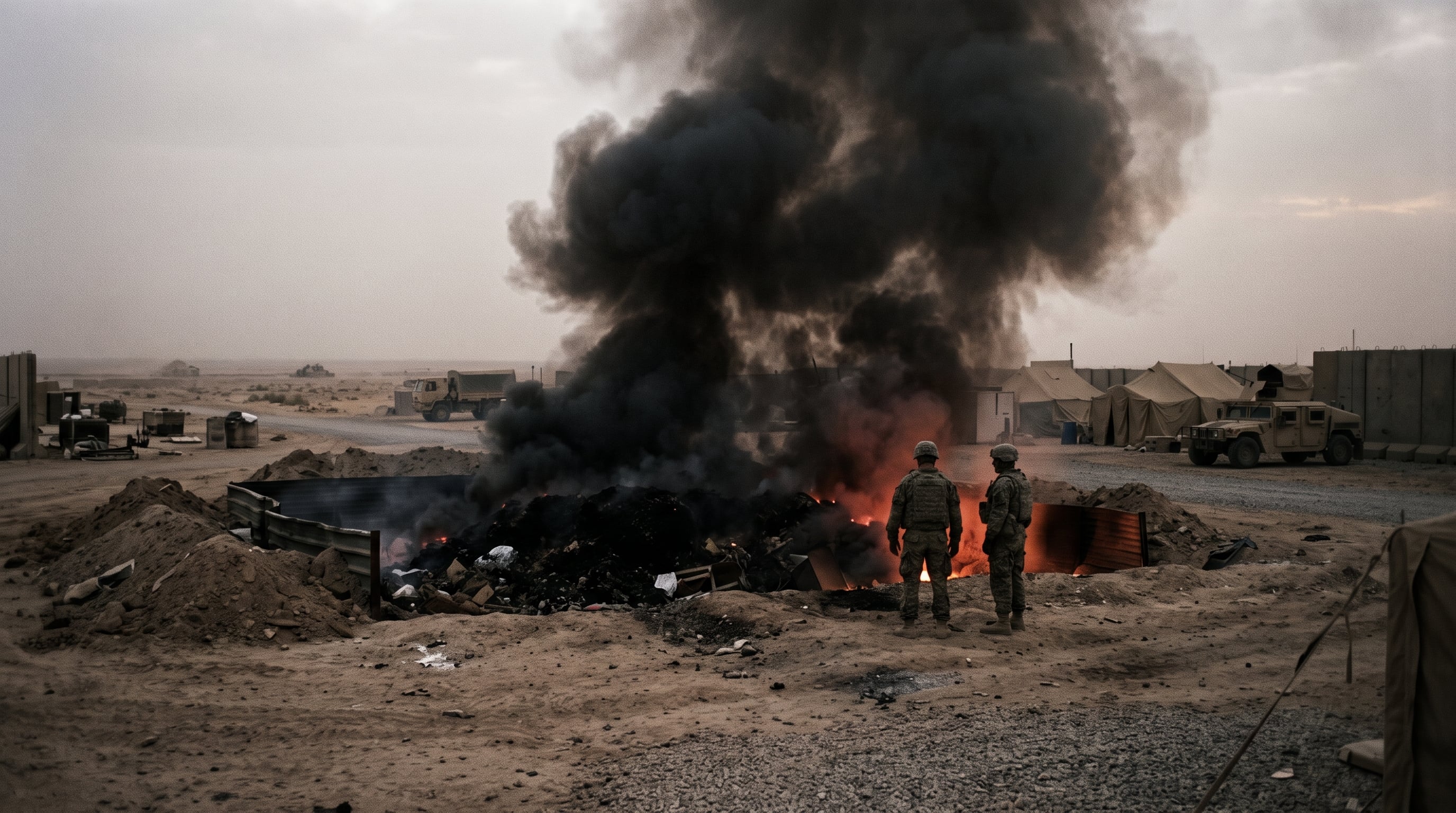
Open burn pit smoke rising over a deployed military installation

Airborne Hazards and Open Burn Pit Registry

Who it covers

Veterans and service members who served in the listed operations and locations. Since August 1, 2024, VA and the Defense Department enroll eligible people automatically, from deployment records, for service between August 2, 1990 and August 31, 2021.

What happens

Nothing to sign up for, in most cases. If you enrolled yourself before the redesign, your enrollment carried over. To check your status, ask the environmental health coordinator at your facility.

The registry holds deployment and demographic data only — no medical information. It is optional, it is not required to file a claim, and it is not evidence of exposure on its own.

Open the burn pit registry
Burning oil well fires over the Gulf War desert

Gulf War Registry

Who it covers

Veterans who served in the Gulf War and the Southwest Asia theater of operations.

What happens

A free registry examination and a documented exposure history, with a written summary of what was found and what to follow up on.

It is not the same thing as a claim, and it does not replace filing one. It also does not affect your eligibility for care or benefits either way.

Gulf War Registry on VA Public Health
Radiation warning signage and dosimetry equipment

Ionizing Radiation Registry

Who it covers

Veterans who took part in a radiation-risk activity during service.

What happens

A free registry examination with your radiation exposure history documented in VA’s own record, plus a written summary.

It is not a claim and it is not a rating decision. It is a clinical assessment and a research record.

Radiation registry exam on VA Public Health
A gloved laboratory technician placing specimen tubes into a rack for exposure testing

Depleted Uranium Follow-Up Program

Who it covers

Veterans who were in or on a vehicle struck by depleted uranium rounds, who were near a fire or an explosion involving depleted uranium munitions or armor, or who were deployed to Karshi-Khanabad Air Base in Uzbekistan.

What happens

Urine testing for uranium plus a clinical evaluation. Call VET-HOME at 833-633-8846 and ask to speak with a nurse about depleted uranium urine testing.

A normal result does not erase the exposure from your history, and it does not decide a claim.

Depleted uranium program on VA Public Health
Metal fragments and machining debris representing embedded fragment exposure

Toxic Embedded Fragment Surveillance

Who it covers

Veterans carrying retained fragments from a blast injury — metal that was never removed.

What happens

Long-term surveillance and evaluation through VA’s Toxic Embedded Fragment Surveillance Center, because embedded metal can keep releasing into the body for decades.

It is a surveillance and evaluation program, not a claim, and not a substitute for treatment of the injury itself.

Embedded fragment center on VA Public Health
One number starts all of this

VET-HOME — the VA exposure team

The Veterans Exposure Team — Health Outcomes Military Exposures runs the registry evaluations, and a registry evaluation does not require you to be enrolled in VA health care. Call and say you want an exposure evaluation and the registry exam that fits your service. Monday to Friday, 9:00 a.m. to 7:30 p.m. Eastern. They do not prescribe medication and they do not complete claim forms.

Call 833-633-8846The words to use, and your coordinatorEvery registry, and four more programs

The doctor page has the direct phone number and VA email of the environmental health coordinator at your own VA medical center, state by state. The registries page explains how an evaluation runs and what your family qualifies for.

Need this looked at by a doctor?

Bring this condition to a clinician and get the exposure written into your record. Our doctor page has the words to use, the direct phone number and VA email of the exposure coordinator at your own VA medical center, and every VA registry you can sign up for.

Both options are free · No obligation

Two ways to work with us — both free

Talking to a VA-accredited claims agent costs nothing either way. Pick the one that fits: get answers to your questions, or register to hire us to take on your claim.

A VA-accredited claims agent talking across a desk with an older veteran in a ball cap, coffee mugs between them, nothing being signed

Free information — just ask

You can ask Albert, our AI claims assistant, anything about exposure, evidence, or the claims process — he answers instantly. If you would rather have a direct, personal answer, send your question below and an accredited agent will come back to you. No cost, no obligation.

Or send your question
A veteran and his wife at a conference table with an accredited representative pointing to the paperwork in front of them

Ready to hire us? Register with us

For veterans who have decided they want us on their claim. Registering is free too, and it takes the registration form plus a signed VA Form 21-22a.

Until VA Form 21-22a is signed we cannot accept your claim, access your VA file, or do any work on your behalf. That is federal law, not firm policy.

What happens after you register

  • You register. This simply starts the conversation — you are not our client yet, and you owe us nothing.
  • You sign and return VA Form 21-22a. It appoints us as your accredited representative and gives us access to your VA file.
  • Once we have your signed 21-22a and access to your case, we verify everything is in order.
  • We review your case in full and conduct your interview with an accredited agent.
  • Only then do YOU decide whether to move forward with us. If you choose not to, we will not proceed on your behalf — no pressure, no obligation.
Call us: 702-992-4883

An accredited agent personally reviews every request — we’ll reach out within 48 hours.