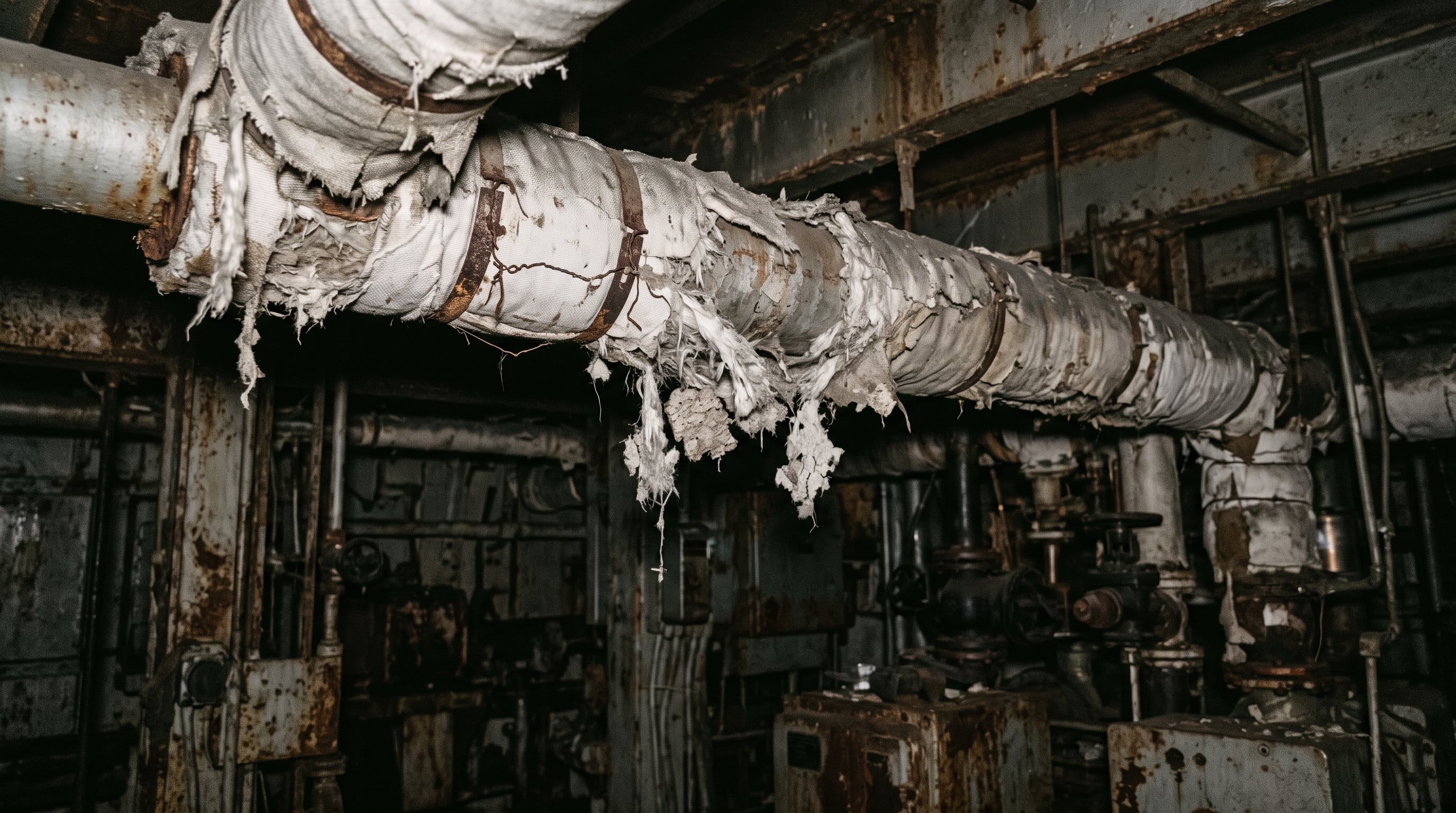
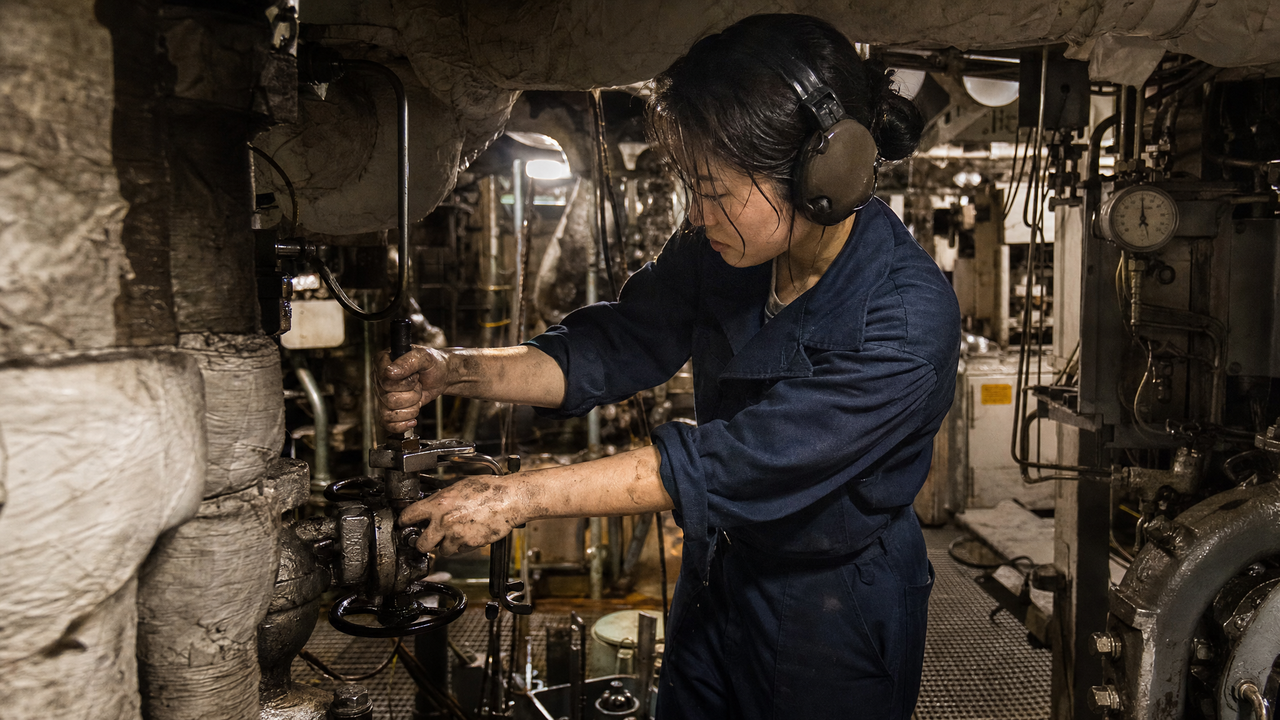
Asbestos was the standard insulating material of the twentieth-century military. It wrapped every steam line on every ship, lined every boiler, sat inside every brake and clutch assembly, and was sprayed into overheads and bulkheads across the fleet and the barracks. Navy veterans who served before the mid-1970s worked inside compartments where the lagging was cut, patched, and torn out with hand tools and no ventilation. The dust that came off it was fine enough to hang in the air for hours in a closed space.
What makes asbestos different from almost every other exposure is the latency. Mesothelioma typically appears twenty to fifty years after exposure, and asbestosis and lung cancer follow similar timelines. A machinist mate who breathed lagging dust in 1968 is diagnosed in 2004, by which time the ship is scrapped and the records are thin. VA has no asbestos presumption. What it has instead is an internal development procedure in the M21-1 adjudication manual that assigns a probability of exposure to the veteran’s military occupation — and knowing how that procedure works is most of the case.
What you were actually breathing, drinking, or touching
ChrysotileAmositeCrocidolitePipe laggingBoiler insulationBrake and clutch liningsGasket and packing material
No presumption — facts-found claim
No presumption exists. VA instead applies the M21-1 asbestos development procedure, which assigns a probability of exposure based on your military occupation — minimal, probable, or highly probable.
Where it was, when it was, and who was standing there
The exposure, in specifics
A claim is decided on specifics. Location, date range, and duty — in that combination — are what turn an assertion of exposure into a documented one.
Shipboard — the highest-probability environment
Engine rooms, fire rooms, boiler rooms, and pump rooms. Boiler technicians, machinist mates, machinery repairmen, hull technicians, pipefitters, and enginemen worked directly on lagged systems. Berthing compartments adjacent to those spaces carried the dust too.
Shipyards and overhaul periods
A yard period meant ripping out old lagging on an industrial scale. Anyone aboard during an overhaul — not only the shipyard workers — was in the dust, which is why deck and supply ratings show up in these claims as often as engineering ratings.
Vehicle and aircraft maintenance
Brake and clutch linings were asbestos into the 1980s. Blowing out a brake drum with compressed air — standard practice — aerosolised it directly into the mechanic’s breathing zone.
Buildings and demolition
Barracks, hangars, boiler plants, and steam tunnels built before the mid-1970s used asbestos insulation and floor tile. Engineers, utilities workers, and anyone on a demolition or renovation detail disturbed it.
How you qualify
The routes available on this exposure
Work out which route your case is on before you gather a single document. Preparing the wrong evidence is the most common reason a truthful claim comes back denied.
Facts-found route
The M21-1 occupational probability route
VA is required to develop asbestos claims by determining whether your military occupation carried a minimal, probable, or highly probable likelihood of exposure. Ratings such as boiler technician, machinist mate, hull technician, pipefitter, and damage controlman sit at the top of that scale. Getting the occupation correctly characterised in the file is decisive, because a “highly probable” finding effectively concedes the exposure element and leaves only the medical nexus in dispute.
Establish the rating or MOS, the ship or installation, and the years.
Establish whether you served during a shipyard overhaul period.
Rule out significant civilian asbestos work, or address it head-on if it exists.
The nexus opinion must state that service exposure is at least as likely as not the cause.
Secondary route
What follows an asbestos-related lung disease
Asbestosis and mesothelioma both produce progressive respiratory failure, and everything downstream of that is separately claimable — pulmonary hypertension, cor pulmonale, weight loss, and the profound functional limitation that supports Total Disability based on Individual Unemployability. Mesothelioma in particular is aggressive enough that expedited processing should be requested immediately.
Respiratory failure to right-heart strain and pulmonary hypertension.
Severe pulmonary limitation to Total Disability based on Individual Unemployability.
Terminal diagnosis to expedited handling and to survivor benefits planning.
Two different things — never combine them
A presumption and a TERA determination are not the same thing
These two get mixed together constantly — by veterans, by service officers, and sometimes in the decision letter itself. They are separate mechanisms that answer separate questions. One asks where and when you served. The other asks what you did while you were there. Treating either one as a substitute for the other is how a winnable claim gets prepared the wrong way and comes back denied.
Here is the fastest way to tell which lane you are standing in. A presumption almost always comes out of a deployment or an assignment to a place that has already been named — Vietnam, the Gulf, the Korean DMZ, the burn-pit countries, Camp Lejeune. Congress or VA drew a box around a region and a set of dates, and if your service falls inside that box and your diagnosis is on the list attached to it, you are in the presumptive lane and the law does the connecting for you. TERA is for everything else. If your exposure did not come from being sent to one of those named locations — if it came from the aircraft you turned wrenches on, the fuel you pumped, the foam you sprayed, the paint and solvent you stripped with, the engine room you stood watch in, the stateside installation where the work itself was the hazard — then no list is ever going to carry your claim. That is a TERA case, and it is proved with your duties.
Read both columns before you decide what to gather. If you are in the presumptive lane, the work is proving your service facts — orders, dates, locations. If you are in the TERA lane, the work is documenting what you actually did and then getting a medical opinion that ties it to the diagnosis. Those are two entirely different piles of paper, and preparing the wrong one costs months. And plenty of veterans are standing in both lanes at the same time — one condition that qualifies off a deployment, another that only ever gets connected through the work.
Set by law — where and when you served
A presumption
A presumption is written into statute and regulation. It has three moving parts and all three have to line up: a specific place, a specific date range, and a diagnosis that appears on the list attached to that place. When they do, VA presumes the exposure and presumes the connection — you never have to produce a medical opinion tying the disease to the service.
It is decided on service records, not on medical evidence.
Miss the location or the date window by anything at all and the presumption simply does not apply.
The condition list is closed — a diagnosis that is not on it is not presumptive, however strong the science behind it.
If you do qualify, it is the fastest route to a decision that exists.
Based on what you actually did
A TERA determination
TERA stands for Toxic Exposure Risk Activity. It is VA’s finding that your service involved an activity that put you at risk of a hazard, and it comes out of your duties, your assignments, and the work you actually performed — not out of a list of places and dates. It is not a presumption, and on its own it does not grant service connection.
What it does: it puts the exposure into the record, and under 38 U.S.C. § 1168 it generally obligates VA to obtain an exam and a medical opinion when there is a current disability and the file is otherwise short of proof.
What it does not do: it does not concede the medical link. VA can find TERA and still deny the claim for “no nexus.”
It is also used on the health care side, to establish eligibility to enroll and to get the toxic exposure screening.
It is frequently missing from the file, or built off your primary job code alone — which misses the duties that actually exposed you.
Keep them apart — four rules that decide claims
No presumption does not mean no claim. It means your claim is facts-found, and the link gets built with evidence instead of handed to you by regulation.
A TERA finding is not a presumption. It never removes the need for a nexus opinion — it is what forces VA to go get one.
You can be in both lanes at once. Presumptive on one condition and facts-found on another, inside the same application.
Serving somewhere with a documented hazard is not the same as qualifying for a presumption. The presumption needs the exact place, the exact dates, and a listed condition — all three.
The condition lists
What is on a list, and what is not
Read the label above each list carefully. A presumptive list and a health-care eligibility list are two different things, and confusing them costs veterans claims every single day.
Asbestos-related diseases recognised in the medical literature
Not a VA presumptive list. These are the diagnoses an asbestos claim is normally built on.
Mesothelioma of the pleura or peritoneum
Asbestosis
Lung cancer
Pleural plaques and pleural thickening
Benign pleural effusion
Laryngeal cancer
Ovarian cancer
How to apply
The filing order, with the actual forms
Order matters. Filing in the wrong sequence is how veterans lose months of back pay on a claim that was always going to be granted.
1
VA Form 21-0966
File the Intent to File immediately
On an aggressive diagnosis this single form protects the effective date and, if the worst happens, protects the survivor’s accrued benefits claim.
2
VA Form 21-526EZ
File and name the occupation, not just the exposure
Write your rating or MOS, the hull numbers, the yard periods, and the specific work you did on insulated systems. That language is what triggers the M21-1 development.
3
Request expedited handling for a terminal diagnosis
Mesothelioma and advanced lung cancer qualify for priority processing. Ask for it in writing at the time of filing — it is not applied automatically.
4
VA Form 21-4142
Release the pulmonary and oncology records
Imaging and pathology are the backbone of this claim, and both are usually held privately.
5
VA Form 21-22a
Appoint an accredited agent
These claims move faster and land harder with representation. Speak with us before you file.
Evidence to gather
What belongs in the file before you file
DD-214 and personnel records establishing the rating or MOS and every ship or installation.
Ship history and yard period records showing overhaul or major maintenance during your time aboard.
A statement describing the specific work — cutting lagging, replacing gaskets, blowing out brake drums.
Chest imaging, including high-resolution CT, showing plaques, thickening, or interstitial change.
Pathology from any biopsy — mesothelioma is confirmed histologically.
A civilian work history that rules out, or squarely addresses, post-service asbestos exposure.
A nexus opinion that addresses latency and apportions causation to the service exposure.
What you will be told, and the answer
The shortcuts to expect
““You worked construction after the Navy.””
Post-service exposure does not erase in-service exposure. The standard is whether service exposure is at least as likely as not a cause — not the only cause. Asbestos disease is dose-cumulative, and a rater treating civilian work as a complete defence is applying the wrong test.
““There is no record of asbestos aboard your ship.””
The M21-1 procedure does not require a ship-specific asbestos record. It requires an occupational probability determination. If your rating is on the high-probability side, the exposure is developed from the occupation itself.
““You were discharged forty years ago.””
Latency of twenty to fifty years is the defining feature of asbestos disease. A long gap between service and diagnosis is expected medicine, not evidence against the claim, and there is no filing deadline on a VA compensation claim.
Why representation changes the odds
Register with us on your asbestos claim
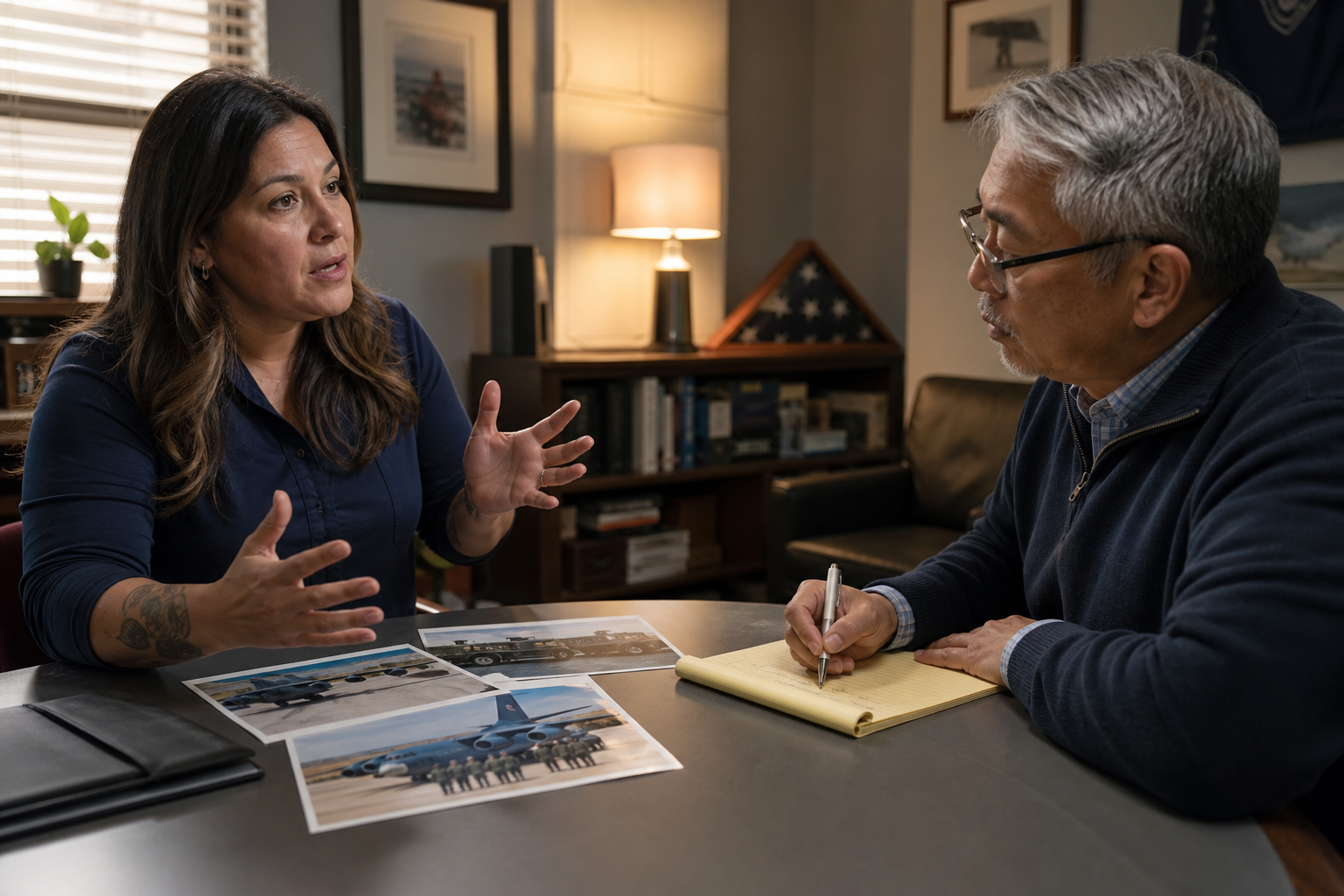
Tell an accredited agent what happened and we will review your situation first, then tell you honestly whether we can help. One form, one click, and a real person reads it.
Getting the occupation characterised as high-probability under M21-1 is the whole exposure argument, and it turns on how the claim is written.
Post-service civilian work is the most common denial rationale and it is answerable — but only if the nexus opinion addresses apportionment directly.
Terminal diagnoses need expedited handling and a survivor benefits plan running in parallel. Both have to be requested.
Pleural plaques alone are frequently dismissed as non-disabling. Whether they are compensable depends on the measured pulmonary findings, and those have to be captured correctly at the exam.
VA-Accredited Claims Agent #45147
Albert Thombs
An accredited agent personally reviews every request — we’ll reach out within 48 hours.
Registering opens the secure sign-up form of the advocate who is next to take a new file, in a new tab. If you would rather have someone look at your situation before you decide anything, ask for the free case review instead.
Office hours: Mon–Fri, 11am–6pm Pacific
Keep building the case
The era, the job, and the medical evidence that go with this exposure
Asbestos development procedure: VA Adjudication Procedures Manual M21-1. Direct service connection: 38 CFR 3.303. Benefit of the doubt: 38 CFR 3.102. General information for education, not legal or medical advice.
Both options are free · No obligation
Two ways to work with us — both free
Talking to a VA-accredited claims agent costs nothing either way. Pick the one that fits: get answers to your questions, or register to hire us to take on your claim.
Free information — just ask
You can ask Albert, our AI claims assistant, anything about exposure, evidence, or the claims process — he answers instantly. If you would rather have a direct, personal answer, send your question below and an accredited agent will come back to you. No cost, no obligation.
Or send your question
Ready to hire us? Register with us
For veterans who have decided they want us on their claim. Registering is free too, and it takes the registration form plus a signed VA Form 21-22a.
Until VA Form 21-22a is signed we cannot accept your claim, access your VA file, or do any work on your behalf. That is federal law, not firm policy.
What happens after you register
You register. This simply starts the conversation — you are not our client yet, and you owe us nothing.
You sign and return VA Form 21-22a. It appoints us as your accredited representative and gives us access to your VA file.
Once we have your signed 21-22a and access to your case, we verify everything is in order.
We review your case in full and conduct your interview with an accredited agent.
Only then do YOU decide whether to move forward with us. If you choose not to, we will not proceed on your behalf — no pressure, no obligation.