
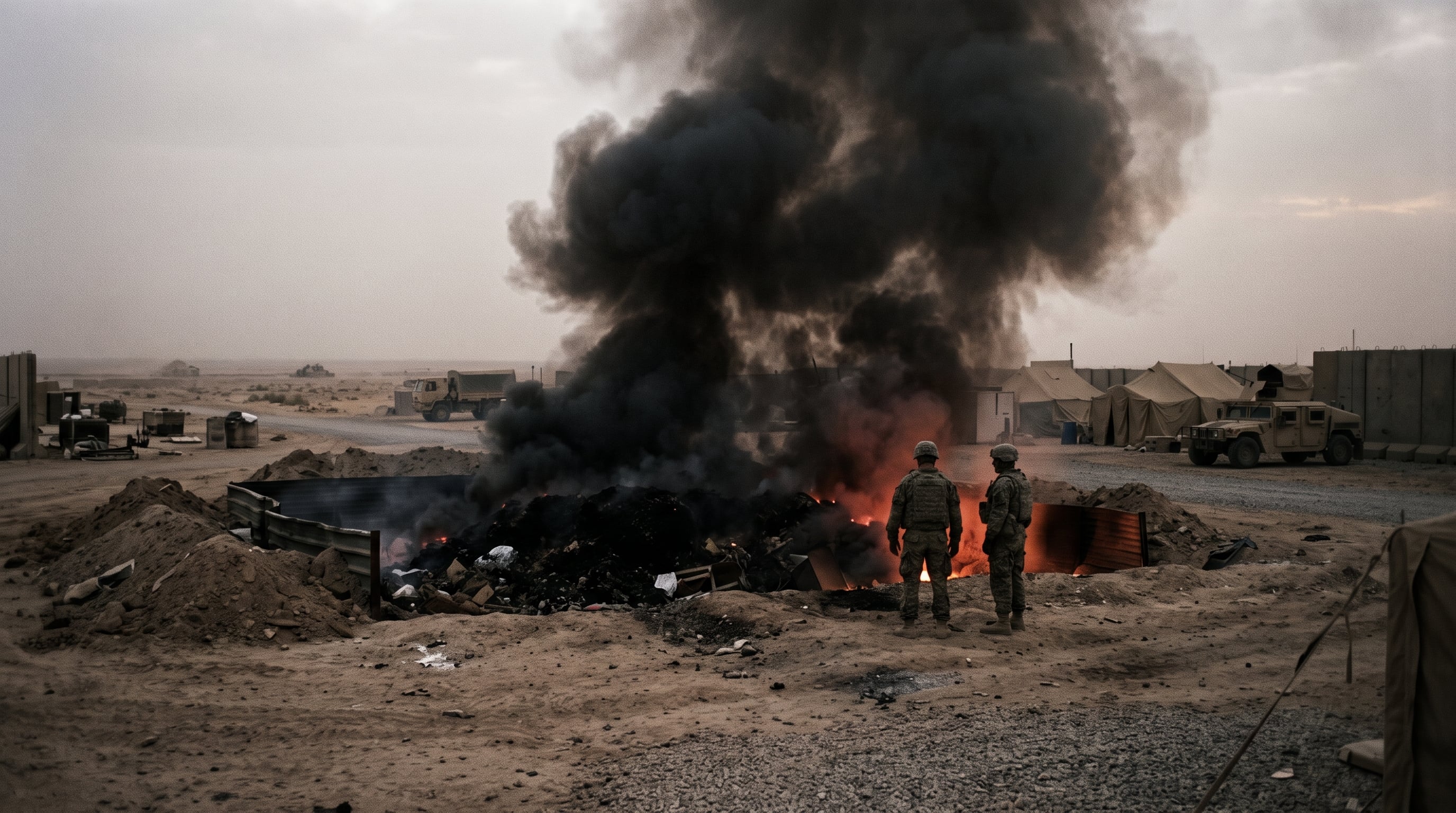
Burn pits and particulate matter
Risk varied by distance, work and living location, materials burned, wind, frequency, duration, and respiratory protection.
Burn pits disposed of plastics, chemicals, paint, medical and human waste, and petroleum products—sometimes using JP-8. Veterans also encountered sand, dust, diesel exhaust, industrial pollution, sulfur-fire smoke, and task-specific hazards.
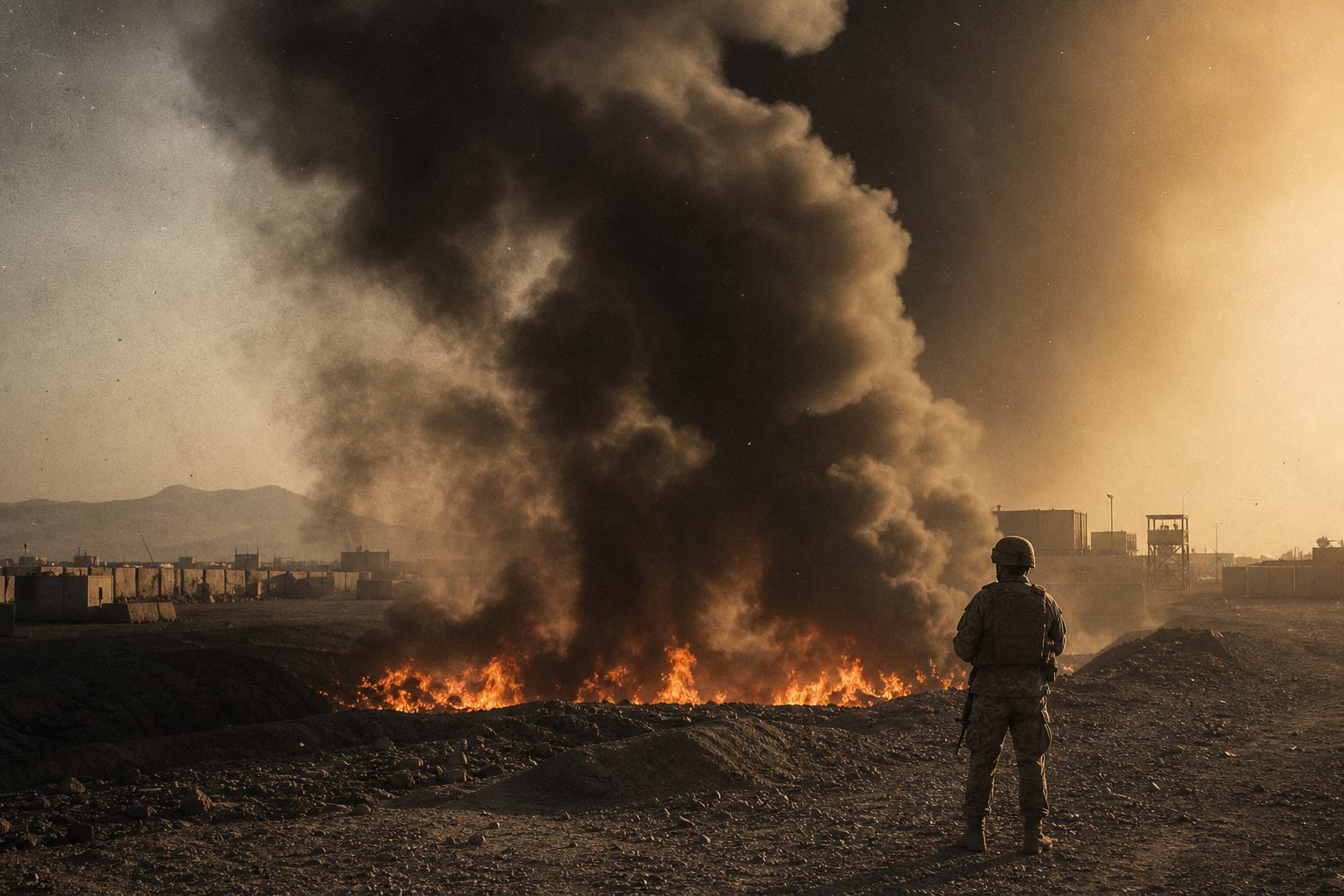
Risk varied by distance, work and living location, materials burned, wind, frequency, duration, and respiratory protection.
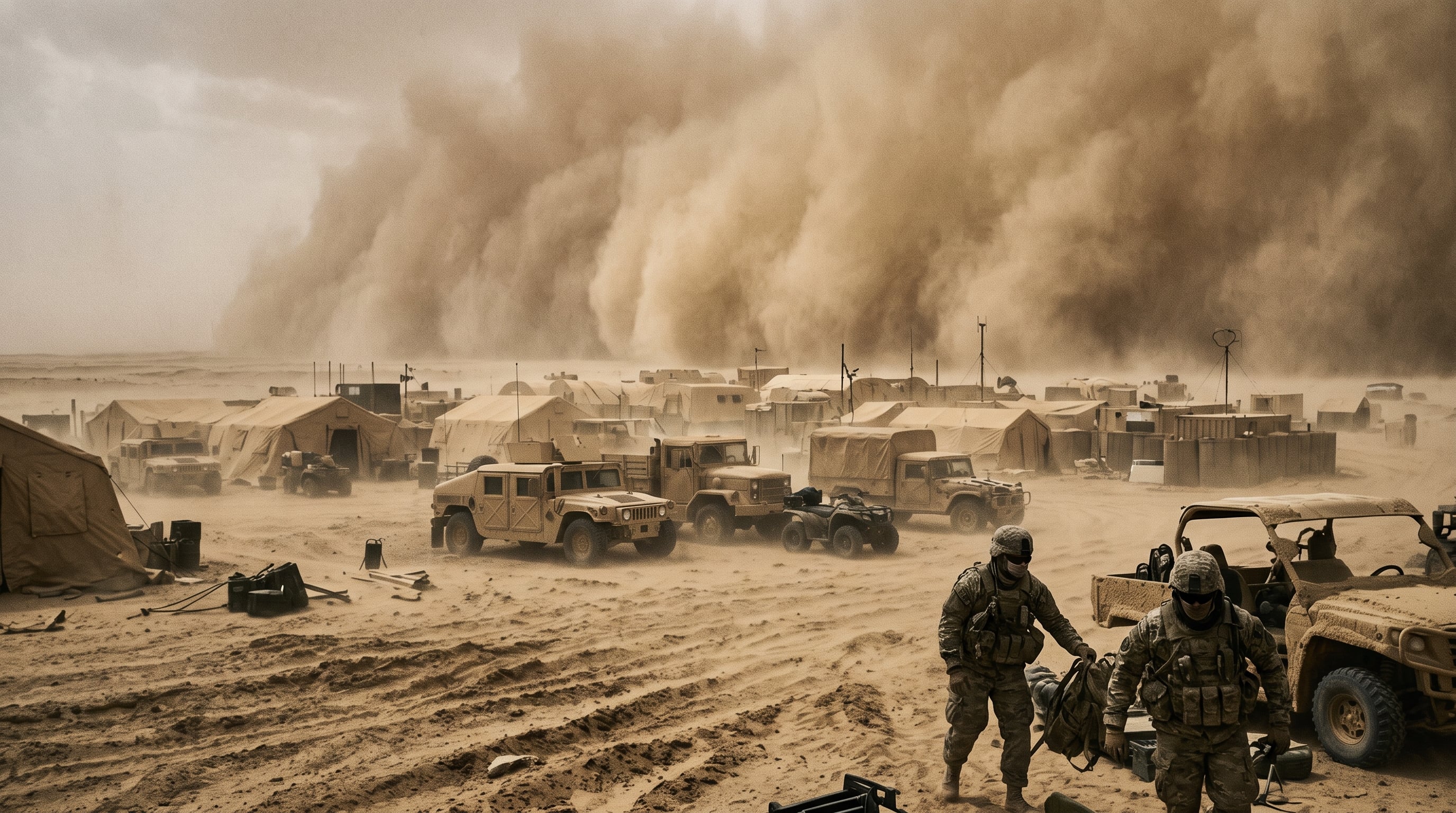
More than 20 cancers and respiratory illnesses are presumptive for qualifying service, including asthma after service, COPD, rhinitis, sinusitis, fibrosis, sarcoidosis, and constrictive bronchiolitis.

About 830 U.S. service members were potentially exposed to sodium dichromate dust containing hexavalent chromium at the Iraqi facility in 2003.
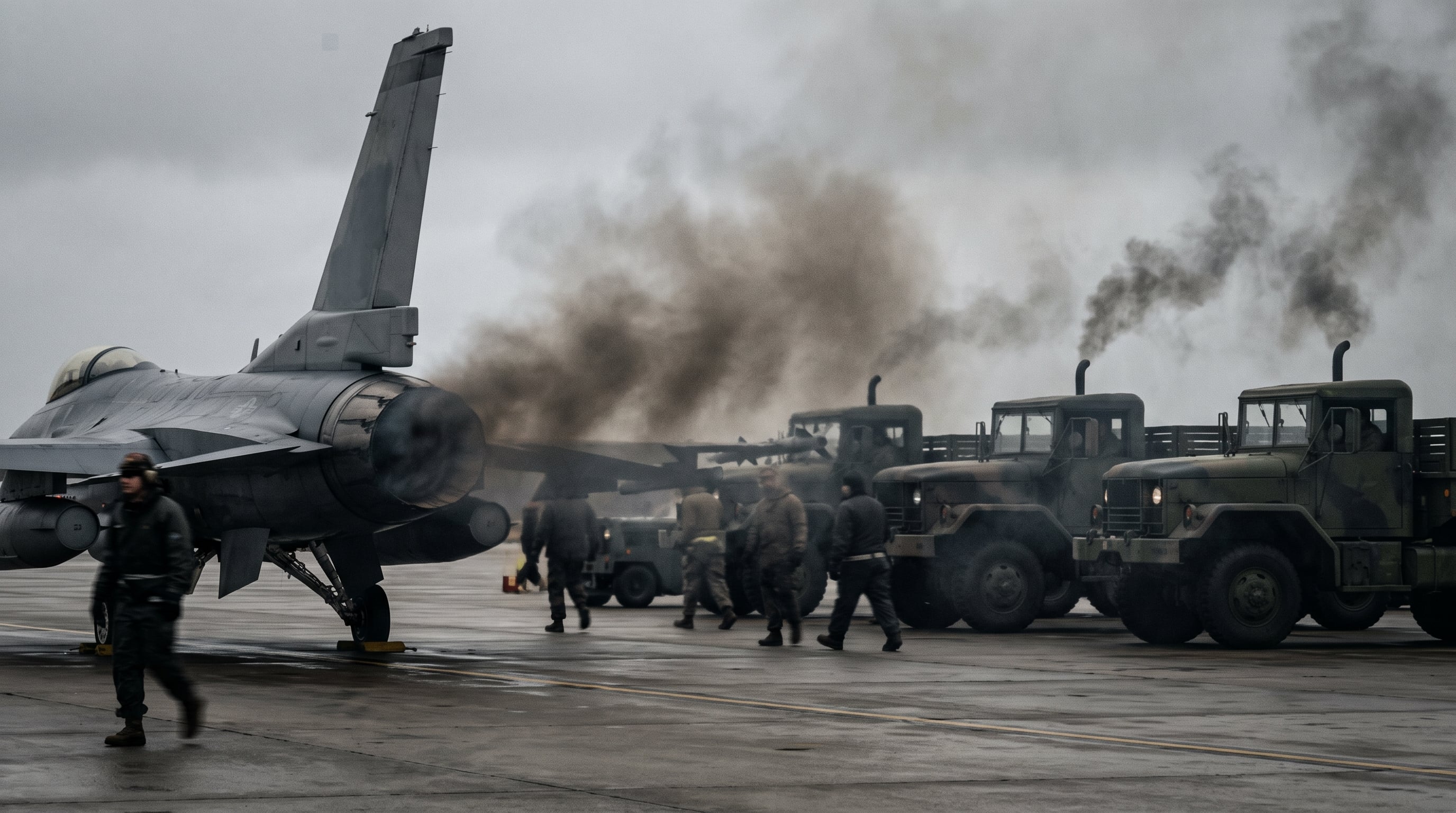
Sulfur dioxide can cause airway injury. Unit position, plume proximity, acute symptoms, and other inhalants must be separated and documented.
VA explains how the PACT Act presumptions work for burn-pit and airborne-hazard claims. Treat this as the floor, not the ceiling. The presumption gets the condition service-connected; the percentage still turns on measured test results and on how bad your worst weeks actually are, and that is where post-9/11 veterans lose money without ever being denied.
Source: U.S. Department of Veterans Affairs, official channel
Post-9/11 veterans got the widest presumptive expansion in the history of the compensation system, and they are still being denied inside it. The PACT Act made 23 respiratory conditions and cancers presumptive for covered service, with no exposure proof and no nexus opinion required. Yet claims come back denied because the decision used the wrong location list, applied pre-2022 rules, or fixed on a diagnosis that is close to the list without being on it. “Reactive airway disease” is not “asthma” on paper. “Chronic cough” is not “chronic bronchitis.” That one word has cost veterans years, and correcting the wording of the diagnosis is often the entire fix.
The second problem is the small airways. The disease that burn pits and fine desert particulate produce sits deep in the lung, in airways too small for routine spirometry to see. Biopsy-confirmed constrictive bronchiolitis has been reported in symptomatic deployers whose noninvasive testing looked relatively unremarkable, and a specialty referral series found deployment-related distal lung disease in 68.5 percent of the deployers evaluated. So when an examiner writes “pulmonary function testing within normal limits,” that finding proves very little without post-bronchodilator values, diffusing capacity, and exercise testing. That is the argument to make — the adequacy of the examination, not the credibility of the veteran.
Two veterans of the same conflict rarely carry the same claim, and veterans of different conflicts often carry the same one. The first panel is what belongs to this era alone. The second is the layer this era shares with the rest of the site — and it is the layer that reopens old denials.
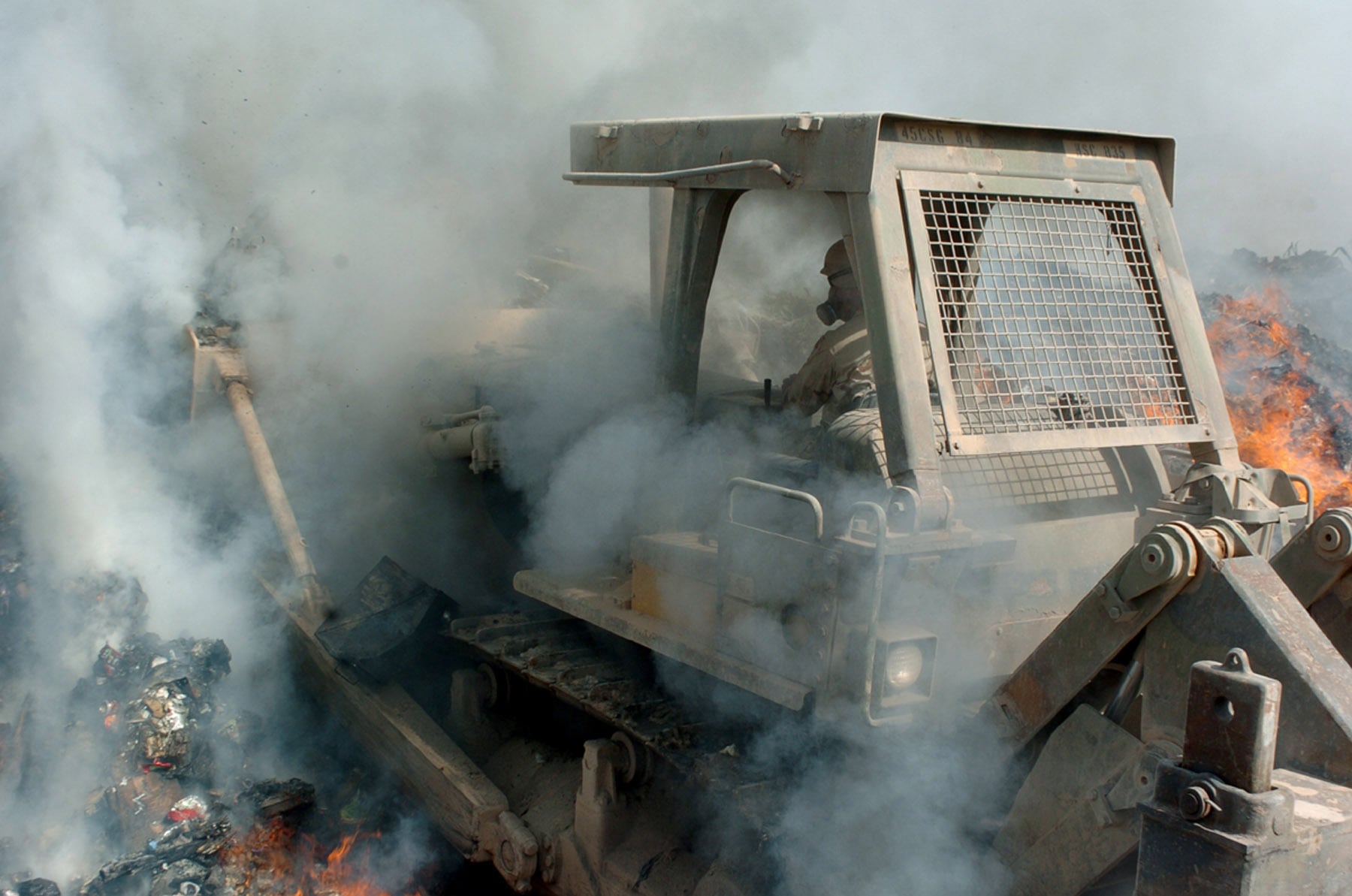
Named sites and named exposures. When your file identifies the specific installation and what was burning or spilled there, the claim stops being generic.

Two of these will surprise you, and the last one is the mistake that gets post-9/11 files answered under the wrong law entirely.
The presumptive list in this era is long enough that most veterans stop reading after it. That is a mistake, because the ratings that change a household’s income are usually the secondary conditions nobody claimed — the sleep apnea behind the sinusitis, the depression behind the years of breathlessness.
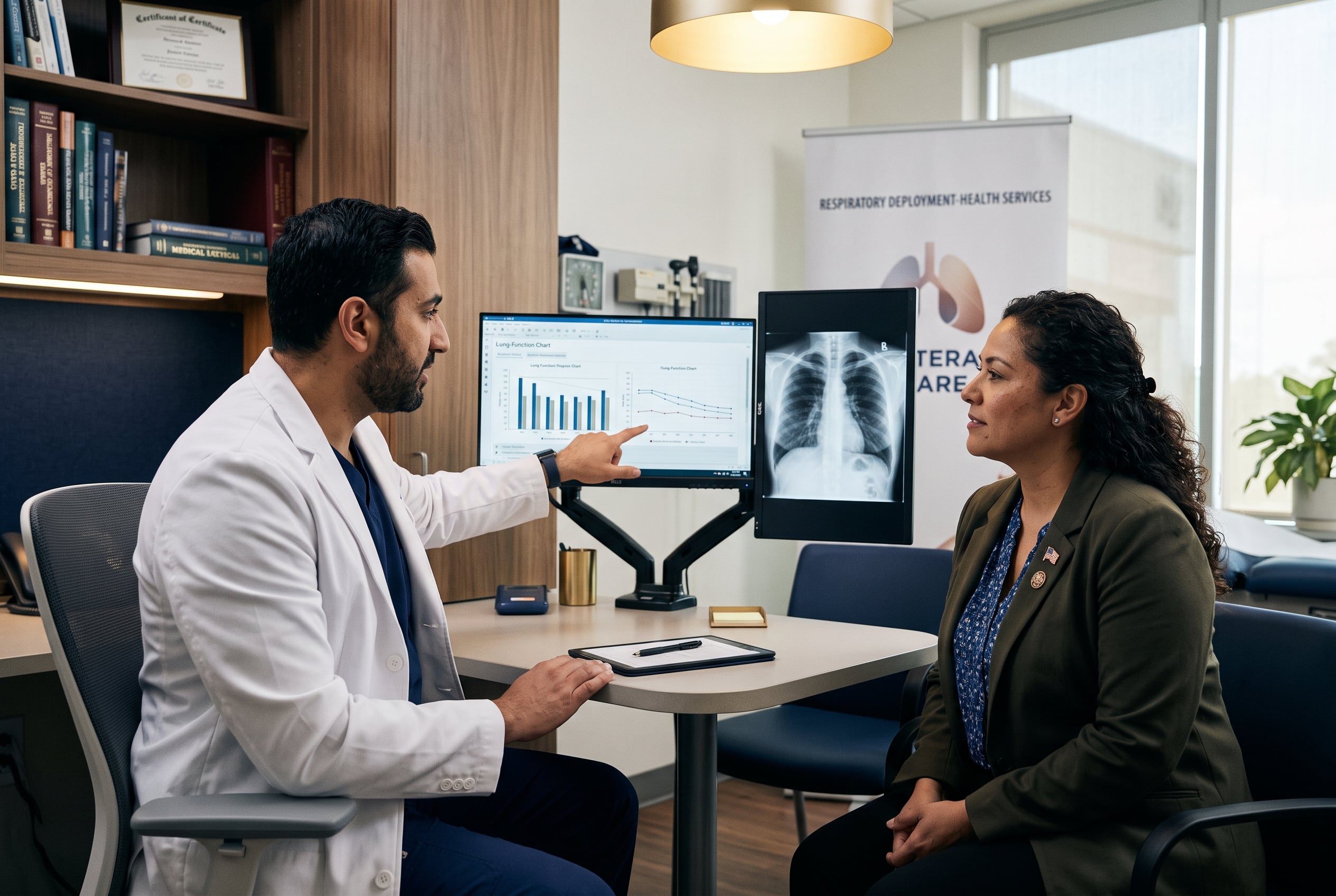
Covered service on or after September 11, 2001 in Afghanistan, Djibouti, Egypt, Jordan, Lebanon, Syria, Uzbekistan, or Yemen, or on or after August 2, 1990 in Bahrain, Iraq, Kuwait, Oman, Qatar, Saudi Arabia, Somalia, or the United Arab Emirates — including the airspace above those countries. No exposure proof, no nexus opinion:
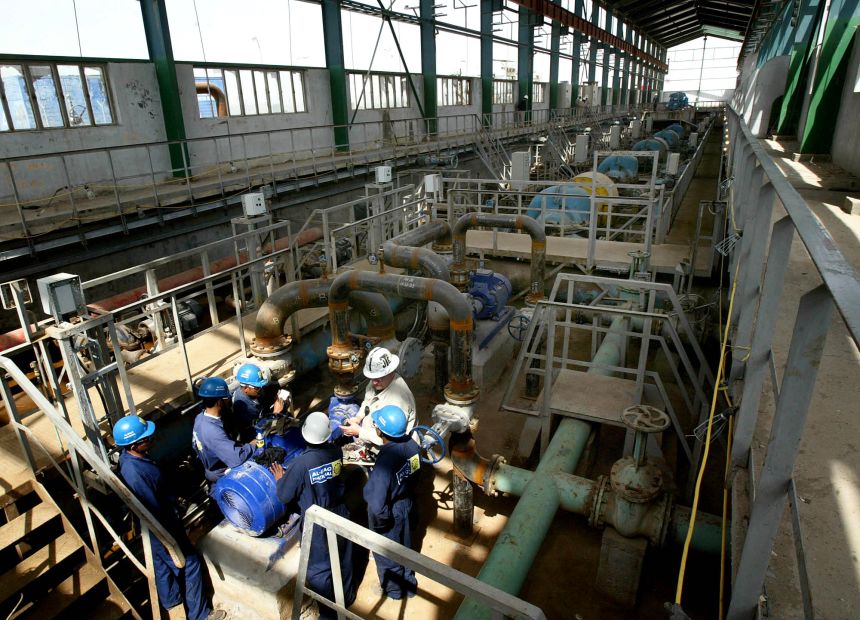
When your disease is not on the list, the site itself becomes the argument. These claims are won by naming the installation, the date range, and the specific contaminant — not by describing deployment in general.

Every one of these requires a service-connected condition first, then a diagnosis, then an opinion tying the two together. They are rated separately and combined — they are not absorbed into the first rating.
One phrase confuses more veterans than any other in this era: asthma is presumptive when it is “diagnosed after service.” That is part of the presumption, not a bar to it. A diagnosis that came five or fifteen years after you got out is exactly what the list describes.
Breathing conditions dominate this era, and two of the three codes below can be met by the treatment you take rather than by any number on a breathing test. That is not a loophole — it is what the schedule says, in the schedule’s own words.
38 CFR § 4.97
THE NOTE THAT FOLLOWS DIAGNOSTIC CODE 6602
FEV-1 or FEV-1/FVC under 40% predicted, or more than one attack per week with episodes of respiratory failure, or daily use of systemic (oral or injected) high-dose corticosteroids or immunosuppressive medication.
FEV-1 or FEV-1/FVC of 40 to 55% predicted, or at least monthly visits to a physician for required care of exacerbations, or intermittent courses — at least three per year — of systemic corticosteroids.
FEV-1 or FEV-1/FVC of 56 to 70% predicted, or daily inhaled or oral bronchodilator therapy, or inhaled anti-inflammatory medication.
In plain terms: Read that last clause again. A daily inhaler meets this criterion on its own — your breathing test does not have to be abnormal at all.
FEV-1 or FEV-1/FVC of 71 to 80% predicted, or intermittent inhaled or oral bronchodilator therapy.
That note is the answer to the most common denial in this era. If your breathing test on the day of the examination was normal, a verified history of attacks still carries the claim — refill records, urgent care visits, and a provider statement all qualify as that history.
38 CFR § 4.97, General Rating Formula for Sinusitis
CONDITIONS RATED ON THIS FORMULA
Following radical surgery with chronic osteomyelitis, or near-constant sinusitis with headaches, pain and tenderness of the affected sinus, and purulent discharge or crusting after repeated surgeries.
Three or more incapacitating episodes a year requiring four-to-six-week antibiotic treatment, or more than six non-incapacitating episodes a year with headaches, pain, and purulent discharge or crusting.
One or two incapacitating episodes a year requiring four-to-six-week antibiotic treatment, or three to six non-incapacitating episodes a year.
Detected by X-ray only.
Sinusitis is rated on counted episodes, not on imaging. If your flares are treated with a five-day antibiotic and never charted as episodes, the record will not support 30 percent no matter how often they come. Ask your provider to document each episode, its duration, and the length of the antibiotic course.
38 CFR § 4.97
Allergic or vasomotor rhinitis with polyps.
Allergic or vasomotor rhinitis without polyps, but with greater than 50 percent obstruction of the nasal passage on both sides, or complete obstruction on one side.
Ten or 30 percent is the whole code, which is why rhinitis matters most as the anchor for what it causes. Chronic nasal obstruction is one of the most commonly accepted bases for secondary obstructive sleep apnea — and sleep apnea, rated under diagnostic code 6847 and combined with everything else, is frequently the largest single rating in a post-9/11 file.
The full breathing schedule — all 61 diagnostic codes in 38 CFR § 4.97, including the general formula for COPD and bronchitis, interstitial lung disease, and the sleep apnea criteria — is reproduced in plain language on our respiratory evidence page, along with the medical literature on deployment lung disease.
Combine your ratingsThree doors. Most post-9/11 veterans qualify through more than one and file under only the first.
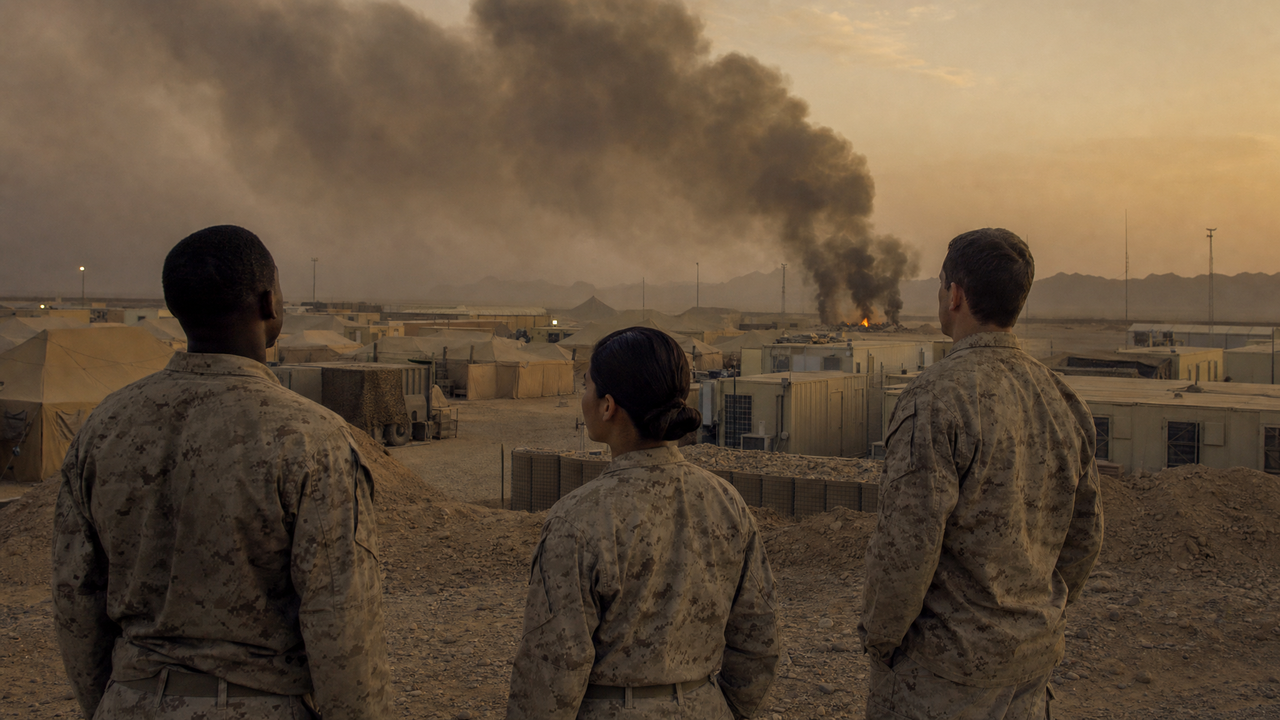
Covered service on or after September 11, 2001 in Afghanistan, Djibouti, Egypt, Jordan, Lebanon, Syria, Uzbekistan, or Yemen, or on or after August 2, 1990 in the listed Gulf countries. A diagnosis on the 23-condition list is presumed service-connected.
What the file needs

Southwest Asia service also opens 38 CFR § 3.317 for undiagnosed illness and medically unexplained chronic multisymptom illness — chronic fatigue syndrome, fibromyalgia, and functional gastrointestinal disorders. No nexus opinion required.
What the file needs

For site-specific exposures like Qarmat Ali, Al Mishraq, and K2, and for every secondary condition — sleep apnea, depression, reflux, hypertension. This is the door that produces the largest rating increases and gets used the least.
What the file needs
Order matters more than speed. Every step below is free, and the first one protects money you have not been awarded yet.
An Intent to File locks your effective date for one year. Everything you are later awarded is paid back to the date VA received that form, not the date you finished gathering evidence. It takes minutes and costs nothing.
One form can carry many conditions, but each one has to be named. "Breathing problems" is not a claim; asthma, chronic sinusitis, and chronic rhinitis are three claims with three sets of criteria, and each is rated on its own before the ratings are combined.
The Individual Longitudinal Exposure Record compiles what the government already knows about where you served and what was there. For exposure that is not on a presumptive list, ask for a Toxic Exposure Risk Activity determination under 38 U.S.C. § 1168 — that determination is what turns an unlisted exposure into a developed one.
Form 21-22a appoints an accredited agent or attorney; form 21-22 appoints a veterans service organization. Representation is never required. No one may lawfully charge you a fee to prepare or file an original claim.
A Supplemental Claim (20-0995) is for new and relevant evidence. Higher-Level Review (20-0996) is for a decision that got the existing evidence wrong and allows no new evidence. A Board appeal (10182) is for the law itself. Choosing the wrong lane can cost a year and, in the worst case, an effective date.
If you were denied for asthma, sinusitis, rhinitis, or a listed cancer before August 10, 2022, that decision was issued under a law that no longer exists. A Supplemental Claim with the new presumption named is the correct route. Filing is free, and no one may lawfully charge a fee to prepare or file an original claim.

Post-9/11 veterans are the one group VA enrolls in a registry automatically. That enrollment does nothing for your claim by itself, and it is not a substitute for the health examination that actually documents your lungs.
To confirm you are in the burn pit registry, to schedule the Gulf War Registry exam, or to ask for the toxic exposure screening, contact the Environmental Health Coordinator at your VA medical center, or call MyVA411 at 800-698-2411, available 24 hours a day, seven days a week.
Being in a registry is not evidence that you were exposed, and no registry entry has ever granted a claim. Use the registry and the screening to build a documented medical record — then file the claim, which is the only thing that pays.
Registry exams and exposure evaluations start with a clinician. Our doctor page has the words to use at the appointment, the direct phone number and VA email of the exposure coordinator at your own VA medical center, and every VA registry you can sign up for.

As the PACT Act moves more burn-pit and airborne-hazard diseases onto the presumptive list, more post-9/11 deaths become service-connected — and that directly widens the door to survivor benefits. Dependents of a permanently and totally disabled veteran can use health care and education benefits while the veteran is still living.
Both options are free · No obligation
Talking to a VA-accredited claims agent costs nothing either way. Pick the one that fits: get answers to your questions, or register to hire us to take on your claim.

Free information — just ask
You can ask Albert, our AI claims assistant, anything about exposure, evidence, or the claims process — he answers instantly. If you would rather have a direct, personal answer, send your question below and an accredited agent will come back to you. No cost, no obligation.

Ready to hire us? Register with us
For veterans who have decided they want us on their claim. Registering is free too, and it takes the registration form plus a signed VA Form 21-22a.
Until VA Form 21-22a is signed we cannot accept your claim, access your VA file, or do any work on your behalf. That is federal law, not firm policy.
What happens after you register
An accredited agent personally reviews every request — we’ll reach out within 48 hours.