If you were there for a shot, you have a name for it, and the name is Atomic Veteran. The government did not use it for decades — the Nuclear Radiation and Secrecy Agreements Act was not repealed until 1996, and until then a great many of these men could not lawfully say what they had watched. This is that file.
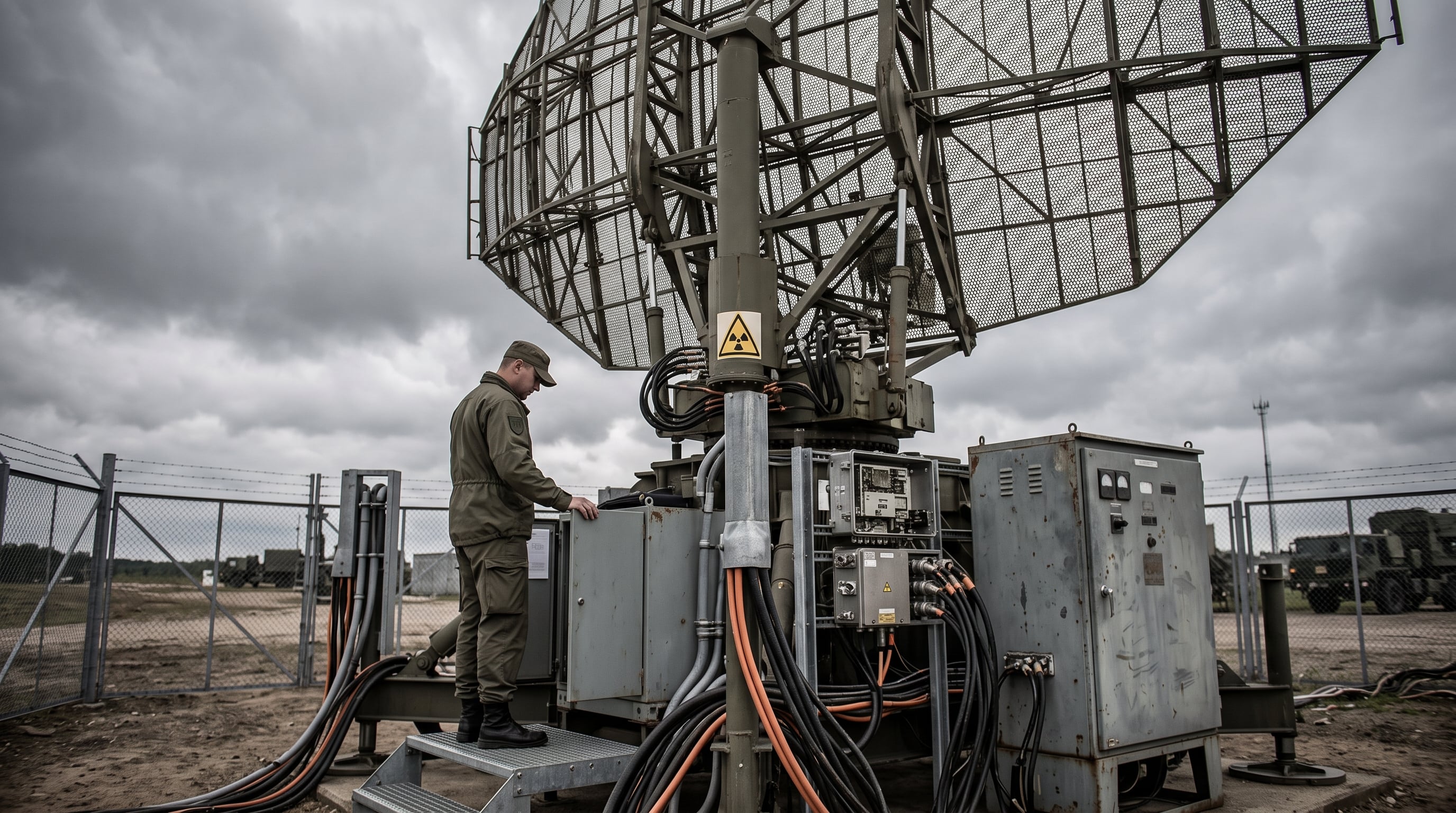
The United States conducted hundreds of atmospheric nuclear tests between 1945 and 1962, and service members were present for them by design. They watched from trenches, flew sampling aircraft through the cloud, crewed ships positioned downwind, and walked back into ground zero afterward to recover instruments. Others occupied Hiroshima and Nagasaki in the months after the bombings, cleaned up broken-arrow accident sites in Spain and Greenland, scraped contaminated soil from Pacific atolls, or worked inside the gaseous diffusion plants that enriched the fuel.
Radiation is the one exposure where VA maintains two entirely separate legal routes, and confusing them costs veterans their claims. The first is the radiation-risk activity presumption under 38 CFR 3.309(d): participate in a listed activity, develop one of twenty-one listed cancers, and service connection is presumed. The second is the dose-based route under 38 CFR 3.311, where a dose estimate is reconstructed and a radiogenic disease is evaluated against it. If the first route does not fit, the second is still open — and being denied under one is not a denial under the other.
What you were actually breathing, drinking, or touching
A presumption exists for 21 cancers if you participated in a listed radiation-risk activity. A separate dose-based route under 38 CFR 3.311 covers radiogenic diseases outside that presumption.
Where it was, when it was, and who was standing there
The exposure, in specifics
A claim is decided on specifics. Location, date range, and duty — in that combination — are what turn an assertion of exposure into a documented one.
Atmospheric nuclear test participation — the Atomic Veterans
Onsite participation in an atmospheric nuclear weapons test, including the official operational periods and the occupation of test sites. This is the largest group of radiation-exposed veterans and it covers the Nevada Test Site and the Pacific Proving Grounds alike.
Hiroshima and Nagasaki occupation, and POW service in Japan
Occupation of Hiroshima or Nagasaki between August 6, 1945 and July 1, 1946, and service as a prisoner of war in Japan during that period.
Nuclear fuel plants and Amchitka
Service at the gaseous diffusion plants at Paducah, Kentucky; Portsmouth, Ohio; or the K-25 area at Oak Ridge, Tennessee, and service on Amchitka Island, Alaska, before January 1, 1974, in connection with underground testing.
The PACT Act additions
The PACT Act added three cleanup missions as radiation-risk activities: the Enewetak Atoll cleanup, January 1, 1977 to December 31, 1980; the response to the nuclear accident at Palomares, Spain, January 17, 1966 to March 31, 1967; and the response at Thule Air Base, Greenland, January 21, 1968 to September 25, 1968.
How you qualify
The routes available on this exposure
Work out which route your case is on before you gather a single document. Preparing the wrong evidence is the most common reason a truthful claim comes back denied.
Presumptive route
Route one — radiation-risk activity under 3.309(d)
Participation in a listed activity plus one of the twenty-one listed cancers, and service connection is presumed. The activity is what has to be proven, and the Defense Threat Reduction Agency maintains the participation records that prove it. Many veterans are on those rosters and have never been told.
Participation is documented through the Defense Threat Reduction Agency.
Unit records, orders, and ship movement reports corroborate presence.
The cancer must be one of the twenty-one listed diseases.
Film badge readings are helpful but are not required for this route.
Facts-found route
Route two — the dose-based route under 3.311
If the presumption does not fit — your activity is not listed, or your disease is not one of the twenty-one — VA is required to obtain a radiation dose estimate and refer the claim for an opinion on whether the disease is related to that dose. This route covers a much broader set of radiogenic diseases and it is procedural: VA has to do the dose reconstruction. A decision issued without one is incomplete.
VA must request a dose estimate from the service department.
The claim is then referred to the Under Secretary for Benefits for an opinion.
Radiogenic diseases under 3.311 extend well beyond the 3.309(d) cancer list.
Film badge data, if it exists, is direct dose evidence — request it.
Two different things — never combine them
A presumption and a TERA determination are not the same thing
These two get mixed together constantly — by veterans, by service officers, and sometimes in the decision letter itself. They are separate mechanisms that answer separate questions. One asks where and when you served. The other asks what you did while you were there. Treating either one as a substitute for the other is how a winnable claim gets prepared the wrong way and comes back denied.
Here is the fastest way to tell which lane you are standing in. A presumption almost always comes out of a deployment or an assignment to a place that has already been named — Vietnam, the Gulf, the Korean DMZ, the burn-pit countries, Camp Lejeune. Congress or VA drew a box around a region and a set of dates, and if your service falls inside that box and your diagnosis is on the list attached to it, you are in the presumptive lane and the law does the connecting for you. TERA is for everything else. If your exposure did not come from being sent to one of those named locations — if it came from the aircraft you turned wrenches on, the fuel you pumped, the foam you sprayed, the paint and solvent you stripped with, the engine room you stood watch in, the stateside installation where the work itself was the hazard — then no list is ever going to carry your claim. That is a TERA case, and it is proved with your duties.
Read both columns before you decide what to gather. If you are in the presumptive lane, the work is proving your service facts — orders, dates, locations. If you are in the TERA lane, the work is documenting what you actually did and then getting a medical opinion that ties it to the diagnosis. Those are two entirely different piles of paper, and preparing the wrong one costs months. And plenty of veterans are standing in both lanes at the same time — one condition that qualifies off a deployment, another that only ever gets connected through the work.
Set by law — where and when you served
A presumption
A presumption is written into statute and regulation. It has three moving parts and all three have to line up: a specific place, a specific date range, and a diagnosis that appears on the list attached to that place. When they do, VA presumes the exposure and presumes the connection — you never have to produce a medical opinion tying the disease to the service.
It is decided on service records, not on medical evidence.
Miss the location or the date window by anything at all and the presumption simply does not apply.
The condition list is closed — a diagnosis that is not on it is not presumptive, however strong the science behind it.
If you do qualify, it is the fastest route to a decision that exists.
Based on what you actually did
A TERA determination
TERA stands for Toxic Exposure Risk Activity. It is VA’s finding that your service involved an activity that put you at risk of a hazard, and it comes out of your duties, your assignments, and the work you actually performed — not out of a list of places and dates. It is not a presumption, and on its own it does not grant service connection.
What it does: it puts the exposure into the record, and under 38 U.S.C. § 1168 it generally obligates VA to obtain an exam and a medical opinion when there is a current disability and the file is otherwise short of proof.
What it does not do: it does not concede the medical link. VA can find TERA and still deny the claim for “no nexus.”
It is also used on the health care side, to establish eligibility to enroll and to get the toxic exposure screening.
It is frequently missing from the file, or built off your primary job code alone — which misses the duties that actually exposed you.
Keep them apart — four rules that decide claims
No presumption does not mean no claim. It means your claim is facts-found, and the link gets built with evidence instead of handed to you by regulation.
A TERA finding is not a presumption. It never removes the need for a nexus opinion — it is what forces VA to go get one.
You can be in both lanes at once. Presumptive on one condition and facts-found on another, inside the same application.
Serving somewhere with a documented hazard is not the same as qualifying for a presumption. The presumption needs the exact place, the exact dates, and a listed condition — all three.
The condition lists
What is on a list, and what is not
Read the label above each list carefully. A presumptive list and a health-care eligibility list are two different things, and confusing them costs veterans claims every single day.
Presumptive cancers under 38 CFR 3.309(d)
These apply when a radiation-risk activity is established.
Leukemia, other than chronic lymphocytic leukemia
Cancer of the thyroid
Cancer of the breast
Cancer of the pharynx
Cancer of the esophagus
Cancer of the stomach
Cancer of the small intestine
Cancer of the pancreas
Multiple myeloma
Lymphomas, other than Hodgkin’s disease
Cancer of the bile ducts
Cancer of the gall bladder
Primary liver cancer, unless cirrhosis or hepatitis B is indicated
Cancer of the salivary gland
Cancer of the urinary tract
Bronchiolo-alveolar carcinoma
Cancer of the bone
Cancer of the brain
Cancer of the colon
Cancer of the lung
Cancer of the ovary
How to apply
The filing order, with the actual forms
Order matters. Filing in the wrong sequence is how veterans lose months of back pay on a claim that was always going to be granted.
1
VA Form 21-0966
File the Intent to File
Dose reconstruction and DTRA record requests take months. Hold the effective date for one year while the record is assembled.
2
Request your Defense Threat Reduction Agency participation record
This is the document that establishes a radiation-risk activity. Request it before filing if you can, and name the operation if you know it.
3
VA Form 21-526EZ
File and name the route you are claiming under
State the operation or mission, the dates, and the cancer. If your disease is outside the twenty-one, say plainly that you are claiming under 38 CFR 3.311 so the dose reconstruction is triggered.
4
Request the dose estimate in writing
Under 3.311, VA must obtain a dose estimate from the service department. Ask for it explicitly and ask for a copy when it arrives.
5
VA Form 21-22a
Appoint an accredited agent
Radiation claims are the most procedurally technical in the system. Talk to us before filing so the correct route is invoked from the start.
Evidence to gather
What belongs in the file before you file
Defense Threat Reduction Agency participation records for atmospheric test participation.
Unit orders, ship deck logs, and movement reports placing you at the test site or cleanup mission.
Film badge or dosimetry records where they exist — request them explicitly.
Occupation records for Hiroshima or Nagasaki service in the covered window.
Employment records for the Paducah, Portsmouth, or K-25 gaseous diffusion plants.
Pathology confirming the specific cancer and the date of diagnosis.
Buddy statements from others on the same mission, which matter enormously when unit records were classified or destroyed.
What you will be told, and the answer
The shortcuts to expect
““Your film badge showed no significant dose.””
Film badges were issued inconsistently, worn inconsistently, and measured only external gamma — not inhaled or ingested internal contamination, which is the primary hazard on a cleanup mission. A low badge reading does not measure what you breathed.
““Your cancer is not on the presumptive list.””
Then the claim belongs under 38 CFR 3.311, which requires VA to obtain a dose estimate and refer the case for a medical opinion. A denial that never mentions 3.311 has skipped a step the regulation requires.
““We have no record you participated.””
VA is not the record holder. The Defense Threat Reduction Agency maintains the participation database and can confirm presence at named operations. That request has to be made, and it is frequently not made until someone insists.
Why representation changes the odds
Register with us on your ionizing radiation — atomic veterans claim
Tell an accredited agent what happened and we will review your situation first, then tell you honestly whether we can help. One form, one click, and a real person reads it.
Choosing the right route — 3.309(d) presumption or 3.311 dose reconstruction — decides the case, and the wrong route produces a denial that looks final and is not.
DTRA participation records exist for a great many veterans who were never told and never requested them.
Dose reconstructions are challengeable. They rest on assumptions about time, distance, shielding, and internal uptake that can be wrong.
Enewetak, Palomares, and Thule became radiation-risk activities under the PACT Act. Pre-PACT denials for those missions are strong reopening candidates.
Many Atomic Veterans still believe they are bound by the secrecy oath. Congress repealed the Nuclear Radiation and Secrecy Agreements Act in 1996, and President Clinton had already apologised to them in October 1995. You are allowed to say what you saw — to your doctor, to the VA, and to your family.
The 1973 fire at the National Personnel Records Center destroyed millions of records, and it is a common reason a participation claim stalls. That is what the Defense Threat Reduction Agency database exists to work around, and it is a separate request from anything the VA does on its own.
VA-Accredited Claims Agent #45147
Albert Thombs
An accredited agent personally reviews every request — we’ll reach out within 48 hours.
Registering opens the secure sign-up form of the advocate who is next to take a new file, in a new tab. If you would rather have someone look at your situation before you decide anything, ask for the free case review instead.
Office hours: Mon–Fri, 11am–6pm Pacific
Keep building the case
The era, the job, and the medical evidence that go with this exposure
Radiation-risk activities and presumptive cancers: 38 CFR 3.309(d). Dose-based radiogenic disease claims: 38 CFR 3.311. Enewetak, Palomares, and Thule added by the PACT Act of 2022. General information for education, not legal or medical advice.
Both options are free · No obligation
Two ways to work with us — both free
Talking to a VA-accredited claims agent costs nothing either way. Pick the one that fits: get answers to your questions, or register to hire us to take on your claim.
Free information — just ask
You can ask Albert, our AI claims assistant, anything about exposure, evidence, or the claims process — he answers instantly. If you would rather have a direct, personal answer, send your question below and an accredited agent will come back to you. No cost, no obligation.
Or send your question
Ready to hire us? Register with us
For veterans who have decided they want us on their claim. Registering is free too, and it takes the registration form plus a signed VA Form 21-22a.
Until VA Form 21-22a is signed we cannot accept your claim, access your VA file, or do any work on your behalf. That is federal law, not firm policy.
What happens after you register
You register. This simply starts the conversation — you are not our client yet, and you owe us nothing.
You sign and return VA Form 21-22a. It appoints us as your accredited representative and gives us access to your VA file.
Once we have your signed 21-22a and access to your case, we verify everything is in order.
We review your case in full and conduct your interview with an accredited agent.
Only then do YOU decide whether to move forward with us. If you choose not to, we will not proceed on your behalf — no pressure, no obligation.