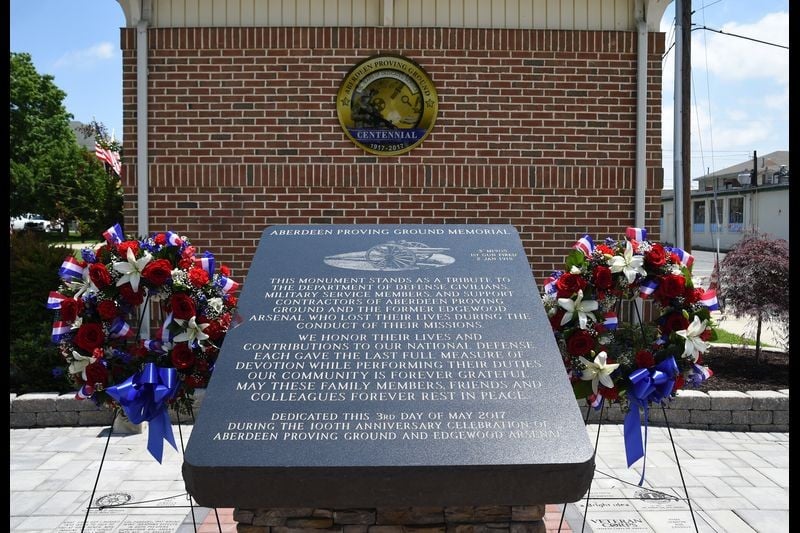
The United States tested chemical and biological warfare agents on its own servicemembers. This is not a theory — it is documented federal history. From 1942 through 1975 at Edgewood Arsenal in Maryland, roughly 7,000 soldiers were exposed to nerve agents, incapacitating agents, and psychoactive drugs under a research program. During World War II, tens of thousands more were put through mustard gas chamber and field tests. From 1962 through 1974, Project 112 and its shipboard component Project SHAD released chemical and biological agents on and around Navy vessels and at land sites to test detection and decontamination.
Almost every one of these men was sworn to secrecy, and many kept that oath for decades — which meant they could not describe their own exposure to a VA rater or even to their own doctor. The programs were declassified, DoD produced participant lists, and VA now accepts those rosters as proof of exposure. If you were in one of these programs, the hardest part of the exposure case is already done. What remains is claiming correctly.
What you were actually breathing, drinking, or touching
Mustard gas (sulfur mustard)LewisiteSarin and VX nerve agentsBZ (3-quinuclidinyl benzilate)LSD and psychoactive compoundsBiological simulants and live agentsRiot control agents
Partly presumptive
A narrow presumption exists. 38 CFR § 3.316 provides presumptive service connection for specific conditions in veterans with full-body exposure to mustard gas or Lewisite. Edgewood and Project 112 or SHAD participation does not carry its own presumptive condition list — those are facts-found claims, but with the exposure element already established by the federal record.
Where it was, when it was, and who was standing there
The exposure, in specifics
A claim is decided on specifics. Location, date range, and duty — in that combination — are what turn an assertion of exposure into a documented one.
Edgewood Arsenal, 1942–1975
Volunteer research subjects at Edgewood Arsenal in Maryland were exposed to nerve agents including sarin and VX, incapacitating agents including BZ, psychoactive compounds including LSD, and irritants. Participants received a code name and were told not to discuss the work. DoD later identified the roster.
WWII mustard gas and Lewisite testing
Full-body chamber tests, patch tests, and field exercises exposed servicemembers to sulfur mustard and Lewisite to evaluate protective clothing and treatment. Testing occurred at multiple sites including Edgewood, Bushnell in Florida, Naval Research Laboratory sites, and Pacific field locations.
Project 112 and Project SHAD, 1962–1974
Shipboard and land-based trials released chemical and biological agents and simulants to test detection, protection, and decontamination. Project SHAD covered the shipboard tests. Crews were frequently unaware a test was in progress. DoD has published fact sheets identifying the vessels and test names.
Who was exposed
Research volunteers at Edgewood, WWII-era chamber and field test subjects, and the crews of participating vessels and land units in Project 112 and SHAD — including sailors who were simply aboard and never volunteered for anything.
How you qualify
The routes available on this exposure
Work out which route your case is on before you gather a single document. Preparing the wrong evidence is the most common reason a truthful claim comes back denied.
Presumptive route
Mustard gas and Lewisite presumption under § 3.316
If you had full-body exposure to nitrogen or sulfur mustard or to Lewisite during active service, and you later developed one of the conditions listed in the regulation, service connection is presumed. The regulation sets different exposure thresholds for different conditions — some require full-body exposure to mustard agents, some require additional exposure criteria. This is the only true presumption in the agent testing category.
Chronic conjunctivitis, keratitis, corneal opacities, and scar formation
Nasopharyngeal, laryngeal, lung, and squamous cell skin cancer
Chronic laryngitis, bronchitis, emphysema, asthma, and chronic obstructive pulmonary disease
Acute nonlymphocytic leukemia following full-body Lewisite exposure
Facts-found route
Edgewood, Project 112, and SHAD on the facts
For these programs the exposure element is generally established by the DoD participant roster or vessel fact sheet — you do not have to prove you were there. What you still need is a current diagnosis and a medical opinion linking it to the specific agent you were exposed to. Because the agents differ enormously between programs, a generic opinion will not work. The opinion has to name the agent and explain the mechanism.
DoD Edgewood participant confirmation or the VA Edgewood claims process
DoD Project 112 and SHAD fact sheets naming your vessel or unit and test
Deck logs, muster rolls, or unit records placing you aboard during the test window
A statement on VA Form 21-4138 describing what you were told and what you experienced
Secondary route
Secondary service connection
Under 38 CFR § 3.310, conditions caused or aggravated by an established service-connected condition are compensable separately. In agent testing cases the mental health chain matters especially — many participants carry documented psychiatric consequences of both the agents and the secrecy imposed on them afterward.
Two different things — never combine them
A presumption and a TERA determination are not the same thing
These two get mixed together constantly — by veterans, by service officers, and sometimes in the decision letter itself. They are separate mechanisms that answer separate questions. One asks where and when you served. The other asks what you did while you were there. Treating either one as a substitute for the other is how a winnable claim gets prepared the wrong way and comes back denied.
Here is the fastest way to tell which lane you are standing in. A presumption almost always comes out of a deployment or an assignment to a place that has already been named — Vietnam, the Gulf, the Korean DMZ, the burn-pit countries, Camp Lejeune. Congress or VA drew a box around a region and a set of dates, and if your service falls inside that box and your diagnosis is on the list attached to it, you are in the presumptive lane and the law does the connecting for you. TERA is for everything else. If your exposure did not come from being sent to one of those named locations — if it came from the aircraft you turned wrenches on, the fuel you pumped, the foam you sprayed, the paint and solvent you stripped with, the engine room you stood watch in, the stateside installation where the work itself was the hazard — then no list is ever going to carry your claim. That is a TERA case, and it is proved with your duties.
Read both columns before you decide what to gather. If you are in the presumptive lane, the work is proving your service facts — orders, dates, locations. If you are in the TERA lane, the work is documenting what you actually did and then getting a medical opinion that ties it to the diagnosis. Those are two entirely different piles of paper, and preparing the wrong one costs months. And plenty of veterans are standing in both lanes at the same time — one condition that qualifies off a deployment, another that only ever gets connected through the work.
Set by law — where and when you served
A presumption
A presumption is written into statute and regulation. It has three moving parts and all three have to line up: a specific place, a specific date range, and a diagnosis that appears on the list attached to that place. When they do, VA presumes the exposure and presumes the connection — you never have to produce a medical opinion tying the disease to the service.
It is decided on service records, not on medical evidence.
Miss the location or the date window by anything at all and the presumption simply does not apply.
The condition list is closed — a diagnosis that is not on it is not presumptive, however strong the science behind it.
If you do qualify, it is the fastest route to a decision that exists.
Based on what you actually did
A TERA determination
TERA stands for Toxic Exposure Risk Activity. It is VA’s finding that your service involved an activity that put you at risk of a hazard, and it comes out of your duties, your assignments, and the work you actually performed — not out of a list of places and dates. It is not a presumption, and on its own it does not grant service connection.
What it does: it puts the exposure into the record, and under 38 U.S.C. § 1168 it generally obligates VA to obtain an exam and a medical opinion when there is a current disability and the file is otherwise short of proof.
What it does not do: it does not concede the medical link. VA can find TERA and still deny the claim for “no nexus.”
It is also used on the health care side, to establish eligibility to enroll and to get the toxic exposure screening.
It is frequently missing from the file, or built off your primary job code alone — which misses the duties that actually exposed you.
Keep them apart — four rules that decide claims
No presumption does not mean no claim. It means your claim is facts-found, and the link gets built with evidence instead of handed to you by regulation.
A TERA finding is not a presumption. It never removes the need for a nexus opinion — it is what forces VA to go get one.
You can be in both lanes at once. Presumptive on one condition and facts-found on another, inside the same application.
Serving somewhere with a documented hazard is not the same as qualifying for a presumption. The presumption needs the exact place, the exact dates, and a listed condition — all three.
The condition lists
What is on a list, and what is not
Read the label above each list carefully. A presumptive list and a health-care eligibility list are two different things, and confusing them costs veterans claims every single day.
Presumptive conditions under 38 CFR § 3.316 — mustard gas and Lewisite
These are true VA presumptives, subject to the full-body exposure requirements written into the regulation. Read the exposure criteria carefully — they are not identical for every condition.
Conditions reported among Edgewood and Project 112 or SHAD participants
Not a VA presumptive list. These are outcomes reported in the National Academies reviews and participant health studies. Each requires a facts-found claim with a medical opinion naming the agent.
Persistent cognitive impairment and memory loss
Chronic anxiety and depressive disorders
Post-traumatic stress disorder
Peripheral and autonomic neuropathy
Chronic respiratory disease
Cardiac arrhythmia
Chronic dermatologic conditions
Sleep disorders
How to apply
The filing order, with the actual forms
Order matters. Filing in the wrong sequence is how veterans lose months of back pay on a claim that was always going to be granted.
1
VA Form 21-0966
Protect the effective date
File the Intent to File first. Verification of program participation can take months, and the Intent to File holds your date while that runs.
2
VA Form 21-4138
Write your account of the program
Where you were, what year, what you were told, whether you signed anything, what agents were named, and what you experienced during and after. Include the code name if you were given one.
3
VA Form 21-4142 and 21-4142a
Release your civilian medical records
Decades of private treatment records often contain the earliest documentation of the condition. Authorize all of it.
4
VA Form 21-526EZ
File and state the program by name
Write Edgewood Arsenal, Project 112, Project SHAD, or mustard gas testing explicitly in the claim. Naming the program triggers the verification process instead of leaving your file to be handled as an ordinary claim.
5
VA Form 21-22a
Appoint an accredited representative
These claims turn on federal records most veterans have never seen. An accredited agent can pursue the verification, frame the presumptive and facts-found arguments in the alternative, and appeal under VA Form 20-0995, VA Form 20-0996, or VA Form 10182 if needed.
Evidence to gather
What belongs in the file before you file
DoD Edgewood Arsenal participant confirmation, or a VA request for the roster check on your behalf
DoD Project 112 and Project SHAD fact sheets identifying your vessel, unit, and test dates
Deck logs, muster rolls, morning reports, or orders placing you at the site during the test
WWII service records, chamber test records, or unit histories for mustard gas and Lewisite testing
Your own written account of what you were told, what you signed, and what happened afterward
Complete medical records establishing every current diagnosis and its onset date
A nexus opinion naming the specific agent and explaining the biological mechanism
What you will be told, and the answer
The shortcuts to expect
“You signed a secrecy agreement, so you cannot discuss it.”
The programs were declassified. DoD published participant information and VA processes these claims routinely. No oath signed in 1968 prevents you from filing today, and any adjudicator who suggests otherwise is wrong.
“There is no record you participated.”
VA has an established process for verifying Edgewood participation and DoD maintains the Project 112 and SHAD fact sheets. Verification is VA duty-to-assist work, not your burden to complete alone. If the roster search comes back empty, deck logs and muster rolls still place you aboard during a documented test.
“Your exposure to mustard gas was not full-body, so § 3.316 does not apply.”
That may be correct for the presumption — and it does not end the claim. Failing a presumption never bars facts-found service connection under 38 CFR § 3.303(d). The presumption is one road, not the only road.
Why representation changes the odds
Register with us on your chemical and biological agent testing claim
Tell an accredited agent what happened and we will review your situation first, then tell you honestly whether we can help. One form, one click, and a real person reads it.
We pursue the DoD and VA participation verification directly, instead of leaving a roster check to chance inside a busy regional office.
We plead the § 3.316 presumption and the facts-found theory in the alternative, so a failed exposure threshold does not sink the entire claim.
We make sure the nexus opinion names the actual agent — BZ, sarin, sulfur mustard — because a generic chemical opinion gets discounted in these cases.
We claim the psychiatric consequences, which are real, documented in the literature, and left out of most of these filings.
VA-Accredited Claims Agent #45147
Albert Thombs
An accredited agent personally reviews every request — we’ll reach out within 48 hours.
Registering opens the secure sign-up form of the advocate who is next to take a new file, in a new tab. If you would rather have someone look at your situation before you decide anything, ask for the free case review instead.
Office hours: Mon–Fri, 11am–6pm Pacific
Keep building the case
The era, the job, and the medical evidence that go with this exposure
Authorities: 38 CFR § 3.316 exposure to certain herbicide agents and full-body exposure to mustard gas or Lewisite; 38 CFR § 3.303(d); 38 CFR § 3.310. Program history from Department of Defense Project 112 and Project SHAD fact sheets and the National Academies of Sciences reviews of Edgewood Arsenal chemical agent testing. General information for education, not legal or medical advice.
Both options are free · No obligation
Two ways to work with us — both free
Talking to a VA-accredited claims agent costs nothing either way. Pick the one that fits: get answers to your questions, or register to hire us to take on your claim.
Free information — just ask
You can ask Albert, our AI claims assistant, anything about exposure, evidence, or the claims process — he answers instantly. If you would rather have a direct, personal answer, send your question below and an accredited agent will come back to you. No cost, no obligation.
Or send your question
Ready to hire us? Register with us
For veterans who have decided they want us on their claim. Registering is free too, and it takes the registration form plus a signed VA Form 21-22a.
Until VA Form 21-22a is signed we cannot accept your claim, access your VA file, or do any work on your behalf. That is federal law, not firm policy.
What happens after you register
You register. This simply starts the conversation — you are not our client yet, and you owe us nothing.
You sign and return VA Form 21-22a. It appoints us as your accredited representative and gives us access to your VA file.
Once we have your signed 21-22a and access to your case, we verify everything is in order.
We review your case in full and conduct your interview with an accredited agent.
Only then do YOU decide whether to move forward with us. If you choose not to, we will not proceed on your behalf — no pressure, no obligation.