

Start with when he served
Vietnam, Korea, the Gulf, the Cold War, post-9/11 — each era carries its own hazards and its own records. Find his era and you know which questions to ask.
Find his eraIf you lost your veteran to cancer, to his lungs, or to something the doctors never fully explained, you are not too late to learn what he was standing in. This page is here to show you what he was exposed to, tell you plainly what doors are open to you, and point you to the person to talk to. It costs nothing to read.

Read this first
He came home, he got older, and then he got sick. Maybe it was prostate cancer. Maybe his lungs. Maybe a cancer nobody in the family had ever had. He was told it was his age, or bad luck, or the cigarettes he quit in 1978 — and nobody ever asked him where he served or what he handled while he was there. By the time the family understood how serious it was, the conversation was about hospice, not about the Army.
So this page does the thing nobody did for him. First, it shows you what he was exposed to — by era, by base, by the duty he actually pulled. Second, it tells you the truth about your own rights: when a service-connected condition caused or contributed to a veteran’s death, the surviving family has claims in their own name, and a claim he had pending when he died does not simply disappear. Third, it tells you who to talk to. No forms to buy, no sign-up, nothing to pay.
Step one
Every survivor claim is built on the same foundation as his would have been: when he served, where he was stationed, what he actually did there, and what hazard was in that place. Work through these four in order. Write down what you find as you go — a name, a year, a base, a job. You are rebuilding the record he never got the chance to.
Vietnam, Korea, the Gulf, the Cold War, post-9/11 — each era carries its own hazards and its own records. Find his era and you know which questions to ask.
Find his era
Installations have documented contamination histories. Camp Lejeune, Fort McClellan, K2, Qarmat Ali and many more are on this site with what was there and when.
Look up a base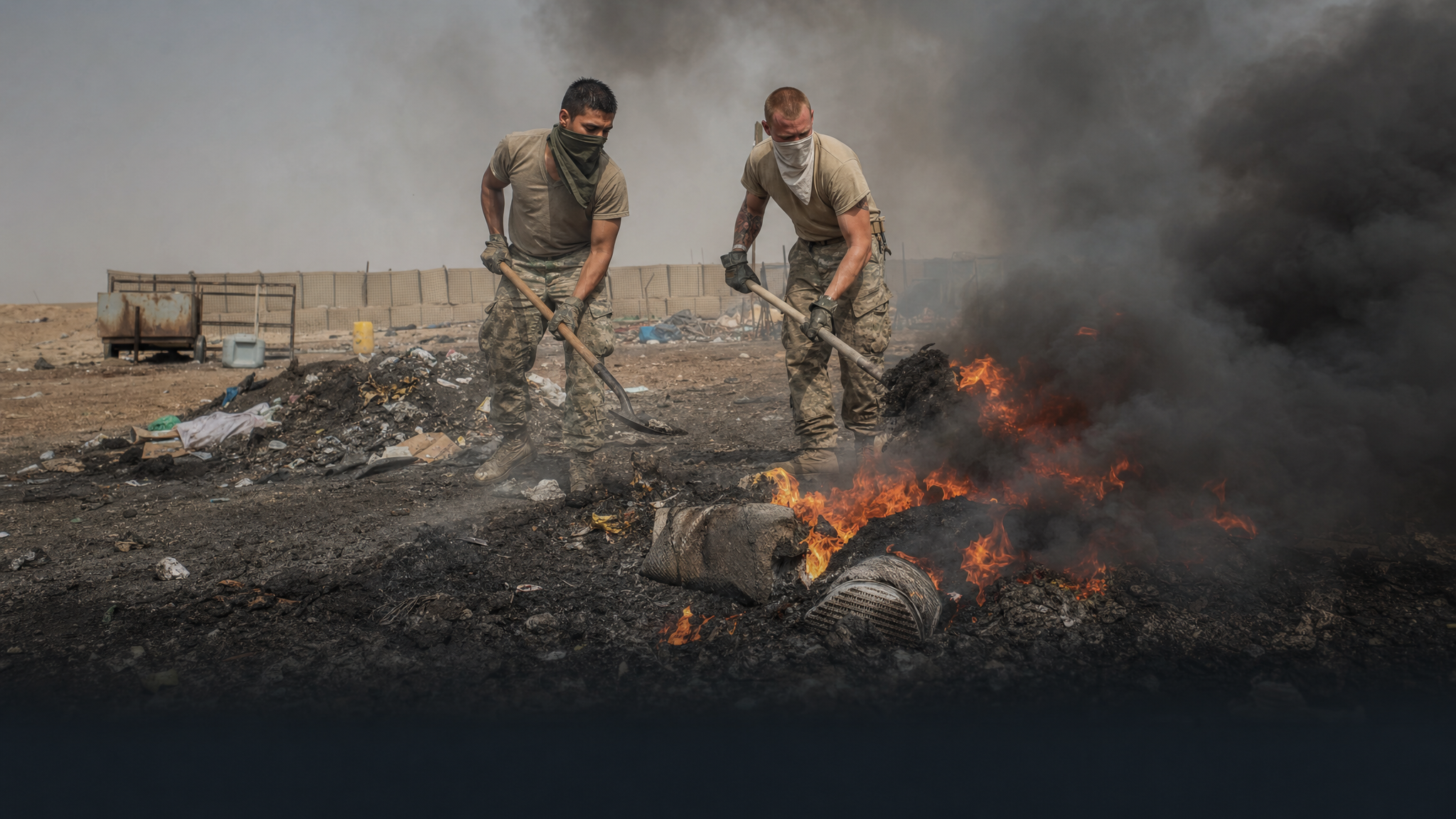
Aviation, fuel, motor pool, supply, engineers, firefighting, cleanup. The duty he pulled matters more than the job title on his discharge paper — including the details nobody logged.
Find his duty
Agent Orange, burn pits, the water at Camp Lejeune, solvents, fuels, asbestos, radiation. Put a name on what he breathed, drank or handled and the rest of the file has something to point at.
See the hazardsStep two
A death certificate does not have one cause of death on it. It has an immediate cause, the conditions that led to that cause, and a separate line for other significant conditions contributing to death. That structure is the whole reason survivors have a case at all: the law does not require that the service-connected condition was the only thing that killed him. It can be the condition that contributed.
So read every line, not just the first one. Then take three things and put them side by side: the certificate, his service history, and his treatment records. If the disease named on that certificate is one that shows up in the exposure literature for where and when he served, that is exactly where a survivor claim starts. It is also exactly the comparison nobody makes on their own.
Do not throw anything away
The certified death certificate, the hospital and oncology records, the pathology report, his discharge paper, his VA letters, even the photographs with a date on the back. Families discard the exact documents a claim is built from, usually within the first year. Put it all in one box and leave it there.

The record can be rebuilt after he is gone. It happens all the time.
Step three
If you believe his death was connected to his service, you do not need his permission and you are not filing on his behalf as a favor — several of these are your own claims, in your own name. Families routinely qualify for more than one of these, and filing one does not automatically file the others. The mechanics, the form numbers and the deadlines are all laid out in the filing guide; what follows is simply so you know the door is there.
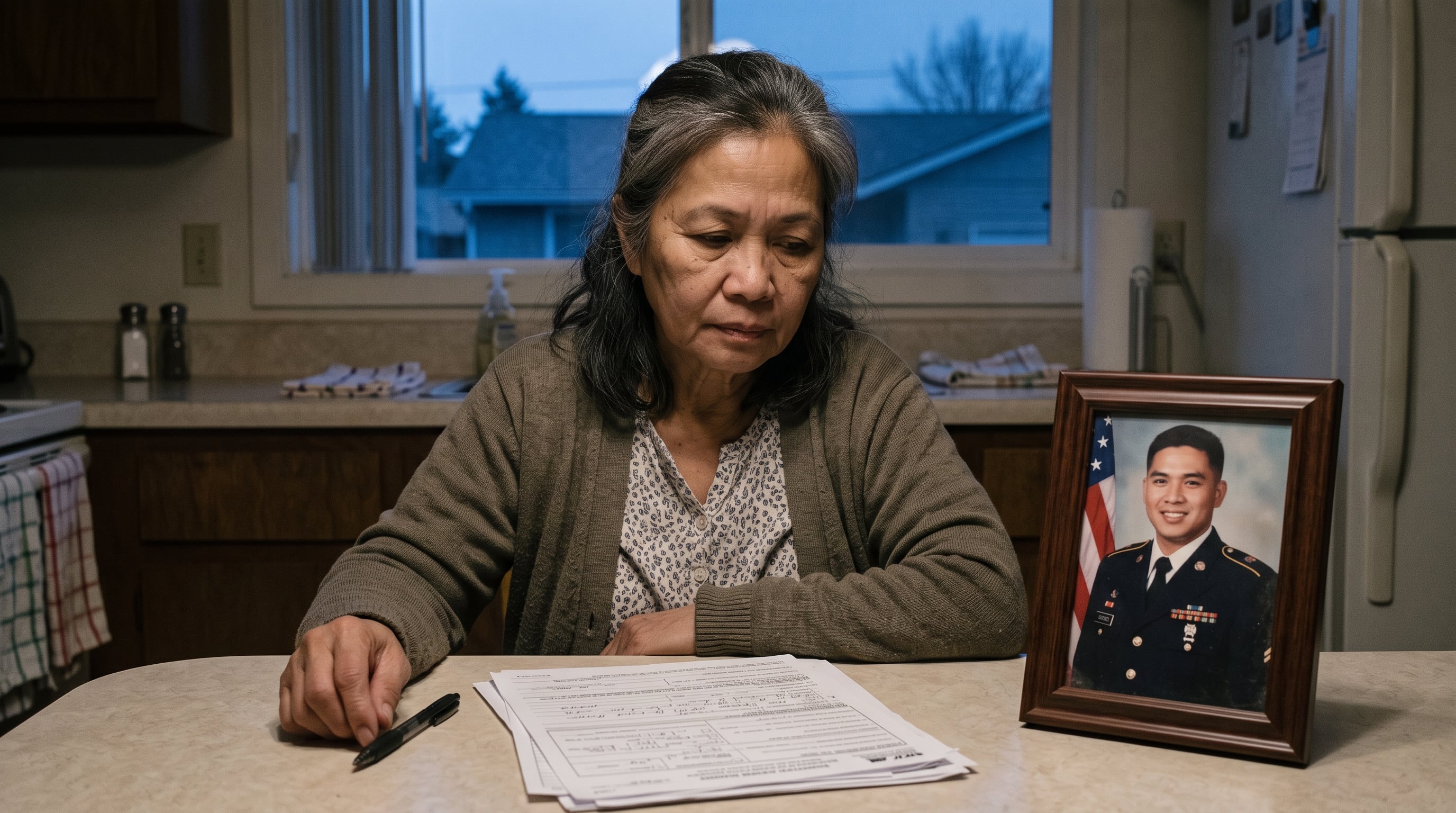
A tax-free monthly benefit in your own name when a service-connected condition caused or contributed to his death. For a surviving spouse, child, or dependent parent.

If he had a claim or appeal still pending when he died, an eligible survivor can step in and continue it, keeping his original filing date. There is a one-year window from the death.
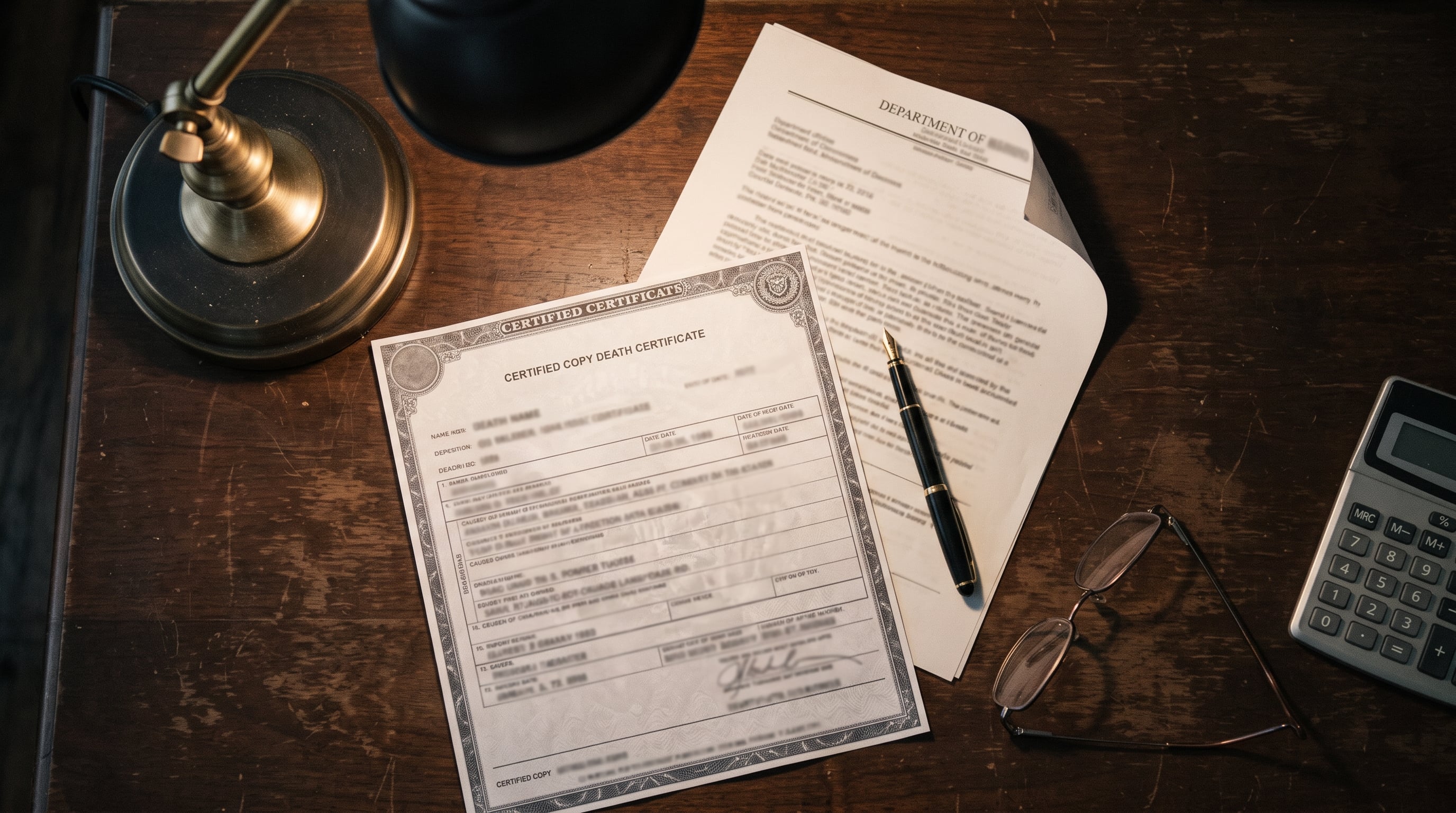
Money VA had approved and not yet paid when he died can be claimed by the surviving family, following the order of succession. The death certificate is required.
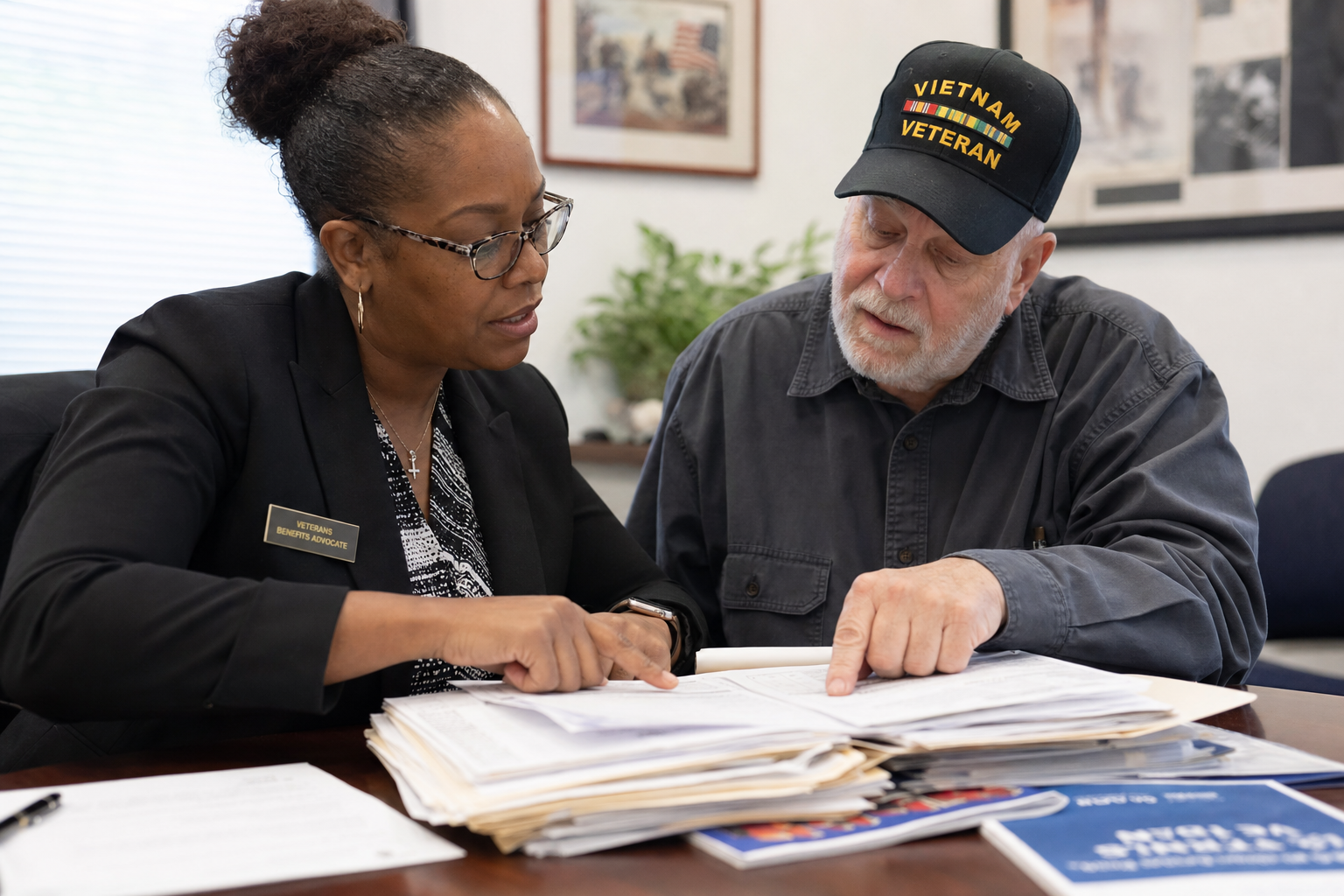
A denial does not become permanent because he died. A pending appeal can be carried forward, and a final decision can often still be challenged on the right pathway.
The mechanics are already written down for you
The filing guide on this site names each form, explains what it does in plain English, lists the evidence to gather, walks through requesting his discharge paper and claim file, and lays out the deadlines that actually bite. Read it before you mail anything.
Step four
Families lose months calling the wrong office. Gather the paper first, then bring it to someone accredited. These four, in this order, is the shortest path from where you are standing to a decision on the merits.
His oncologist or pulmonologist holds the records that describe the disease. You do not need them to agree it was service-connected — you need the records, the pathology and the dates.
How to raise exposure with a doctorHis DD-214, service records, and his VA claim file are all obtainable by an eligible survivor. The filing guide walks through requesting each one.
How to request the recordsWrite down every base, every year, every job and every hazard you can name before you talk to anyone. The worksheet on this site gives you the exact fields to fill in.
Print the exposure worksheetSurvivor claims turn on evidence and pathways, not sympathy. Albert Thombs is a VA-accredited claims agent, #45147, and a review of what you have costs you nothing.
Ask for a free reviewStraight talk, because you have had enough of the other kind
Turn this page into an appointment
Reading a symptom list changes nothing on its own. A dated note in your medical record does — for your health first, and years later for a claim. Below is every route to an appointment, the phrase that gets your exposure history written down, and the numbers to dial. Nothing on this page is a diagnosis, and none of it replaces your doctor.

Some things do not wait for a scheduler
Chest pain or pressure lasting more than a few minutes, or chest pain with sweating, nausea, or pain spreading to the jaw or arm
Sudden trouble breathing, or breathlessness while sitting still
Face droop, weakness or numbness on one side, slurred speech, or sudden confusion
Coughing up or vomiting blood, or bleeding that will not stop
A first seizure, or fainting you cannot explain
Call 911 or go to the nearest emergency room. Do not wait to reach a VA facility first, and do not drive yourself. Tell VA as soon as you can afterward — VA asks to be notified within 72 hours of emergency care received in the community — and keep every discharge paper and bill.
The PACT Act requires VA to offer this to every veteran enrolled in VA health care. It takes about five to ten minutes, and it is the cheapest way to get your exposure history into VA's own record in VA's own words.
What it is
A short set of questions asking whether you believe you were exposed to open burn pits and other airborne hazards, Agent Orange, radiation, Gulf War-related hazards, or contaminated water at Camp Lejeune.
Who can get it
Every veteran enrolled in VA health care. If you are not enrolled yet, enrollment comes first — call 877-222-8387.
How often
An initial screening, then at least once every five years. If you answer that you do not know whether you were exposed, VA schedules you again a year later.
How to get one
It is often done during a primary care or specialty visit — but you can ask for it sooner. Ask your primary care team directly, or ask your facility for its Toxic Exposure Screening Navigator by name.
What it is not
It is not an exam for any specific illness, and it is not part of the disability claims process. It is optional, and declining it does not affect your health care or your benefits.
Why bother
It creates a dated VA record that you raised military exposure. Years later, that entry is evidence that the concern predated the diagnosis.
A civilian or community provider cannot perform this screening — it lives inside VA's own health record. If you only see a private doctor, that is a reason to enroll in VA health care as well.
Since August 1, 2024, VA and the Defense Department enroll eligible veterans and service members in the Airborne Hazards and Open Burn Pit Registry automatically, from deployment records. For most people there is nothing to sign up for.
Automatic enrollment covers service between August 2, 1990 and August 31, 2021 in the listed operations and locations — Desert Shield, Desert Storm, Iraqi Freedom, Enduring Freedom and New Dawn, the Southwest Asia theater, Egypt, Afghanistan, Djibouti, Jordan, Lebanon, Syria, Uzbekistan, Yemen, and the associated airspace and waters.
You do not need to have been knowingly exposed, and you do not need any current health problem, to be included.
If you enrolled yourself before the redesign, your enrollment carried over. There is nothing to redo.
To check your status, contact the Environmental Health Coordinator at your VA facility.
The registry holds deployment and demographic data only. No medical information is stored in it.
Participation is optional and you can opt out. Being in the registry is not required to file a claim, and it does not affect your eligibility for care or benefits either way.
Being in the registry is not evidence of exposure on its own, and it is not a claim. Treat it as a research tool, and do not let anyone tell you a claim depends on it.
Write the veteran's job and the places they served at the top of that sheet, in the words the military used for it.
VET-HOME — VA's exposure team
833-633-8846
Monday to Friday, 9:00 a.m. to 7:30 p.m. ET
The number to call about a military environmental exposure specifically. VET-HOME books a free telehealth evaluation with a clinician trained in military exposures, and that clinician writes your exposure history into your VA record. Say you want a military environmental exposure assessment.
MyVA411 — VA main line
800-698-2411
24 hours a day, 7 days a week
The one number to call if you do not know who to call. Ask to be put through to your VA medical center's scheduling line, or press 0 for a person.
VA Health Benefits Hotline
877-222-8387
Monday to Friday, 8:00 a.m. to 8:00 p.m. ET
Enrolling in VA health care, health-care eligibility, VA medical bills, and community care billing.
Veterans Crisis Line
988, then press 1
24 hours a day, 7 days a week
Any crisis, and you do not need to be enrolled in VA health care to use it. You can also text 838255.
My HealtheVet help desk
877-327-0022
Monday to Friday
Trouble signing in, secure messaging, or online scheduling.
VA Benefits Hotline
800-827-1000
Monday to Friday, 8:00 a.m. to 9:00 p.m. ET
Claims, ratings, and back pay — the benefits side rather than the medical side.
TTY
711
Relay service
If you are deaf or hard of hearing.
These are VA's own published lines. If a number ever gives you a runaround, MyVA411 at 800-698-2411 will transfer you — it is staffed every hour of every day.
Bring us what you have
Send what you have — the certificate, his discharge paper, the diagnosis, the bases you can remember. Albert Thombs is a VA-accredited claims agent, #45147, and the review costs you nothing. If there is no case here, you will be told that plainly. General information, not legal advice. We are not the VA.
Straight from the VA
Two official videos for a spouse or child working out what they are entitled to after a veteran dies.
VA Pensions for Surviving Spouses | VA Benefits for Veterans' Wives & Husbands | theSITREP
Survivor pension basics from the VA, for a spouse figuring out what is left.
Source: U.S. Department of Veterans Affairs
VA Benefits for Children | Dependency & Indemnity Compensation, CHAMPVA, TRICARE, Burial | theSITREP
DIC, CHAMPVA, TRICARE and burial benefits as they apply to children.
Source: U.S. Department of Veterans Affairs
These videos are published by the U.S. Department of Veterans Affairs and are embedded here unedited. They are the agency’s own explanation of its rules, not ours, and they are not legal or medical advice. If what the VA said on camera does not match what your decision letter says, that gap is worth a conversation.
Both options are free · No obligation
Talking to a VA-accredited claims agent costs nothing either way. Pick the one that fits: get answers to your questions, or register to hire us to take on your claim.

Free information — just ask
You can ask Albert, our AI claims assistant, anything about exposure, evidence, or the claims process — he answers instantly. If you would rather have a direct, personal answer, send your question below and an accredited agent will come back to you. No cost, no obligation.

Ready to hire us? Register with us
For veterans who have decided they want us on their claim. Registering is free too, and it takes the registration form plus a signed VA Form 21-22a.
Until VA Form 21-22a is signed we cannot accept your claim, access your VA file, or do any work on your behalf. That is federal law, not firm policy.
What happens after you register
An accredited agent personally reviews every request — we’ll reach out within 48 hours.