
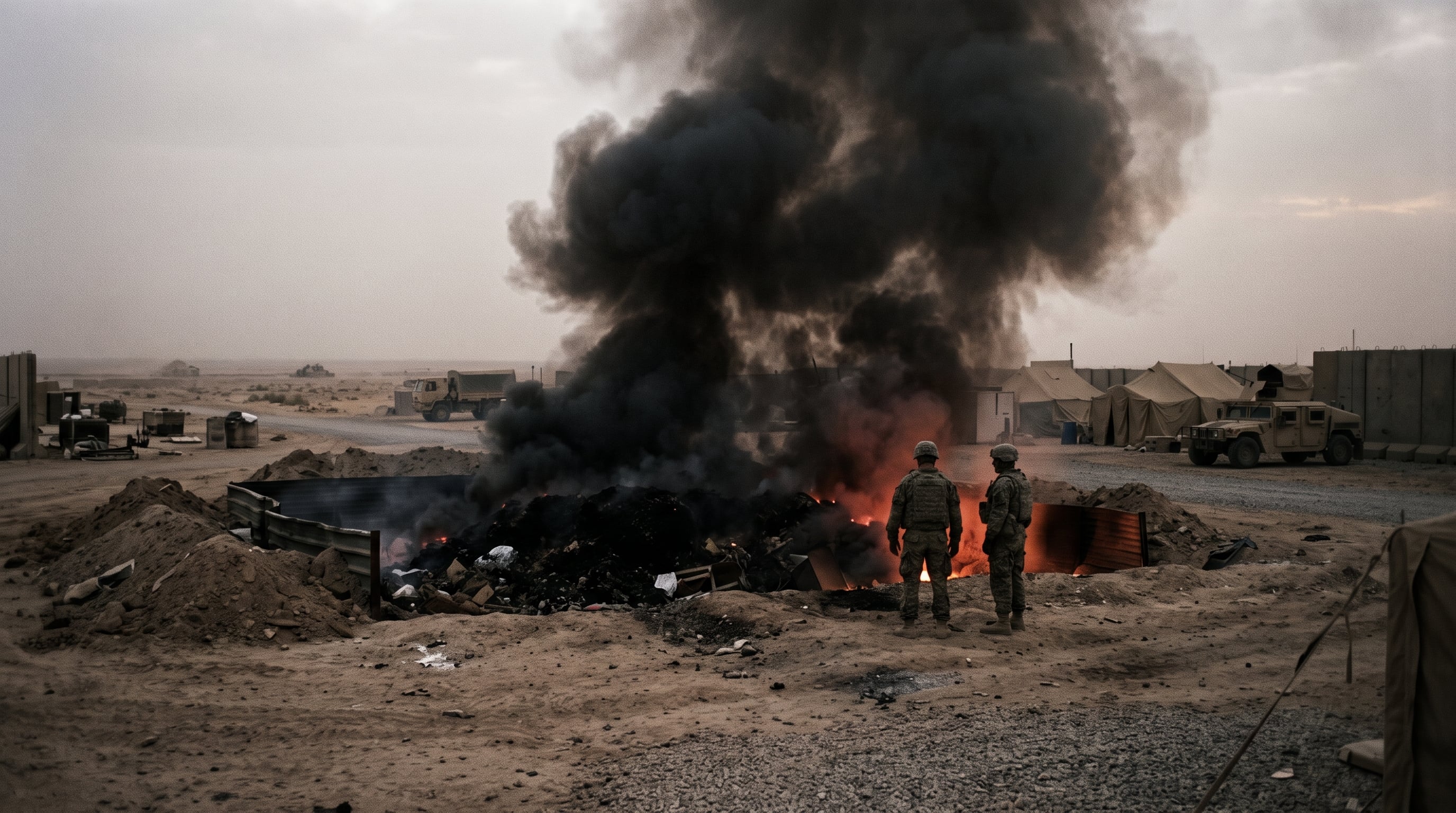
If you came home with constant congestion, sinus infections, coughing, wheezing, or shortness of breath, it is reasonable to ask whether something from deployment played a role. For many veterans, burn pit exposure is part of that story, but the VA claim usually turns on a simpler question: what condition do you have now, and how does the evidence connect it to your service?
The good news is that the PACT Act changed the landscape for many toxic exposure claims. It can make some sinus and respiratory claims more straightforward, but it does not mean every breathing problem is automatically approved. Knowing the difference between a presumptive claim and a facts-found exposure claim can save time and frustration.
Why burn pit exposure matters in VA claims
Burn pits were used in some deployed environments to dispose of waste by open-air burning. Veterans describe exposure to smoke, ash, chemicals, fuel, and dust in and around those areas. But for VA purposes, exposure is not judged by your primary MOS alone.
What matters is the bigger service picture: your unit, every duty station and location, when you served there, and the jobs you actually performed. A mechanic, medic, truck driver, infantryman, cook, or admin specialist could all have meaningful exposure depending on where they lived and worked.
That point matters because many veterans assume, “My MOS was not on a hazardous list, so I must not qualify.” That is not how these claims should be analyzed.
How the PACT Act can help
Under the PACT Act, some veterans with service in certain places and time periods may qualify for presumptive service connection for certain conditions. In plain English, that means if you meet the service criteria and have a covered diagnosis, the VA may not require you to prove the exact exposure event in the usual way.
That is different from a facts-found exposure claim. In a facts-found case, the VA looks at the record to decide whether your toxic exposure likely happened in service, often using service records and exposure information such as ILER or TERA-related development, along with a medical link between the exposure and your current condition.
Both paths can matter in burn pit cases:
- If your condition is one the VA treats as presumptive for qualifying service, your claim may be more direct.
- If your condition is not on a presumptive list, you may still have a valid claim based on facts-found exposure and medical evidence.
A screening tool is not the same thing as an ILER, and veterans should be careful not to assume one document automatically proves the other. It is important to verify what is actually in your file.
Sinus conditions that may come up in burn pit claims
Veterans often use broad phrases like “sinus problems,” but the VA usually decides claims based on diagnosed conditions. That distinction is important.
Examples of sinus-related conditions a veteran might discuss with a medical provider include:
- Chronic sinusitis
- Chronic rhinitis
- Recurring sinus infections
- Nasal inflammation or blockage
- Symptoms after exposure that later became a diagnosed sinus condition
If you have recurring symptoms but no clear diagnosis yet, your treatment records may still matter. The claim is usually stronger when the file shows a pattern over time rather than one isolated complaint.
Respiratory conditions that may be part of the picture
Burn pit claims also often involve lower respiratory symptoms or diagnosed breathing conditions. Again, the issue is usually not just “I was around burn pits,” but “What condition do I have now, and what does the record show?”
Examples that may appear in claims and treatment records include:
- Asthma
- Chronic bronchitis
- Constrictive bronchiolitis or other airway disease
- Persistent cough or wheezing with a later diagnosis
- Shortness of breath tied to a diagnosed respiratory condition
Some veterans have both sinus and respiratory issues at the same time. Upper airway symptoms and lower airway symptoms can overlap, but they are not always rated the same way, and the evidence needed can differ.
What evidence usually helps most
The strongest claims are usually built from ordinary records that tell a consistent story. You do not need dramatic proof. You need credible, organized evidence.
1. A current diagnosis or clearly documented symptoms
The VA generally wants to see what condition exists now. If you have been treated by the VA or a private doctor, request those records and review them for accuracy.
2. Service details that show where and how you served
This can include orders, deployment records, performance records, unit information, and statements explaining what you actually did day to day. Remember: exposure is tied to unit, location, and actual duties, not just your MOS title.
3. A timeline
Write out when symptoms started, whether they began in theater, soon after returning, or worsened over time. A simple timeline can help the VA reviewer follow the facts.
4. Medical opinions when needed
If your claim is not handled on a presumptive basis, a medical nexus opinion may be important. That is the medical explanation connecting your current condition to service or toxic exposure. Not every case needs the same kind of opinion, but many facts-found exposure claims depend on it.
5. Personal and buddy statements
Statements can help fill in practical details: smoke in living areas, proximity to burn pits, coughing during deployment, repeated sinus problems after returning home, or visible limits on exertion. These statements do not replace medical evidence, but they can support it.
Common misunderstandings to avoid
- “I was deployed, so the VA should already know everything.” Sometimes the record is incomplete or unclear. It helps to spell out where you were and what you did.
- “My MOS was not high-risk, so I do not have a claim.” MOS alone does not control exposure.
- “If it is burn pit related, it must be presumptive.” Some cases are presumptive, others are facts-found.
- “I only have symptoms, so I should wait forever to file.” It may make sense to get evaluated and document the problem rather than assume it will resolve on its own.
What to do next
- List every location where you served, including deployment areas, bases, and approximate dates.
- Write down the jobs you actually performed, even if they were different from your MOS description.
- Gather medical records for sinus symptoms, breathing issues, urgent care visits, inhalers, imaging, specialist visits, and ongoing treatment.
- Ask your provider about the actual diagnosis if your records only mention vague symptoms.
- Review your VA claim theory: is this likely a presumptive claim, a facts-found exposure claim, or both in the alternative?
- Keep your own symptom timeline with flare-ups, missed work, sleep disruption, infections, or exercise limits.
- Verify information with the VA and your own records before assuming a tool, summary, or informal note proves exposure.
If you are already service-connected and your symptoms have worsened, there may also be situations where a veteran asks for an increased evaluation. Any disability rating or monthly compensation amount would only be an estimate based on the individual veteran's medical evidence, overall situation, and the VA's decision.
This article is general educational information only. It is not legal advice or medical advice, and the Toxic Exposure Evidence Center is not the VA or a government agency. Veterans should verify claim details with the VA, their service records, and their medical records.
If you want a second set of eyes on a burn pit, sinus, or respiratory claim, you can reach Albert Thombs, VA-accredited claims agent #45147, at 702-992-4883. No pressure—sometimes it just helps to have someone review the evidence with you.
Albert Thombs
VA-Accredited Claims Agent #45147 · 702-992-4883
No claims advice or representation without a signed VA Form 21-22a on file. This article is educational — not legal, medical, or claims advice. Accreditation is governed by 38 CFR § 14.629.